



A blurry projector ruins movie nights and presentations. The problem often stems from simple setup mistakes rather than equipment failure. Most fuzzy images can be fixed in minutes once you identify the root cause.
Focus vs Keystone vs Placement: What's Actually Wrong With Your Home Projector
Identifying which adjustment actually fixes your problem saves time and prevents further image degradation.

Focus and Auto-Focus Issues
The projector's focus ring controls lens sharpness. Turn it slowly while projecting a test image with fine text or grid lines. Stop when the center looks sharpest. Many people over-adjust, rotating past the optimal point and back into blur.
Many modern projectors include automatic focus (ISA) technology that sometimes make incorrect adjustments. The system may lock onto the wrong focal point, especially with complex screen content. Disable auto-focus and manually adjust if the image remains soft after automatic calibration.
Keystone Correction Problems
Keystone fixes trapezoid distortion (keystone correction) when the projector sits at an angle to the screen. Digital keystone crops and stretches the image, which reduces resolution and creates softness. Auto-keystone often overcompensates or applies correction when none is needed.
physical alignment beats digital correction every time. Adjust the projector height and angle to create a rectangular image before touching keystone settings. Turn off auto-keystone and check if image sharpness improves.
Throw Distance Requirements
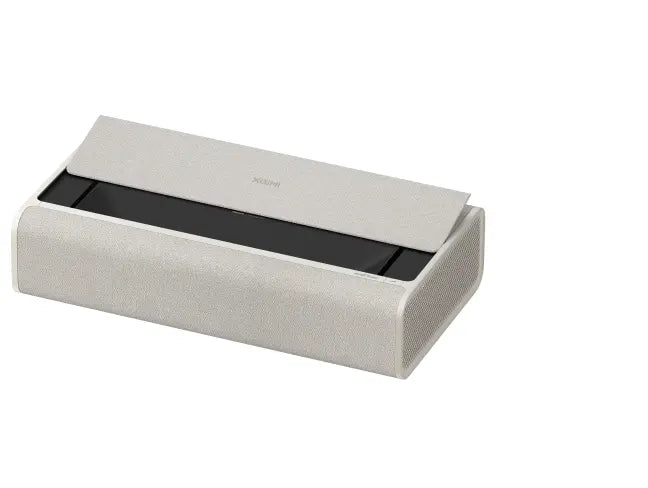
Every projector has an optimal distance range. Too close or too far produces a projector blurry image that focus adjustments can't fix. Check your manual for the throw distance calculator. A 100-inch screen typically requires 8-12 feet for standard throw projectors, 3-5 feet for short throw models.
| Screen Size | Standard Throw | Short Throw | Ultra-Short Throw |
| 80 inches | 6.5-10 feet | 2.5-4 feet | 4-20 inches* |
| 100 inches | 8-12 feet | 3-5 feet | 5-25 inches* |
| 120 inches | 10-15 feet | 4-6 feet | 6-30 inches* |
*Ultra-short throw distances vary significantly by model. Always consult your specific projector's manual.

Quick Diagnosis: Match Your Symptom to the Solution
Before diving into detailed fixes, identify your specific problem with this reference table.
| Symptom | Most Likely Cause | First Action |
| Entire image soft/fuzzy | Wrong throw distance | Measure and adjust projector distance |
| Center sharp, edges blurry | Cheap lens or extreme angle | Reposition projector perpendicular to screen |
| Suddenly blurry (was sharp before) | Dirty lens or protective film | Clean lens, check for plastic film |
| Blurry after auto-focus runs | Auto-focus malfunction | Disable auto-focus, adjust manually |
| Sharp at first, blurry later | Overheating/filter clog | Check ventilation and clean filters |
Fix Throw Distance and Alignment Errors When Learning How to Set Up a Projector
Once you know the core issues, correcting distance and alignment becomes straightforward. Moving the projector forward or backward makes a bigger difference than you'd expect.
Measure from the lens to the screen surface, not from the projector's back. Mark the floor with painter's tape once you find the sweet spot. Even shifting six inches can push the image out of its optimal focal range.
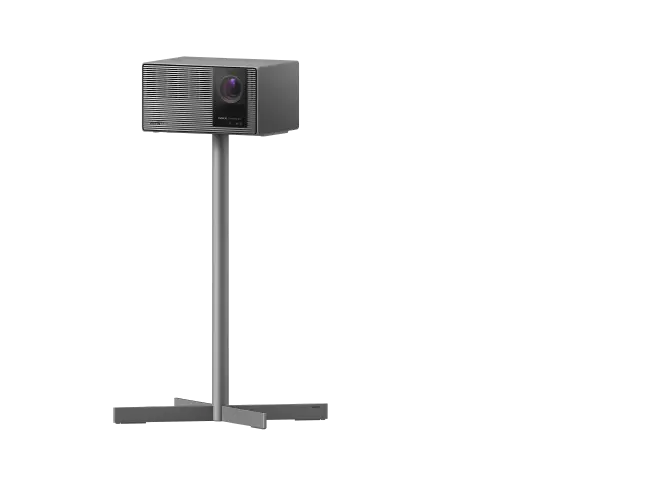
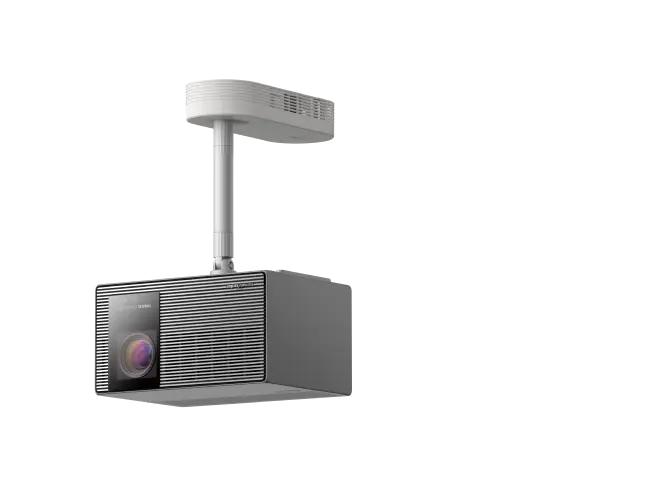
A projector not sharp often sits tilted. Use a small bubble level on top of the unit to check horizontal alignment. Stack books or use adjustable legs to level the projector. The goal is a perfectly rectangular image without any digital correction enabled.
Wall texture creates an out-of-focus appearance even when the setup is correct. Paint and drywall scatter light, reducing sharpness. Dedicated home projector screens reflect light more efficiently and produce crisper images.
Clean the Lens Safely Without Causing Damage to Fix a Fuzzy Projector Picture
After proper alignment, lens maintenance becomes the next priority. Dust and fingerprints block light and soften image quality.
Check for Protective Film First
Many new projectors ship with a clear protective film over the lens. This thin plastic layer causes significant blur but looks almost invisible. Look closely at the lens edge for a tab or lifting corner. Remove any protective film before attempting other fixes.
Proper Cleaning Method
Use microfiber cloths designed for camera lenses or eyeglasses. Blow off loose dust with a manual air blower before wiping. Wipe in gentle circles from the center outward with minimal pressure.
Check filters monthly and vacuum or wash them according to your manual. A clogged filter reduces airflow, causing the lamp to dim prematurely and the image to appear softer.

Avoid Digital Zoom and Over-Sharpening That Creates a Projector Blurry Image
With the physical setup optimized, software settings deserve attention. These adjustments seem like quick fixes, but often make problems worse.
Digital Zoom Drawbacks
Digital zoom crops the image and enlarges the remaining portion. This means you're only using a fraction of the pixels in the center of the image and stretching them to fill the screen, which significantly reduces detail.
Move the projector physically instead of using zoom. Physical distance maintains full resolution. If you can't reposition the unit, accept a smaller image rather than sacrificing clarity.
Sharpness Settings Pitfalls
The projector sharpness setting adds artificial edge enhancement. High values create halos around objects and make the image look processed. Start with sharpness at the default or neutral position. Make small adjustments while viewing actual content, not test patterns.
MEMC (motion smoothing) and frame interpolation create blur during fast action. Turn off motion enhancement for movies. The processing can't always keep up with rapid movement, creating a selective blur that focus adjustments can't fix.
Check Source Quality and Output Resolution Settings
Even a perfectly configured projector displays poor images when the source signal lacks quality. The projector can only project what it receives from connected devices.
Set your video source to match the projector's native resolution. A 1080p projector displays 1080p input at full quality. Feeding it 720p forces upscaling, while 4K input requires downscaling. Both processes reduce sharpness. Gaming consoles and streaming devices auto-detect resolution, but sometimes guess wrong.
HDMI cables longer than 15 feet may experience signal degradation. This causes image flickering, color problems, or resolution drops where the display appears less sharp. Replace damaged or kinked cables. Loose connections at either end also cause intermittent signal quality problems.
Streaming services adjust quality based on bandwidth. A slow connection delivers lower resolution with compression artifacts that look like blur. Download content when possible for maximum quality. Hard-wired Ethernet connections outperform WiFi for streaming.
See Sharper Projector Options If Adjustments Don't Help
Sometimes the projector itself limits image quality regardless of optimization efforts.
720p projectors no longer provide adequate quality. 1080p offers noticeable improvement for screens up to 100 inches. 4K projectors provide the sharpest images but cost more and require 4K content to see the difference.
Native resolution matters more than marketing claims about "supports 4K input." A 1080p projector that accepts 4K signals still only displays 1080p. Check the native panel resolution, not the maximum input resolution.
Budget projectors use plastic lenses that never achieve the same sharpness as glass optics. Glass lenses cost more but maintain clarity across the entire image, not just the center. Look for all-glass lens construction when shopping.
Your room layout might not suit your current projector's throw ratio. Measure your space before buying. The throw calculator should show your desired screen size within the projector's optimal range, not at the extreme ends where image quality suffers.
Get Clear Images Now
Fix your projector blurry image by checking focus, distance, and alignment before adjusting digital settings. Remove any protective film from the lens and clean it monthly. Verify your source quality matches the projector's resolution. These steps solve most sharpness problems without requiring expensive upgrades or professional help.
Frequently Asked Questions
Q1: Why Is My Projector Not Sharp Even After Focusing?
Likely, the throw distance is incorrect. Move the projector forward or backward to match the manufacturer's distance range, which is usually indicated on the packaging or on the manufacturer's website, depending on the size of the screen you have. You cannot focus on the image unless you are within the correct distance range. Also, check if a protective film still covers the lens.
Q2: Can Keystone Correction Make a Projector Out of Focus?
Yes, indirectly. While it doesn't change the optical focus, digital keystone reduces image resolution, making the picture look softer because it crops and stretches the pixels. Physical alignment should always be preferred over digital keystone correction.
Q3: How Often Should I Clean My Projector Lens to Prevent a Fuzzy Projector Picture?
Clean the lens regularly, such as every 2-4 weeks if the projector has light usage, or weekly if the projector has daily usage. Remember, dust the lens first, then clean, since wiping the lens can cause scratching. Check the lens for any protective coating if the projector was brand new.
Q4: Does Using Digital Zoom Create a Projector Blurry Image?
Yes. Digital zoom always reduces sharpness because it only uses the center portion of available pixels and enlarges them to fill the screen. Move the projector physically instead. Any digital zoom noticeably degrades quality and reduces effective resolution.
Q5: What Resolution Do I Need to Avoid a Projector Not Sharp Problem?
Resolution 1080p works well in most cases for screen sizes up to 100 inches. However, if the screen size is large or the viewing distance from the screen is small, then resolution 4K can be considered. The resolution of the screen should be the same as the resolution of the content being played.


