






Choosing the right projector screen material can dramatically improve your home viewing experience, especially when ambient light threatens to wash out the picture. In rooms with windows or daytime use, a basic matte white surface often struggles to maintain contrast, while specialized options like ambient light rejecting (ALR) screens direct more of the projector's light toward viewers and reduce stray reflections. The best choice depends on your room's lighting conditions, projector type, seating arrangement, and how much you prioritize wide viewing angles versus brightness. For more on this topic, see How to Match Screen Gain Specifications to Your Room's Ambient Ligh....

Understanding how different materials handle light helps avoid common regrets such as dull colors during family movie nights or uneven brightness across seats. This guide breaks down the main screen types, when each performs best, and practical steps to match one to your setup.
Why Room Lighting Conditions Matter for Projector Screens
Ambient light can wash out a projected image by reducing contrast and making blacks look less deep. Even a bright projector may deliver disappointing results if light from windows, lamps, or overhead fixtures hits the screen directly. As this official technical evaluation explains, uncontrolled illumination raises black levels and flattens the picture.
In a dedicated dark room, almost any neutral screen works well. But in living rooms or open spaces with variable daylight, the screen material becomes a critical part of the system. Light-rejecting screen material can help control washout caused by overhead lights, side lighting, or windows, according to established audiovisual standards.
Common Projector Screen Materials Explained
Matte White Screens
Matte white is the most common and affordable option. It offers a wide viewing angle and neutral color reproduction with minimal hotspotting. The surface diffuses light evenly in all directions, making it forgiving for multiple viewers spread across a room.
This type excels in controlled lighting where you can close curtains or dim lamps. In bright conditions, however, matte white reflects ambient light back to viewers, quickly lowering contrast. Many beginners start here because it is simple and inexpensive, but it may disappoint in sunlit living rooms.
High-Gain Screens
High-gain materials use a reflective coating to concentrate projected light toward a narrower area, making the image appear brighter from the center. They can help when your projector has modest output or you sit farther away.
However, higher gain is not automatically better. It often comes with narrower viewing angles and a greater chance of hotspotting or uneven appearance. Viewers seated off to the sides may notice dimmer or color-shifted images. Use high-gain only if your seating is centered and you need extra punch without adding much ambient light.
Ambient Light Rejecting (ALR) Screens
ALR screen materials are designed to reduce the effect of stray room light while sending more projected light toward the audience. These directional surfaces typically incorporate microscopic structures that reject light coming from above or the sides while preserving the projector's output.
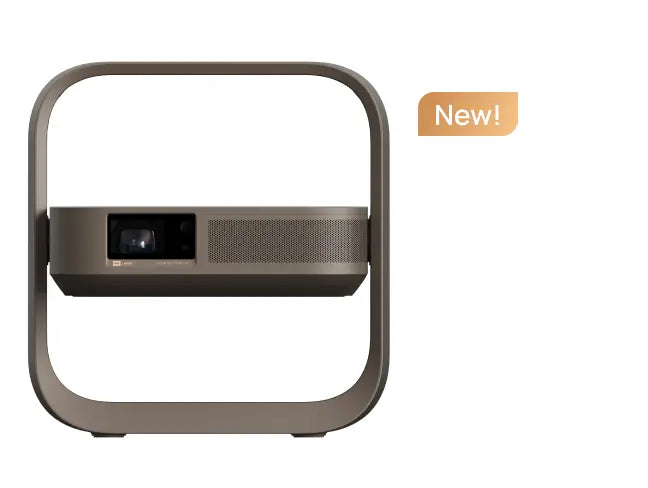
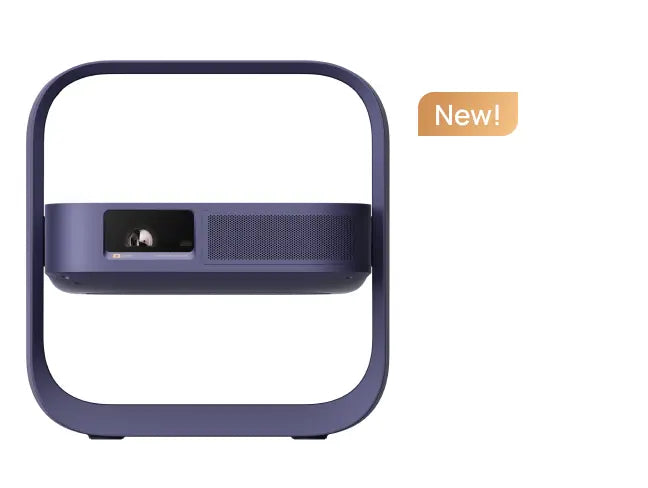
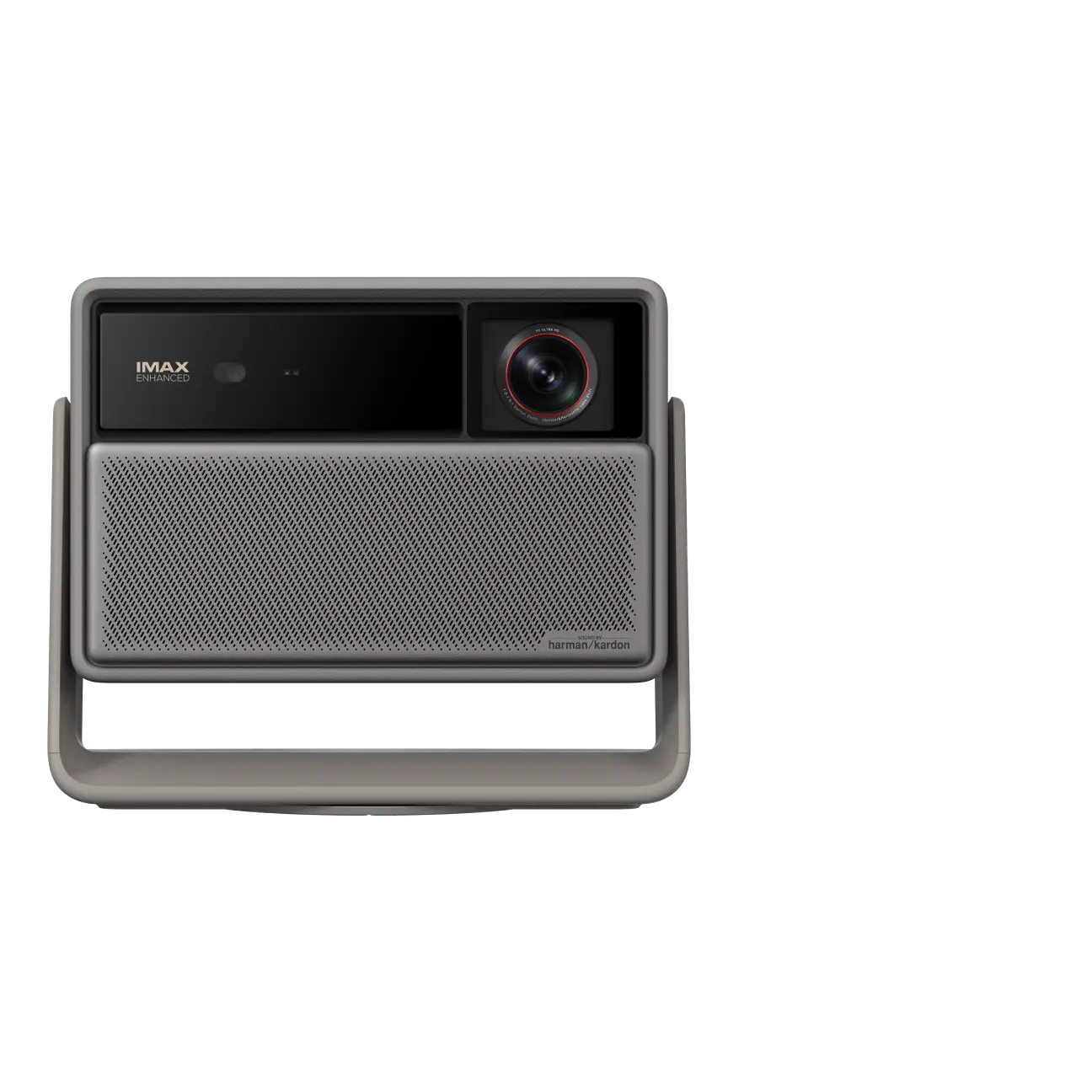
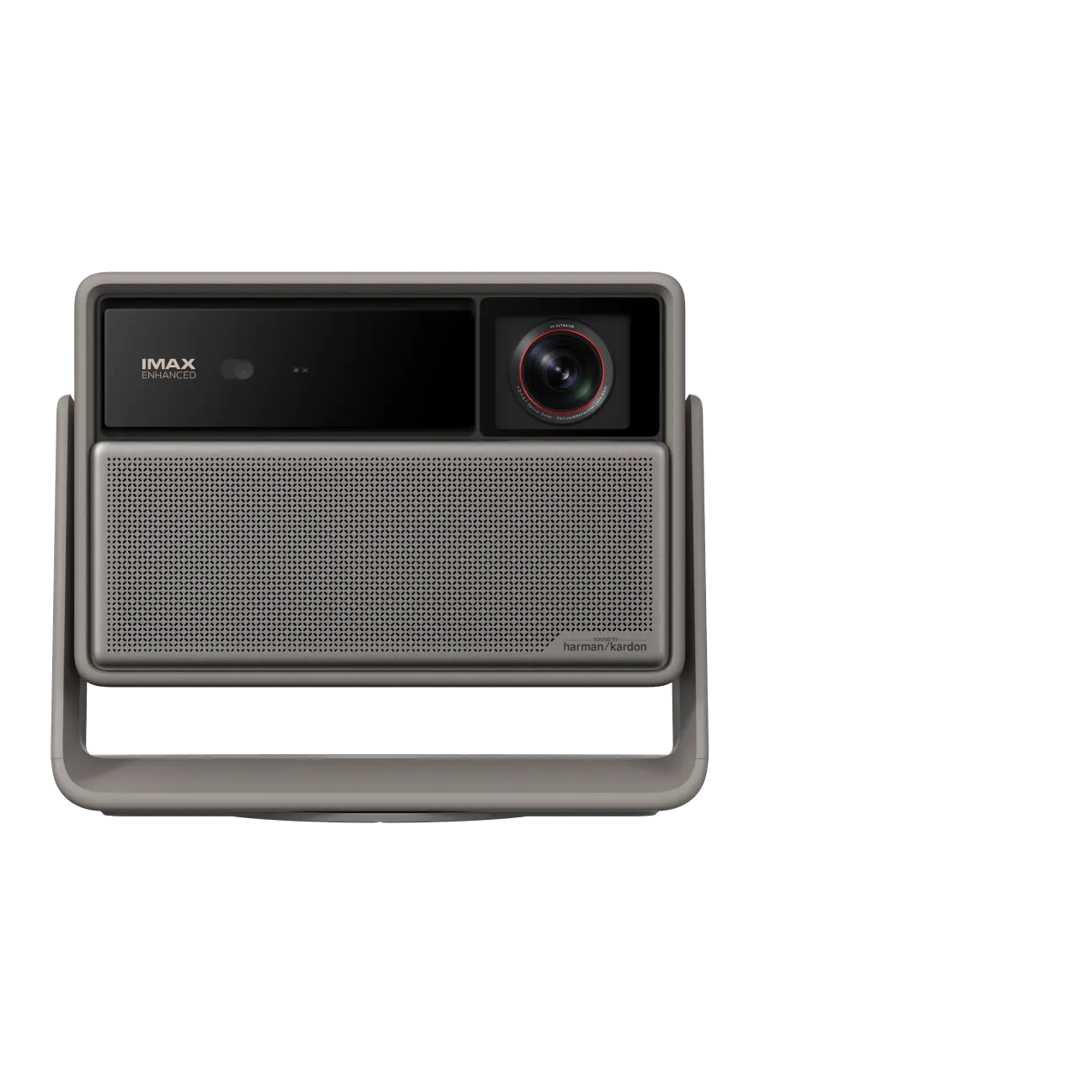
ALR performs best in mixed or bright rooms where you cannot fully control lighting. It maintains better black levels and color saturation during daytime viewing. For ultra-short-throw (UST) projectors like the XGIMI AURA series placed close to a wall, a dedicated UST ALR screen is often the most effective pairing because it accounts for the steep projection angle. For more on this topic, see Bring EA SPORTS FC™ 26 to the Big Screen with XGIMI Projectors. For more on this topic, see Couch Co-Op Revival: Why Projectors Are Perfect for 4-Player Split-....
How to Match Screen Material to Your Room Lighting
Consider these practical scenarios when deciding:
-
Dedicated dark home theater room: A matte white screen usually provides the most balanced, wide-angle experience. High-gain can add perceived brightness if your projector is on the lower end, but ALR offers little extra benefit here and may unnecessarily narrow the viewing cone.
-
Living room with windows and variable daylight: ALR becomes the stronger choice. It helps preserve contrast when sunlight or lamps are present. Matte white may suffice if you watch mainly in the evening and can manage light with curtains.
-
Open-plan family room with mixed ambient light: ALR or a moderate-gain option often delivers the best everyday results. Families who stream sports or shows during the day particularly benefit from ALR's rejection of overhead and side light.
-
Bright daytime viewing for streaming or gaming: An ALR screen is usually worth the investment. In very bright or light-filled spaces, a basic projector-and-screen setup may need extra planning or a different display approach.
Some advanced screen materials are directional by design, using surface structure to shape where light goes. This explains why ALR behaves differently from a simple matte white surface.

Key Tradeoffs to Consider Before Buying
No single material is perfect for every situation. Here are the main compromises:
-
Brightness vs viewing angle: Higher-gain and many ALR screens boost on-axis brightness but reduce performance for off-center seats. If your family spreads out on couches, prioritize wider-angle materials.
-
Cost vs performance: ALR screens typically cost more than matte white. They are most justified when ambient light regularly hits the screen and you use the projector during the day. In controlled dark rooms, the extra expense may not deliver noticeable gains.
-
Hotspotting and uniformity: Directional materials can lose brightness and consistency when viewers sit outside the intended viewing cone. Test your room layout to ensure seating stays within the recommended angle.
-
Projector compatibility: Ultra-short-throw models pair especially well with UST-specific ALR screens. Standard throw projectors work with a broader range of materials.
ALR is usually worth considering when room lighting cannot be controlled well or when daylight and lamps regularly hit the screen. There is no universal ambient-light threshold at which ALR becomes the right choice; it depends on your specific projector brightness, room geometry, and seating.
Higher gain can make the image look brighter on-axis, but it often comes with narrower viewing angles or more hotspotting risk. Some ALR designs narrow the useful viewing cone, though the exact angle varies by material and screen architecture.
Decision Framework: Which Screen Material Should You Choose?
Use this heuristic to narrow options quickly:
- Choose matte white when lighting is controllable and you want the most forgiving viewing cone.
- Consider high-gain when the image looks too dim on a standard screen but you can keep seating centered.
- Select ALR when ambient light is hard to avoid and your layout is stable enough to stay within the screen’s directional sweet spot.
Projector Screen Material Fit by Room Lighting
Use this as a heuristic guide for choosing screen material by room lighting, not as lab-grade performance data.
View chart data
| Category | Matte White | High-Gain | ALR |
|---|---|---|---|
| Dark room | 5.0 | 4.0 | 2.0 |
| Mixed light | 3.0 | 4.0 | 5.0 |
| Bright room | 1.0 | 2.0 | 5.0 |
Illustrative heuristic model derived from article evidence on washout reduction, directional tradeoffs, gain-versus-angle behavior, and ALR function. Not measured product data; scores are relative fit ratings on a 1-5 scale.
Don’t buy if:
- You have wide or shifting seating angles and choose high-gain or ALR without checking the viewing cone.
- You frequently reposition the projector or furniture but select a highly directional ALR screen.
- Your room is only mildly lit and you expect uniform brightness from every seat with a high-gain material.
How to Choose and Set Up Your Screen
-
Assess your room: Measure typical ambient light during intended viewing times. Note window positions and light direction.
-
Consider your projector: Check its brightness (lumens) and throw type. Pair UST models like the XGIMI AURA with compatible ALR screens for best results.
-
Evaluate seating: Count viewers and their positions. Wide arrangements favor matte white.
-
Set a budget: Factor in screen size and installation. A 100" UST ALR screen can transform bright-room performance.
-
Test in place if possible: Many retailers offer return policies. Observe contrast and color during both day and night.
For more on selecting screens for 4K projectors, read our guide on how to select a home projector screen for 4K. If you plan outdoor or portable use, explore the benefits of a XGIMI Portable Outdoor Screen.
Screen choice should account for how wide the viewing area is and how much ambient light the room has. Room illumination changes how bright and legible a projected image needs to be, so ambient light should be part of the setup decision.
Common Myths About Projector Screens
Myth: Higher gain always fixes a bright room.
Reality: Higher gain can make the image look punchier, but it often narrows viewing angles and can introduce hotspotting or brightness falloff off-center.
Myth: ALR solves all lighting issues.
Reality: ALR usually improves performance against off-axis ambient light, but it is not a blanket fix for direct sunlight, overhead glare, or a fully uncontrolled daytime room.
Myth: You do not need a special screen.
Reality: A matte white screen can be enough in controlled lighting, but it loses ground as ambient light increases.
Final Recommendations
For most families in typical living rooms with some daylight, an ALR screen delivers the biggest practical improvement and reduces frustration with washed-out images. In fully light-controlled theaters, matte white remains the sensible, cost-effective choice that preserves wide viewing comfort.
The right decision depends heavily on your specific room conditions and usage patterns rather than chasing the highest specifications. Take time to evaluate your lighting and seating before purchasing. Many XGIMI owners enhance their setups with dedicated screens from the Accessories collection to achieve consistent, immersive results across different times of day.
Comfort and setup disclaimer: This article discusses visual comfort and setup guidance for projectors and screens. It does not constitute medical advice, diagnosis, or treatment. If you experience persistent eye discomfort or have existing vision conditions, consult a qualified eye care professional. Results depend heavily on room conditions, projector quality, and proper installation.
Screen selection ultimately balances tradeoffs rather than delivering a single perfect solution. By matching material to your lighting reality, you can enjoy clearer, more satisfying projection in any environment.


