
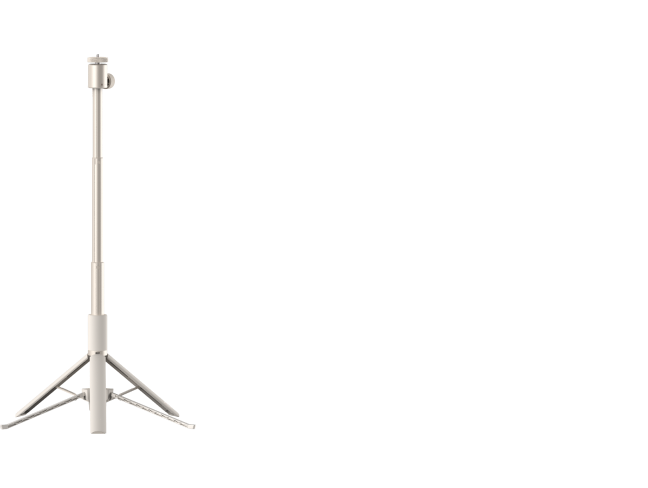
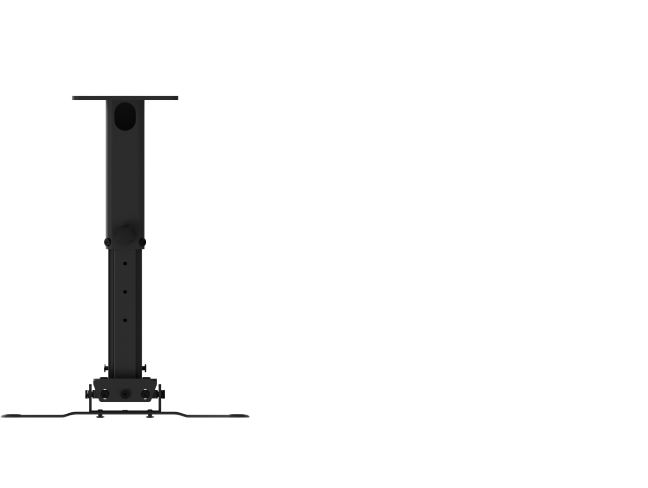



Calculating the exact ceiling mount distance for your projector is essential for achieving a perfectly sized, undistorted image on your screen. The key is understanding your projector's throw ratio and using it with your desired screen dimensions to determine the precise placement before drilling any holes. This prevents common installation regrets like an image that's too large or small, excessive keystone correction, or needing to remount the unit. For more on this topic, see Why You Shouldn't Skimp on a Projector Stand: Stability and Alignment. For more on this topic, see Understanding Projector Throw Distance: A Beginner's Calculation Guide.

By applying a straightforward formula based on throw ratio and screen width, you can plan your permanent home theater setup with confidence. Whether you're targeting a 100-inch screen or another size, the process demystifies what otherwise feels like complex geometry. For more on this topic, see Sim Racing on a 100-Inch Screen: The Ultimate Projector Setup Guide.
Understanding Throw Ratio and Why It Matters for Ceiling Mounts
Throw ratio describes the relationship between the projector's distance from the screen and the resulting image width. It is typically expressed as distance divided by width (D:W), allowing you to calculate the required throw distance by multiplying your screen's width by the throw ratio.
This NASA technical reference on visualization systems confirms that throw ratio is calculated as the projector-to-screen distance divided by image width. For ceiling mounts, this measurement starts from the projector lens to the screen surface, making it critical to account for your mount's drop length and the projector's physical design. For more on this topic, see Projector Brightness Standards and Measurement: A Comprehensive Ref.... For more on this topic, see Projector Throw Ratio Explained: Standard vs. Short Throw vs. Ultra....
Short-throw projectors work well when placed closer to the screen, while standard or long-throw models require greater distances. Using the wrong category for your room can lead to an image that doesn't fit your screen or forces digital corrections that soften picture quality.
The Core Formula for Calculating Projector Throw Distance
The basic calculation is simple:
Throw Distance = Throw Ratio × Screen Width
Always use the screen's width (not the diagonal measurement) for accuracy. For a standard 16:9 screen, the width is approximately 87% of the diagonal size.
For example, a 100-inch 16:9 screen has a width of about 87 inches or 7.27 feet. If your projector has a throw ratio of 1.2, the ideal distance would be roughly 7.27 × 1.2 = 8.72 feet from lens to screen.
When your projector offers zoom, calculate both ends of the range using the minimum and maximum throw ratios provided in the specs. This gives you a flexible mounting window rather than a single point, which is especially useful for ceiling installations where exact positioning may be limited by joists or wiring.
Many official setup guides, such as this university equipment manual, emphasize planning placement from the projector's distance range before installation to avoid image size mismatches.
Step-by-Step Guide to Determining Your Ceiling Mount Distance
-
Choose your screen size and measure the width: Decide on the diagonal (e.g., 100 inches) and calculate width using the 16:9 ratio (width ≈ diagonal × 0.8716).
-
Find your projector's throw ratio: Check the specifications for a single ratio or a range (e.g., 1.0-1.5). Official documentation often lists this clearly.
-
Apply the formula: Multiply width by the throw ratio(s) to get your distance range in feet or meters.
-
Account for ceiling specifics: Add the mount's drop length and ensure the lens aligns with the screen center. Some references note that measurements may reference the lens to screen center, so verify your model's alignment needs.
-
Check for offset and keystone: Lens offset affects vertical image position. Proper physical alignment minimizes reliance on keystone, which should be a last resort according to practical installation advice.
This approach aligns with guidance in technical literature that treats throw distance as a range for zoom-equipped models rather than one fixed number.
Example Calculations for Common Screen Sizes
For a popular 100-inch 16:9 screen (width ≈ 7.27 ft):
- Short-throw (approx. 0.4–1.0 ratio): 2.9–7.3 feet
- Standard throw (approx. 1.0–1.5 ratio): 7.3–10.9 feet
- Long throw (approx. 1.5–2.4 ratio): 10.9–17.4 feet
These are heuristic estimates based on the core formula. Your exact projector specs may vary slightly, and zoom provides additional flexibility within the band.

For a 120-inch screen, scale up the width to approximately 8.72 feet and recalculate accordingly. Always cross-reference with your specific model's manual for the most accurate range.
Visualizing Throw Distance Ranges
Projector Throw Distance Ranges for a 100-inch 16:9 Screen
Install planning chart: use the throw-ratio band to estimate a ceiling mount distance band, not a single point.
View chart data
| Category | Estimated distance range (ft) | Estimated distance range (m) |
|---|---|---|
| Short throw | 2.9 | 0.88 |
| Standard throw | 7.3 | 2.22 |
| Long throw | 10.9 | 3.32 |
Heuristic/estimated ranges derived from the provided formula (distance = screen width × throw ratio) using a 100-inch 16:9 screen width of about 7.27 ft. Throw-ratio bands are illustrative: short 0.4–1.0, standard 1.0–1.5, long 1.5–2.4. Values are conservative planning ranges, not manufacturer-verified specs.
This chart illustrates typical planning bands. The actual usable range for your projector depends on its published specifications and room conditions. Treat these as starting points for layout planning.
When to Use a Projection Calculator Instead of Manual Math
For complex rooms or projectors with lens shift, online projection calculators can simulate various scenarios. Tools like the one from ProjectorCentral let you input your model to see image size at different distances, serving as a useful complement to the manual formula.
However, calculators work best as verification rather than the sole method. They help confirm your manual calculations and visualize trade-offs in real rooms.
Common Mistakes to Avoid in Ceiling Mount Planning
- Measuring to the screen diagonal instead of width
- Ignoring zoom range and treating specs as a single fixed distance
- Forgetting to factor in lens offset or ceiling height
- Relying on keystone correction instead of precise physical placement
- Installing without testing the image size first (use a temporary setup if possible)
As noted in various setup references, planning from the full throw range reduces remounting risks. Keystone can help minor adjustments but shouldn't compensate for major miscalculations.
Choosing the Right Ceiling Mount and Projector for Your Setup
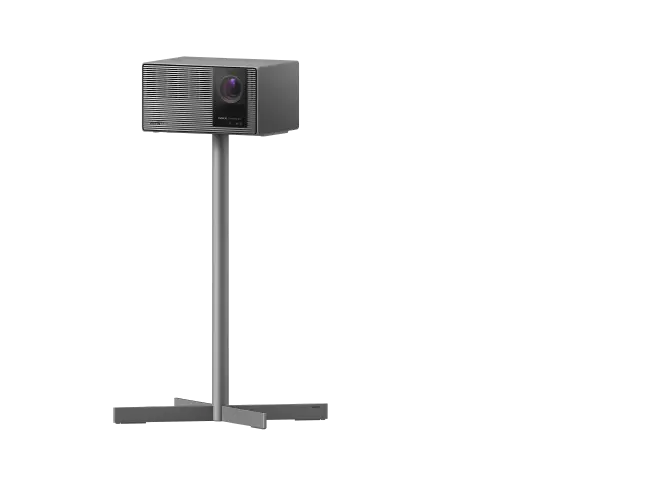
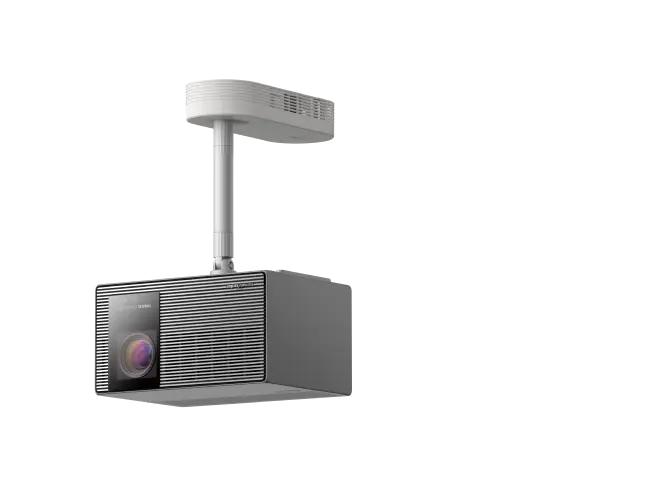
Select a mount that allows fine adjustments in distance and tilt. XGIMI offers options like the XGIMI Ceiling Mount designed for clean, stable installations with cable management.
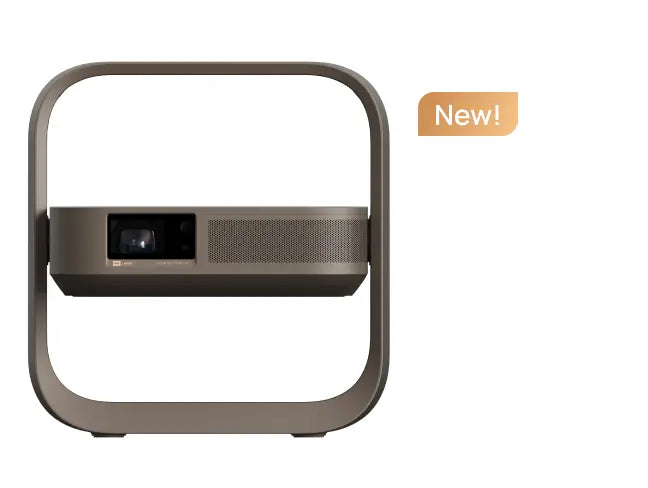
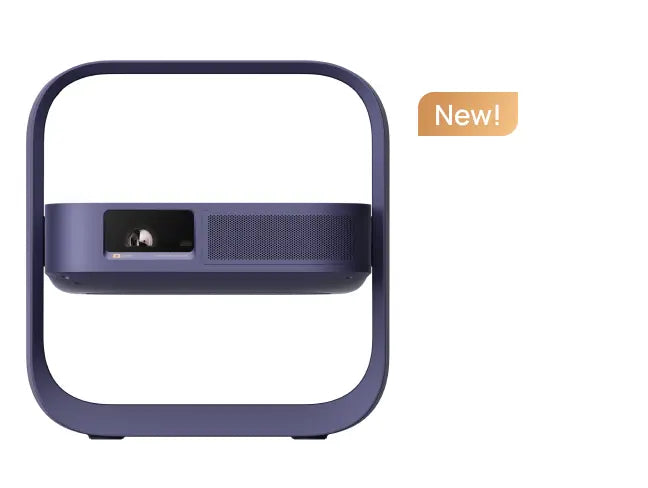
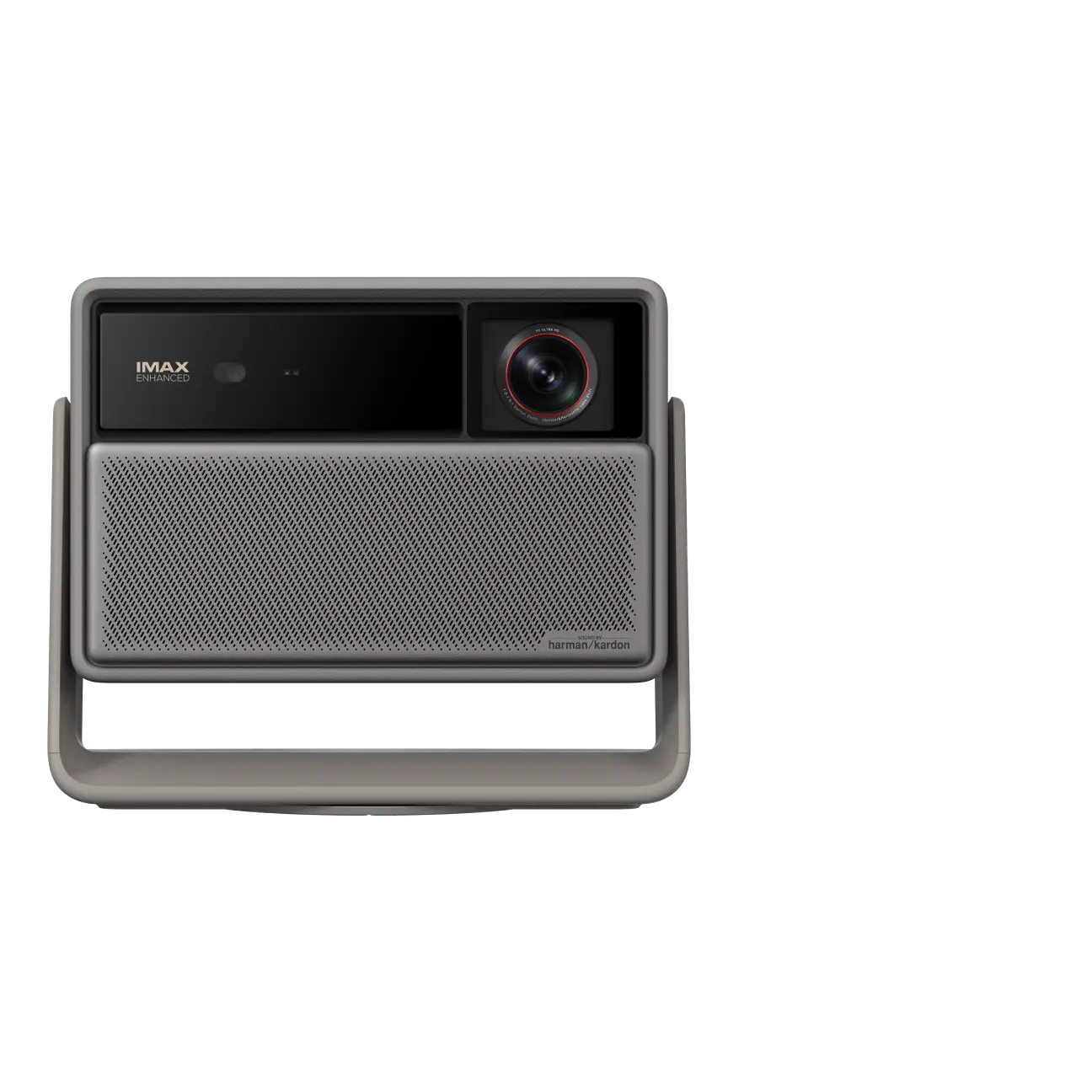
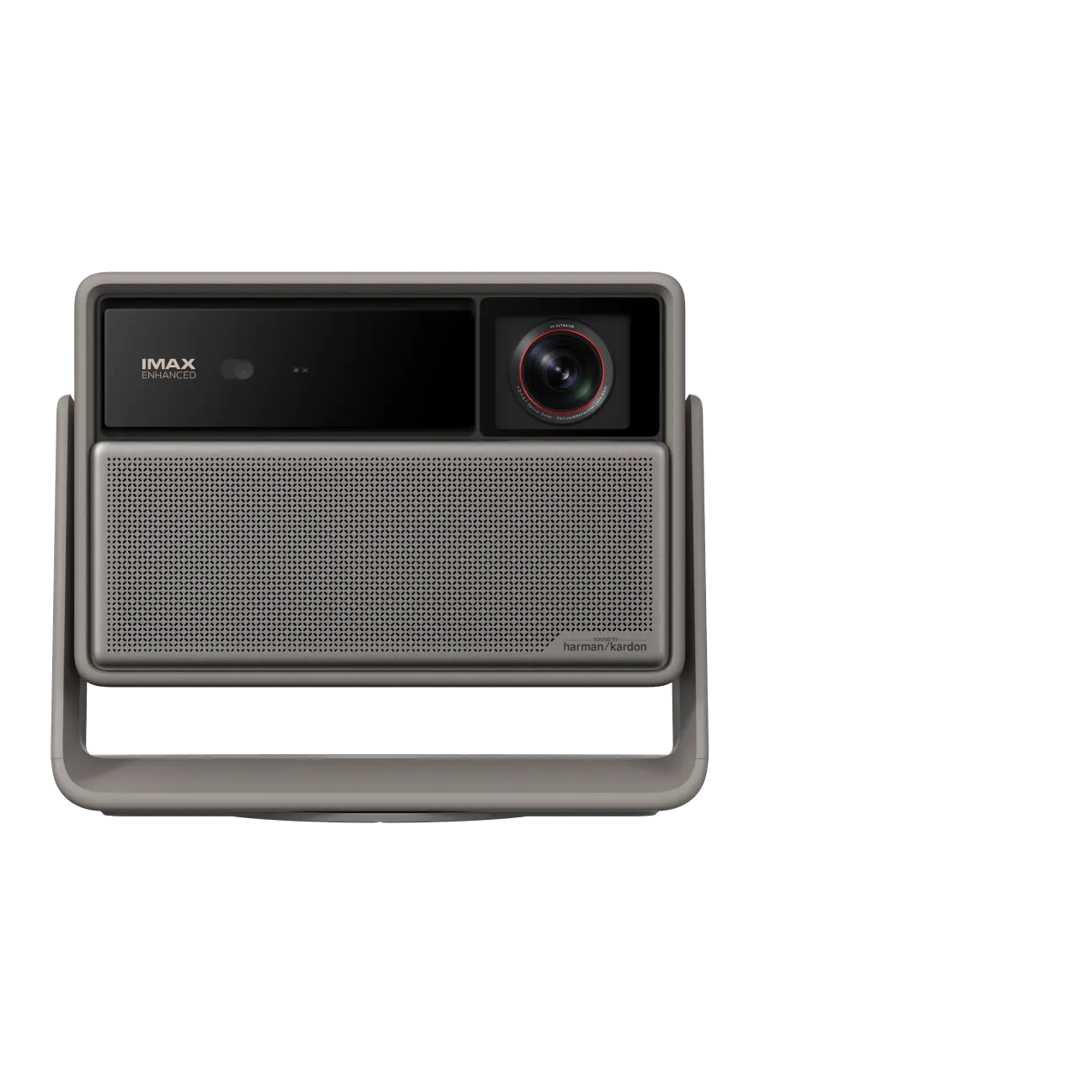
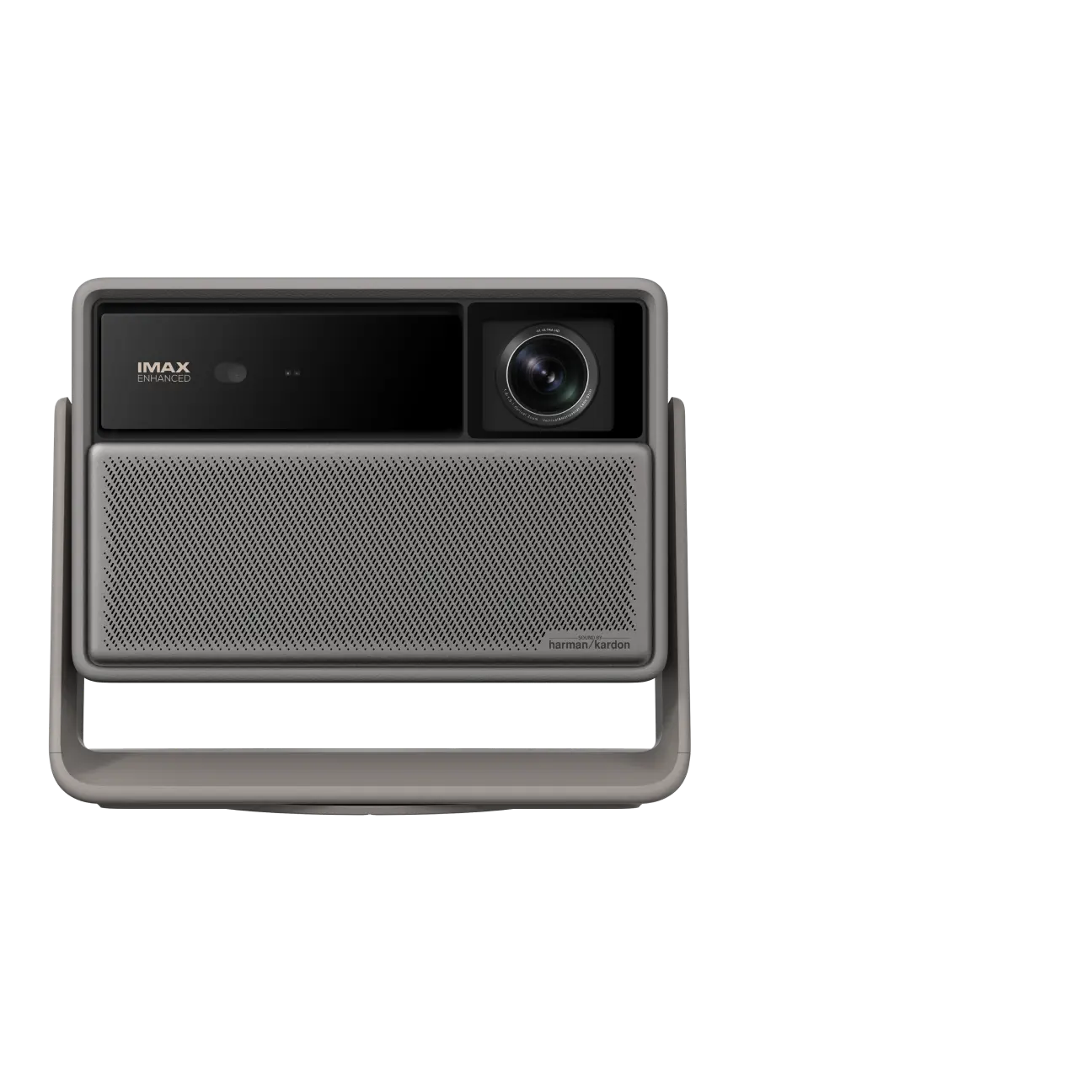
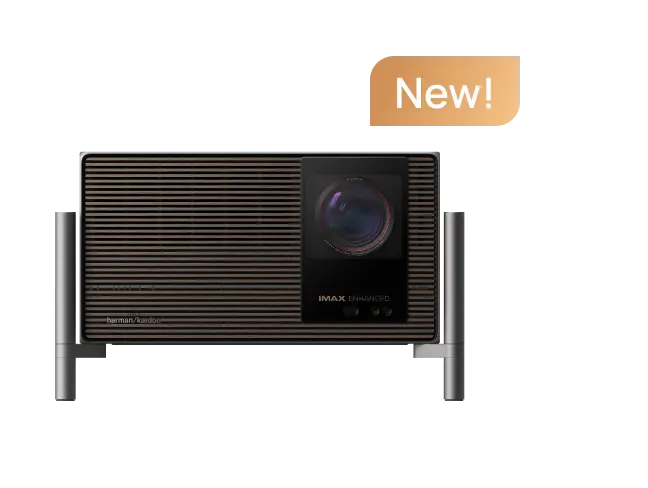
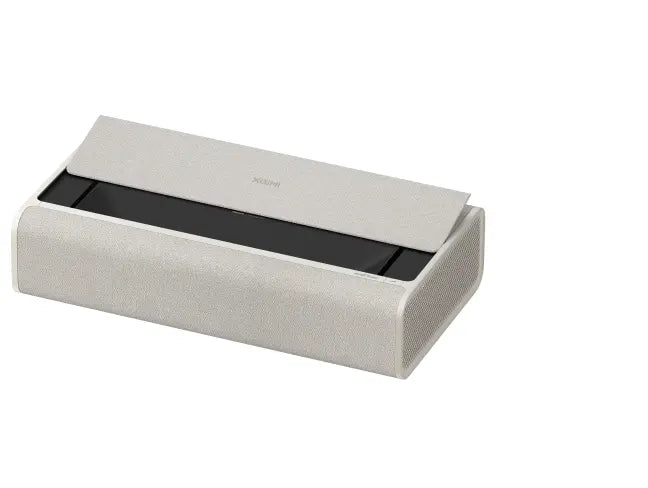
For standard home theaters, models like the HORIZON Ultra work well with typical throw distances. Consider your room depth when choosing between short-throw and standard options.
Explore more in our guide on whether you should mount your projector to the ceiling, which covers pros, cons, and real-life scenarios.
Our broader projector placement and installation guide includes comparisons of ceiling, tabletop, and other setups.
Checklist for Successful Ceiling Mount Installation
- Measure your room depth and ceiling height accurately
- Calculate minimum and maximum throw distances using your projector's specs
- Mark the exact lens position relative to screen center
- Verify the mount can achieve the calculated distance with its adjustment range
- Test image sizing and focus before final mounting
- Leave a small buffer in the range for fine-tuning
- Consult your projector's manual for any model-specific offset or zoom details
This practical checklist translates the math into executable steps, helping you avoid the most common installation pitfalls.
Final Thoughts on Precise Projector Placement
Getting the ceiling mount distance right transforms your home theater from good to exceptional. The calculation isn't overly complex once you focus on throw ratio times screen width, but it demands attention to your specific projector's range and room realities.
While the formulas and examples provide a strong starting framework, real-world factors like exact lens position and minor room variations mean testing is always recommended. The effort invested in proper planning pays off with a crisp, edge-to-edge image that requires no heavy digital corrections.
Remember that this article offers setup guidance only and does not constitute professional installation advice. For persistent alignment issues or complex rooms, consult a qualified installer. If you experience ongoing image problems, professional assessment is recommended.
For more on projector choices, browse our home projectors collection or the full range of 4K projectors.


