




Troubleshooting Common Projector Issues: A Comprehensive 2026 Guide
Nothing ruins a movie night, gaming session, or important presentation faster than a projector that refuses to cooperate. In 2026, most common projector issues stem from HDMI handshake failures, outdated cables, source device settings, or simple setup oversights rather than outright hardware defects. Following a systematic triage order—starting with input selection, cable reseating, and known-good swaps—often resolves no-signal, HDCP errors, laggy mirroring, blurry edges, and random drops without needing customer support or unnecessary replacements.
Topic Navigation

Common Projector Issues in 2026 and Why They Happen
Modern projectors support higher resolutions, HDR formats, and stricter content protection like HDCP 2.3, which improves picture quality but also introduces new failure points. No-signal messages frequently appear during first-time setups when the source device outputs an unsupported resolution or the projector input is not selected correctly. HDMI handshake errors and HDCP warnings usually occur when the signal path between a streaming stick, console, or laptop and the projector cannot negotiate protected content playback. Wireless screen mirroring lag or dropouts are common in environments with Wi-Fi interference or when the source device and projector are on different network bands. Blurry edges or uneven sharpness often result from improper focus, keystone correction over-use, or placement outside the projector's recommended throw distance.
Connectivity drops during streaming or gaming can trace back to power-saving modes, overheating, or unstable firmware. A common pattern we observe is users assuming the projector itself is faulty when the real culprit is the cable, adapter, source output settings, or even the content source's firmware. As this official HDMI troubleshooting guide explains, handshake issues are more often resolved by resetting the chain than by replacing the display device. For more on this topic, see How to Choose a Projector for Your Space: Room-by-Room Guide.

Quick Triage: Is It the Projector, Cable, Source, or Settings?
Before swapping parts or updating firmware, run this simple isolation sequence. It helps you pinpoint the fault domain quickly and avoids wasted effort.
- Confirm Input Selection: Ensure the projector is set to the correct input (HDMI 1, HDMI 2, etc.). Many "no signal" complaints disappear after selecting the right source.
- Power Cycle: Turn off the projector, source device, and any AV receiver, then wait 30 seconds before powering on in sequence (source first, then projector).
- Reseat Connections: Reseat both ends of the HDMI cable firmly. Oxidation or loose connections cause intermittent failures.
- Cable Swap: Test with a known-good, high-quality HDMI cable rated for 4K/60Hz or higher with HDCP 2.3 support.
- Source Isolation: Try a different source device. If the problem follows the original source, adjust its output resolution or disable HDR temporarily.
- Internal Test: Display the projector's built-in test pattern or menu. If it looks sharp, the issue lies in the external signal path rather than the projector optics.
If the issue only appears with protected streaming content but not with local files or the menu, suspect an HDCP path limitation rather than a general display problem. This heuristic prevents misdiagnosis between the projector and the rest of the setup.
No Signal or HDMI Not Working
"No signal" is one of the most reported issues for new owners. Start by verifying the source device is outputting a compatible resolution—many 4K projectors prefer 3840x2160 at 60Hz but may struggle with unusual refresh rates from laptops or consoles. Switch the source to a safer 1080p output temporarily to test.
Next, try a different HDMI port on the projector. Some ports may support eARC or specific features that interfere with basic video. For projectors with built-in streaming, ensure you're not attempting to use an external stick plugged directly into the HDMI port, as this can cause overheating and signal instability according to common user reports.
If the problem persists across multiple cables and sources, check for firmware updates on both the projector and source device. The XGIMI firmware update guide details improvements to HDMI stability in recent versions.
Fixing HDMI/HDCP Handshake Errors
HDCP errors prevent playback of protected content from streaming services, Blu-ray players, or game consoles. These errors are rarely caused by the projector being "outdated" but more often by an incomplete handshake chain involving the cable, adapter, or source settings. For more on this topic, see How to Stabilize a Floor-Placed Projector to Prevent Vibration and ....
Myth vs Reality:
- Myth: "HDCP error means replace the projector."
- Reality: Often resolved by using a certified HDCP 2.3-compliant cable, disabling HDCP on the source if possible, or power-cycling the entire chain.
- Myth: "If it works for one device it should work for all."
- Reality: Different sources trigger different handshake requirements; test with non-protected content first.
Try connecting the source directly to the projector without intermediaries like AV receivers or splitters. For persistent cases, an active HDMI adapter or signal repeater can sometimes stabilize the handshake. Always use short, high-quality cables rather than very long runs that degrade the signal.
Screen Mirroring and Wireless Casting Lag or Dropouts
Wireless screen mirroring lag frustrates gamers and presenters alike. The fix usually involves network optimization rather than projector settings. Ensure the source device and projector are on the same 5GHz Wi-Fi band, reduce interference by moving away from microwaves or thick walls, and close background apps on the source device.
For XGIMI portable models, enabling Game Mode significantly reduces input lag. As detailed in this latency improvement guide, additional steps include updating firmware, using a wired Ethernet adapter for the source when possible, and limiting mirroring resolution to 1080p for stability. Avoid screen mirroring for competitive gaming—use a direct HDMI connection instead.
Fixing Blurry Edges, Focus Issues, and Uneven Sharpness
A projector that is sharp in the center but blurry at the edges often suffers from improper placement, excessive keystone correction, or focus misalignment. This dedicated guide explains that optical limitations are common when the projector is placed at extreme angles or distances outside its recommended range.
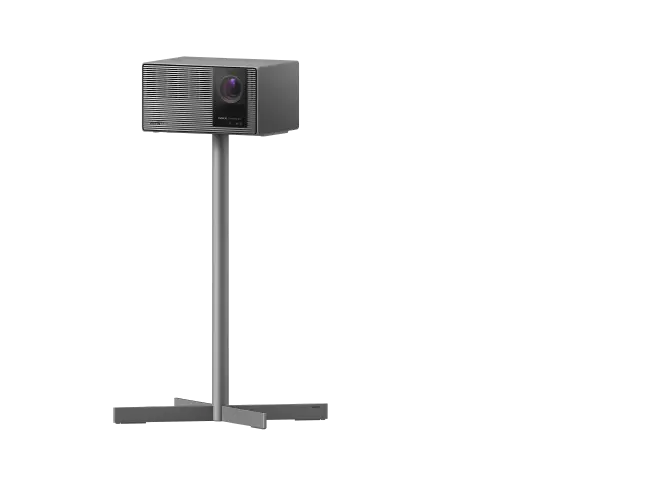
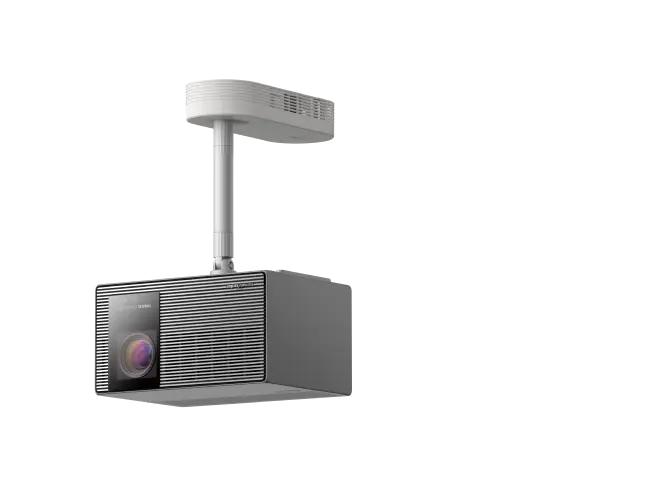
Use the projector's auto-focus or manual focus ring while displaying a test grid pattern. Minimize keystone correction by physically aligning the projector perpendicular to the screen or wall. For permanent installs, consider a ceiling mount to achieve ideal positioning. Clean the lens regularly, as dust can contribute to perceived softness.
How to Focus a Projector: Follow the four-step process in this tutorial that covers both auto and manual methods plus common pitfalls.
Connectivity Drops and Intermittent Issues
Random drops during streaming or presentations usually indicate power management, overheating, or network instability. Disable any eco or power-saving modes on the projector and source. Ensure adequate ventilation—projectors in enclosed spaces overheat and throttle performance.
For wireless setups, check your router firmware and consider a mesh network for better coverage. Firmware updates often address stability; review release notes carefully before installing. If drops happen only with specific content, the issue may be bandwidth-related rather than a projector defect.
Quick Reference Triage Chart
Projector Troubleshooting: Most Likely Cause and First Fix
Use this as a quick triage guide, not a statistical ranking. Higher bars indicate more likely issue frequency in common home-use troubleshooting scenarios.
View chart data
| Category | Relative likelihood | First fix priority |
|---|---|---|
| No signal / HDMI not working | 40.0 | 5.0 |
| HDCP error | 35.0 | 5.0 |
| Screen mirroring lag | 30.0 | 4.0 |
| Blurry edges / focus issue | 20.0 | 4.0 |
| Connectivity drops | 15.0 | 3.0 |
Illustrative heuristic ranking based on common user-reported projector problems in first-time setup, movie night, presentations, and gaming. Values are not official statistics; they reflect bounded modeling to help readers prioritize likely causes and first fixes while avoiding misdiagnosis of projector vs cable vs source device.
This illustrative chart shows relative likelihood and triage priority for common issues based on typical user scenarios. Treat it as a practical starting point only.
Scenario-Based Fixes: When the Best Approach Changes
The optimal troubleshooting steps depend on your use case:
- First-time setup (wired): Prioritize cable quality, input selection, and resolution matching before firmware updates.
- Ongoing use that suddenly fails: Check for recent source device updates or cable wear first.
- Gaming: Enable Game Mode, use wired HDMI, and focus on refresh rate rather than image tuning.
- Movie night/streaming: Address HDCP and protected content paths; test non-protected sources to isolate the issue.
- Wireless/presentations: Optimize network, reduce distance, and avoid high-resolution mirroring.
When upgrading from older projectors, pay special attention to HDCP compatibility with new source devices and consider certified cables.
When to Seek Further Help or Consider Replacement
If the same symptoms persist after trying multiple known-good cables, different sources, firmware updates, and proper placement, the projector may need professional service. Contact support with detailed notes on what you've already tested—this speeds up diagnosis.
Important Note on Comfort and Use: This article provides setup and troubleshooting advice only. It is not medical advice. If you experience eye strain, headaches, or other discomfort while using a projector, consult a qualified eye care professional. Projector brightness, viewing distance, and ambient light all influence viewing comfort.
For more on projector setup, explore our Projector Setup and Installation Options or browse 4K projectors for models with improved connectivity features.
Related Resources
- How to Improve Latency on Projector
- Why Is My Projector Sharp in the Center But Blurry at the Edges?
- HORIZON Ultra for reliable 4K performance
- Portable Projectors collection


