



One Number That Decides Whether Your Projector Fits Your Room
Throw ratio = throw distance ÷ screen width. That's the entire formula. A projector with a 1.20:1 throw ratio placed 240 cm from the wall produces a screen 200 cm wide. Move it to 120 cm and the image shrinks to 100 cm wide. The ratio stays constant; only the distance and resulting image size change together — the fundamental relationship used in projector setup calculations.
The reason this single number matters so much: buying a projector without checking throw ratio against your actual room depth is the most common — and most avoidable — setup mistake first-time buyers make. You can't fix a mismatch with software after the fact. For more on this topic, see why custom mounting points matter for high-end.
Evidence: A 100-inch diagonal 16:9 screen has a width of approximately 221 cm (87.2 in). At a 1.20:1 throw ratio, the required throw distance = 1.20 × 221 cm ≈ 265 cm (~8.7 ft). At a 0.177:1 ratio (XGIMI AURA 2), the same 100-inch image requires just 0.177 × 221 cm ≈ 39 cm — and the official AURA 2 spec confirms 100 inches from 17.8 cm (measured from cabinet edge).
This guide is written for first-time projector buyers, apartment renters with limited room depth, and anyone comparing a standard-throw model like the HORIZON 20 series against an ultra short throw option like the AURA 2. If you already understand throw ratio math and are looking for ISF calibration or multi-projector lens-shift charts, this isn't the right starting point. For more on this topic, see The Case for Laser TVs: Why Ultra-Short Throw is Beating 98-Inch Pa....

The Three Throw Categories and What They Mean in a Real Room
The projector industry broadly divides throw into three practical categories. Understanding where each sits helps you eliminate options before you ever open a spec sheet.
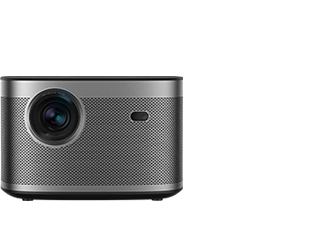
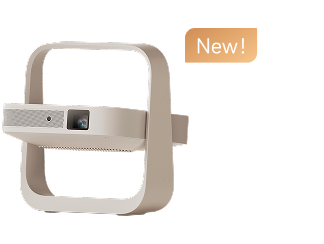
Standard throw covers ratios roughly from 1.20:1 up to around 2.0:1. For a 100-inch 16:9 image, you're looking at a minimum of about 8.7 ft (265 cm) and potentially over 13 ft depending on the specific model's zoom range. This is the category that works in a dedicated home theater room, a spacious living room, or any space where the projector can sit on a shelf or table well back from the wall.
Short throw sits in the 0.4:1 to 1.0:1 range. A 0.6:1 projector, for example, needs roughly 133 cm (~4.4 ft) for a 100-inch image. This category is useful in medium-depth rooms but is notably absent from XGIMI's current lineup — worth knowing if you're specifically shopping for that middle ground.
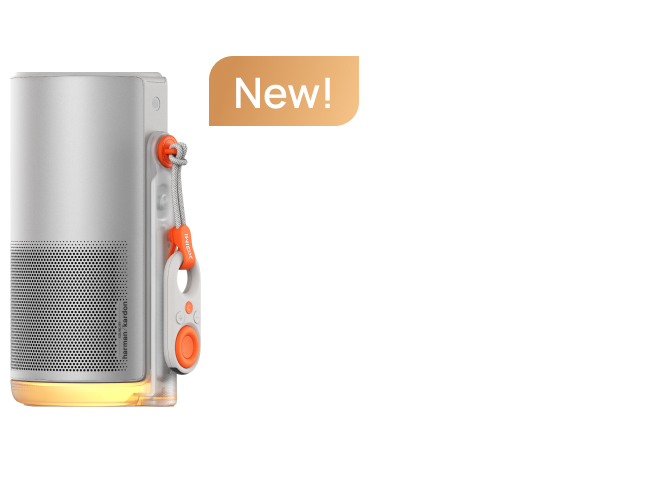
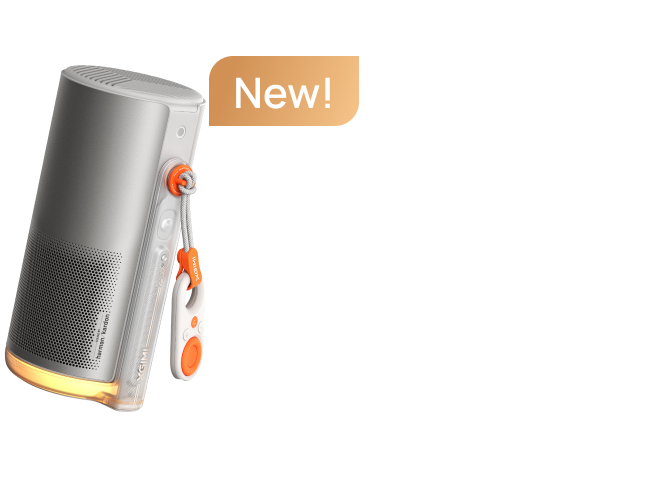
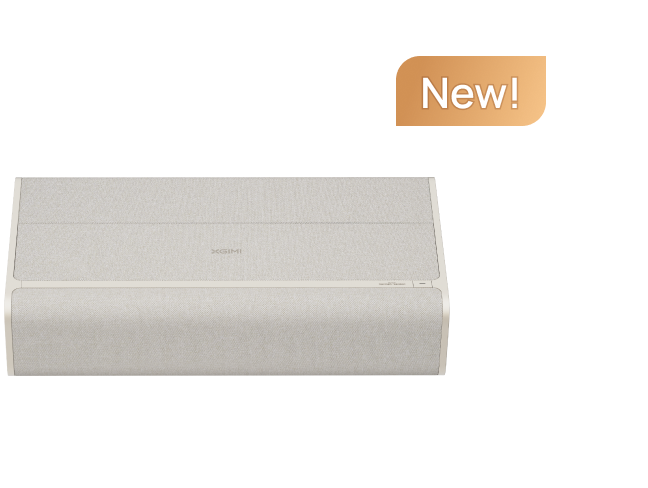
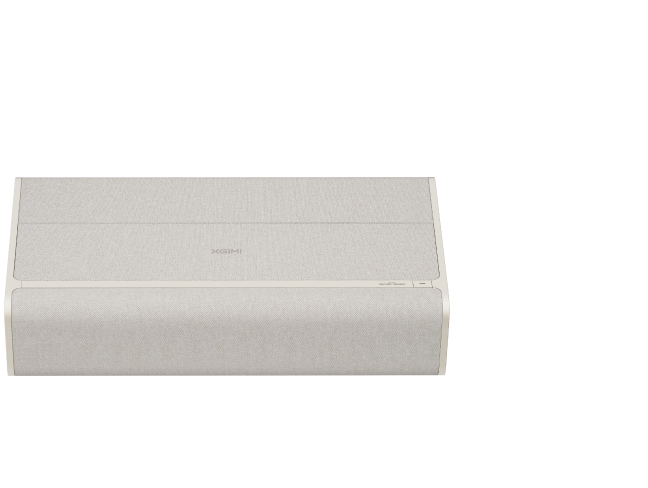
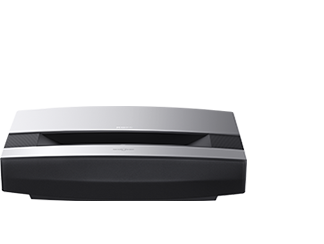
Ultra short throw (UST) operates at 0.4:1 or below, with the most extreme examples well under 0.25:1. The XGIMI AURA 2 sits at 0.177:1, and the original XGIMI AURA at 0.233:1. These projectors live on a TV stand or low cabinet directly below the screen — no long cable runs, no ceiling mount, no furniture rearrangement.
Logic Summary: These category boundaries are industry conventions, not regulatory standards. Individual manufacturers may market a 0.38:1 projector as "ultra short throw" while others call it "short throw." Always verify the actual ratio from the spec sheet and run the distance math yourself.

How to Do the Distance Math in 90 Seconds
The calculation has two steps:
- Find your screen's width from its diagonal. For a 16:9 screen: width = diagonal × 0.872. A 100-inch screen → width ≈ 87.2 inches (221 cm). A 120-inch screen → width ≈ 104.6 inches (266 cm).
- Multiply width by the throw ratio. Minimum throw distance = ratio × width. For a zoom range (like the HORIZON 20 Max's 1.20:1–1.50:1), the minimum distance uses the lower ratio and the maximum usable distance uses the higher ratio.
Worked example — HORIZON 20 Max at 120 inches:
- Screen width: 120 × 0.872 = 104.6 in (266 cm)
- Minimum distance: 1.20 × 266 = 319 cm (~10.5 ft)
- Maximum distance: 1.50 × 266 = 399 cm (~13.1 ft)
Worked example — AURA 2 at 100 inches:
- Screen width: 100 × 0.872 = 87.2 in (221 cm)
- Required distance: 0.177 × 221 = 39 cm (~15.4 in)
One important caveat: the AURA 2's published 17.8 cm figure is measured from the cabinet edge, not the lens center. Real placement needs a few extra centimeters of clearance between the unit and the wall for ventilation and cable management. Always treat the spec as a minimum, not a target.
A community member on r/projectors captured a common stumbling block: "The throw distance calculator lets me enter a custom ratio of 1:1, but this gives very different distances than if I put in 4:3 and the correct width." The confusion here is mixing aspect ratio (4:3, 16:9) with throw ratio — they are completely different numbers. Throw ratio uses screen width only, not diagonal, not height.
Which XGIMI Model Belongs to Which Throw Category
| Model | Throw Type | Throw Ratio | 100-in Image Distance (approx.) | Zoom |
|---|---|---|---|---|
| AURA 2 | Ultra Short Throw | 0.177:1 | ~17.8 cm (cabinet edge) | Fixed |
| AURA (Original) | Ultra Short Throw | 0.233:1 | ~51 cm | Fixed |
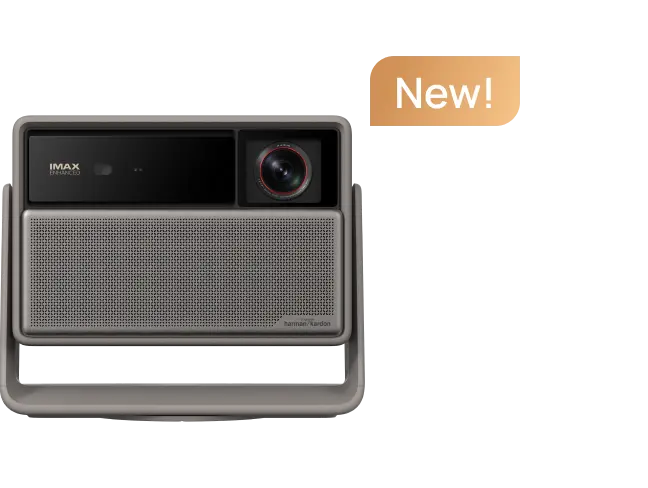
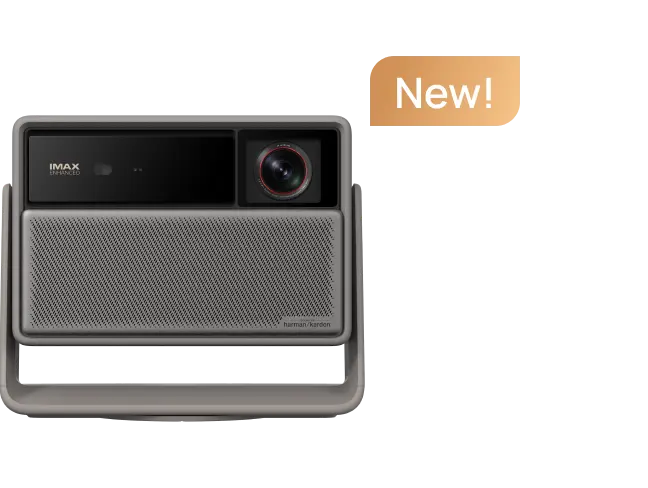
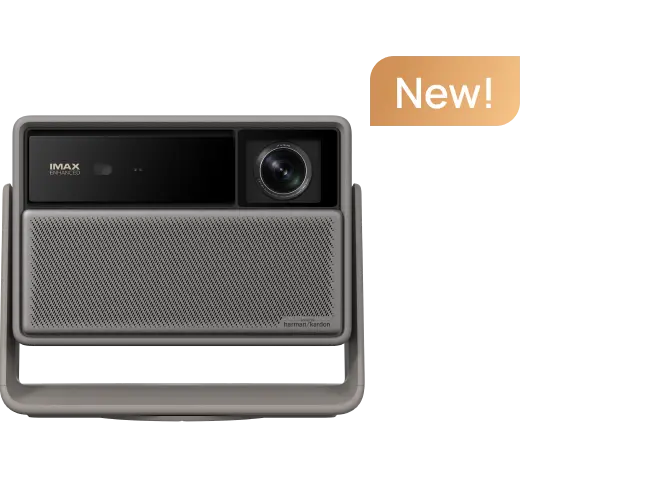
| HORIZON 20 Max | Standard Throw | 1.20:1–1.50:1 | 265–332 cm | 1.25× optical |
| HORIZON 20 Pro | Standard Throw | 1.20:1–1.50:1 | 265–332 cm | Optical |
| HORIZON 20 | Standard Throw | 1.20:1–1.50:1 | 265–332 cm | 1.2× optical |
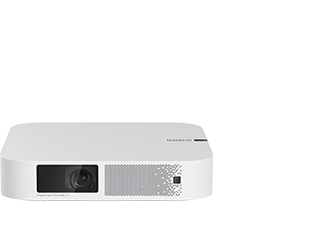
| HORIZON S Max | Standard Throw | 1.20:1 (fixed) | ~265 cm | Digital only |
| HORIZON S Pro | Standard Throw | 1.20:1 (fixed) | ~265 cm | Digital only |
Evidence: HORIZON 20 Max throw ratio range 1.20:1–1.50:1 confirmed at us.xgimi.com/products/horizon-20-max. AURA 2 throw ratio 0.177:1 and 100-inch distance of 17.8 cm confirmed at us.xgimi.com/products/aura-2. AURA original 0.233:1 with 80-inch image at 4.3 in and 150-inch at 17.3 in confirmed at us.xgimi.com/products/aura.
One distinction worth flagging: the HORIZON S Max and S Pro have digital zoom only at a fixed 1.20:1 ratio, while the HORIZON 20 series has optical zoom giving a genuine 1.20:1–1.50:1 range. This matters because optical zoom lets you fine-tune the image size without any resolution penalty, whereas digital zoom crops the sensor and can reduce effective resolution slightly — consistent with XGIMI's own guidance that notes digital correction "can reduce effective resolution slightly."
Also note: the HORIZON 20 Max's autofocus calibration requires a minimum distance of 1.8–2.1 m to function correctly. Placing it closer than that may result in autofocus errors even if the throw ratio math technically allows a smaller image at that distance.
The Hidden Constraint: Why UST Projectors Can't Just Use Any Wall
This is where most buyers get surprised — and where the community has learned hard lessons.
As one r/projectors user put it: "SOLVED: There is nothing wrong with the projector, your wall is not perfectly flat and UST projectors accentuate any deviation in flatness." Another commenter in a separate thread was more direct: "Never use a UST with a wall, full stop. They need an ALR screen specific for the UST format."
The physics behind this is straightforward. UST projectors shoot light upward at an extremely shallow angle relative to the screen surface — essentially skimming the surface rather than projecting perpendicularly to it. Any bump, ripple, or unevenness in the wall acts as a ramp that deflects that angled light beam, producing a wavy, funhouse-mirror distortion in the image. A standard throw projector hitting the same wall at a near-perpendicular angle would barely notice the same imperfection.
XGIMI's guidance on UST projectors confirms this directly: "UST projectors shoot light upward at a sharp angle… You need a flat, rigid screen." And for standard throw on a smooth white wall in a dark room: that can work acceptably. For UST on any wall: it will not.
The solution is a UST-specific ALR (Ambient Light Rejecting) screen — a flat, rigid panel with optical layers engineered to reflect the angled light from below while rejecting off-axis ambient light from ceiling fixtures and windows. The XGIMI 100" UST ALR Screen is rated at 80% ambient light rejection and 1.4× brightness gain, and requires wall mounting to a surface capable of supporting at least 30 kg.
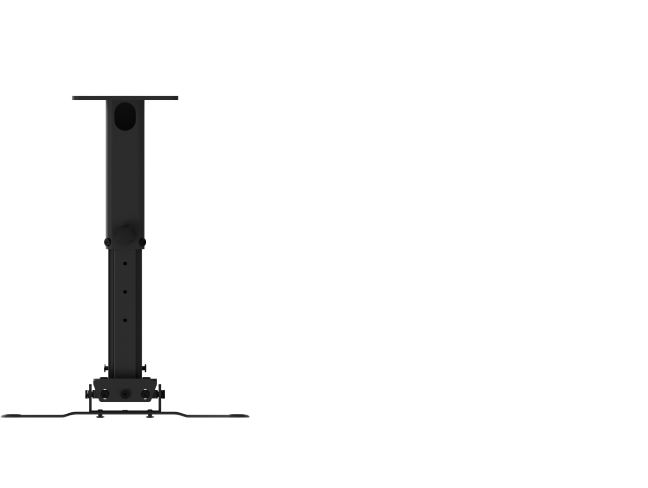
There's an additional constraint that catches some buyers off guard: you cannot ceiling-mount a UST projector and use an ALR screen together. The ALR screen's optical rejection pattern is calibrated for light coming from below. Flip the geometry by ceiling-mounting the projector and the ALR coating actively works against you. Projector ceiling mount guides state: "The objective of the ALR screen is defeated if the model is mounted on the ceiling, hence the ALR will not function." The AURA 2 is also specifically noted as not suitable for ceiling mounting due to its projection angle and cooling system being optimized for tabletop use.
Matching Your Room Depth to the Right Throw Type
Walk through this decision in order:
Step 1 — Measure your available throw distance. This is the distance from where the projector will sit (table, shelf, or cabinet) to the wall or screen. Be honest about furniture placement and traffic paths.
Step 2 — Decide your target screen size. Calculate the required screen width (diagonal × 0.872 for 16:9).
Step 3 — Divide throw distance by screen width. The result is the throw ratio you need. If it's below 0.25, you're in UST territory. If it's 1.2 or above, standard throw works. If it falls between 0.4 and 1.0, you need a short throw model — and should note that XGIMI's current lineup doesn't cover that range.
Step 4 — Check your surface. If you landed in UST territory, a wall is not an option. Budget for a flat, rigid ALR screen as part of the total system cost.
Logic Summary: This four-step framework assumes a single projector on a flat surface projecting straight ahead. It does not account for ceiling mounts, angled side-projection, or multi-projector blending. For those scenarios, consult the specific model's lens-shift and keystone specs rather than throw ratio alone.
For apartment renters specifically: the combination of limited room depth and a landlord who won't allow wall drilling creates a scenario where the AURA 2 on a TV stand with a freestanding or wall-hung ALR screen is often the only path to a large image. The HORIZON 20 series, by contrast, needs at least ~8.7 ft of clear depth for a 100-inch image and typically works best in rooms where the projector can sit on a dedicated shelf or table well behind the seating area.
Keystone Correction: A Useful Safety Net, Not a Substitute for Correct Placement
XGIMI's ISA 5.0 system handles auto keystone correction up to ±40° vertical and ±30° horizontal. Beyond those angles, physical repositioning is required — software cannot compensate. More importantly, digital keystone correction reduces effective resolution slightly, even when the degradation is subtle. The practical guidance: use throw ratio math to get placement right first, then let ISA handle minor fine-tuning. Don't rely on heavy keystone correction as a workaround for a projector that's fundamentally too close or too far for your room.
The AURA 2's continuous auto keystone requires the unit's tilt angle to stay within ±9°. Beyond that, the system may fail and require manual 8-point correction. On an uneven floor or an angled cabinet, this limit is easier to exceed than it sounds.
If your room forces off-center placement, check whether your projector offers optical lens shift before relying on digital keystone. Lens shift physically moves the image without processing the signal, so it adds zero input lag and zero resolution loss — unlike digital keystone correction. Standard throw models like the HORIZON S Max offer vertical lens shift, which allows ceiling-mount positioning above or below the screen center line without keystoning. UST models are typically positioned below the screen by design and do not require vertical shift, but any horizontal offset still benefits from lens shift where available.
Choosing Your Path: A Quick Decision Framework
If your available throw distance is under 50 cm and you want a 90–150-inch image, the XGIMI AURA 2 is the only XGIMI option — and you'll need to budget for a flat, rigid UST ALR screen alongside it. Factor in wall-mounting requirements (minimum 30 kg load capacity) and ensure the screen placement allows the AURA 2 to sit on a surface directly below it.
If your throw distance is roughly 1.5–4 m (5–13 ft), the HORIZON 20 series covers that range with optical zoom flexibility. The Max's 1.25× optical zoom gives you a genuine adjustment range without resolution penalty; the base HORIZON 20 offers 1.2× optical zoom at a lower price point.
For deeper dives into specific scenarios — including how ambient light affects screen choice and whether a gray or ALR screen makes sense for your room — XGIMI's various buying guides cover those trade-offs in detail.
One final note on brightness figures: ISO Lumens ratings (like the AURA 2's 2300 ISO Lumens or the HORIZON 20 Max's 5700 ISO Lumens) are measured under standardized test conditions. Perceived brightness in a real room with ambient light, a specific screen gain, and a specific viewing distance will differ. Treat lumen specs as relative comparisons between models, not absolute predictions of real-world performance.


