




Under 30 dB Is the Bedroom Threshold — Here's What That Actually Means
For most bedroom viewers, a projector operating at 30 dB or below crosses into the "quiet enough" zone. That number maps to roughly the ambient noise level of a quiet library — present, but not intrusive. Push past 35–40 dB and you're approaching refrigerator-hum territory, which becomes noticeable the moment a film cuts to a quiet dialogue scene or a tense, near-silent moment.
The World Health Organization's Environmental Noise Guidelines recommend keeping nighttime indoor noise below 40 dB(A) to avoid sleep disturbance. A bedroom projector running at 32–35 dB sits comfortably inside that window during active viewing, but it's worth understanding that the WHO figure is an outdoor guideline — inside a quiet bedroom at 11 PM, your ears are calibrated to an ambient floor of 20–25 dB, so even a 30 dB fan is perceptible.
The practical decibel ladder for bedroom context:
| Sound Reference | Approximate dB | Bedroom Relevance |
|---|---|---|
| Whisper at 1 m | ~20 dB | Near-silent baseline |
| Quiet library | ~30 dB | Upper limit for comfortable viewing |
| Refrigerator hum | ~40 dB | Noticeable, mildly distracting |
| Normal conversation | ~55–65 dB | Clearly audible, disruptive |
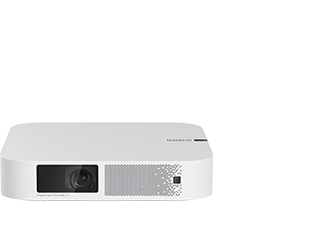
| XGIMI Elfin Flip | 28 dB | Below library threshold |
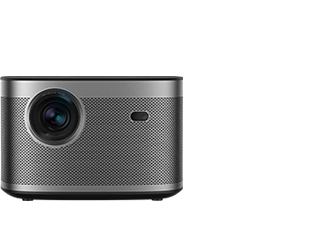
| XGIMI Halo+ | 30 dB | At library threshold |
| XGIMI AURA 2 | 32 dB | Slightly above — still acceptable |
Logic Summary: These dB reference points are drawn from widely cited psychoacoustic benchmarks. The CDC's noise-level reference chart and WHO guidelines use similar anchor points. Projector noise ratings are manufacturer-measured under controlled lab conditions (typically at 1 m distance, in a quiet room). Your bedroom experience may differ based on room acoustics, projector placement, and individual hearing sensitivity.

The Number on the Spec Sheet Is Only Half the Story
Here's what most buying guides skip: decibel level and noise character are two separate things, and the community has learned this the hard way.
One Reddit user testing projectors for bedroom use put it plainly:
"Even if not loud (about 30dB tested with a sound meter), there's a constant high-pitched coil whine that's quite jarring in a quiet bedroom. The spec sheet says 30dB, but the type of noise matters more than the decibel level — a whine at 30dB is much more annoying than fan noise at 30dB."
Another user echoed this when advising on small-room setups:
"Heat and fan noise can be a real issue when the projector is sitting right next to you in a small bedroom. Check the decibel ratings for the 'Eco' modes before you pull the trigger — what manufacturers claim as 'quiet' often doesn't match real-world experience in a silent bedroom."
The psychoacoustic principle behind this is well-established: a 3 dB increase is the smallest difference most listeners can reliably detect, while a 10 dB increase is perceived as roughly twice as loud. But frequency matters independently of level. High-pitched tones (coil whine, high-RPM fans) are more cognitively intrusive than broadband low-frequency airflow at the same measured dB — your auditory system is wired to pay attention to tonal sounds in quiet environments.
What this means practically: a projector with a smooth, low-frequency airflow at 30 dB will feel less distracting than one with a 28 dB high-pitched fan. When evaluating any model, look for community reviews that describe the quality of the fan sound, not just the spec sheet number.

Why Brightness and Fan Noise Are Locked in a Trade-Off
Projector cooling systems exist for one reason: to protect the light engine from heat. Higher brightness = more heat = faster fans = more noise. This relationship is physical, not a design choice.
LED and laser light sources run cooler than traditional lamp projectors, which is why modern compact projectors can achieve 28–32 dB ratings that lamp-based units from a decade ago couldn't approach. But even within LED/laser designs, there's a ceiling. A projector rated at 400–700 ISO lumens (like the Elfin Flip or Halo+) can spin its fans slowly and quietly. A 2,300+ lumen model (like the AURA 2) needs more aggressive cooling, which is why its noise floor sits 4 dB higher. For more on this topic, see Are Projectors Better for Your Eyes? Science-Based Answer.
The performance data tells this story clearly. In low-noise operation at the 28–30 dB threshold, there's an estimated –8% thermal headroom compared to running the same projector at full brightness with faster fans — meaning the projector operates at a slightly higher internal temperature delta (~+5°C). For sustained viewing sessions, this is within normal operating range for quality LED light engines. The trade-off only becomes relevant if you're pushing maximum brightness in a warm room for extended periods.
Rule of thumb: If you need more than ~700 ISO lumens for your bedroom (e.g., you watch with some ambient light), expect fan noise to climb above 30 dB. If you're watching in a darkened bedroom, 400–700 lumens is sufficient and keeps noise in the 28–30 dB range.
How XGIMI's Bedroom-Oriented Models Stack Up on Noise
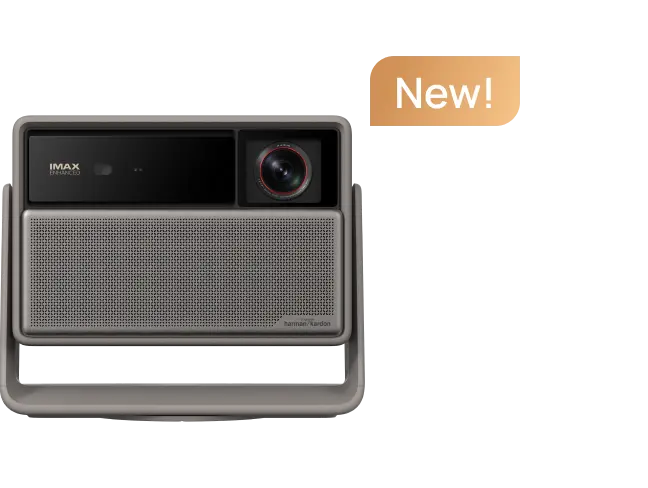
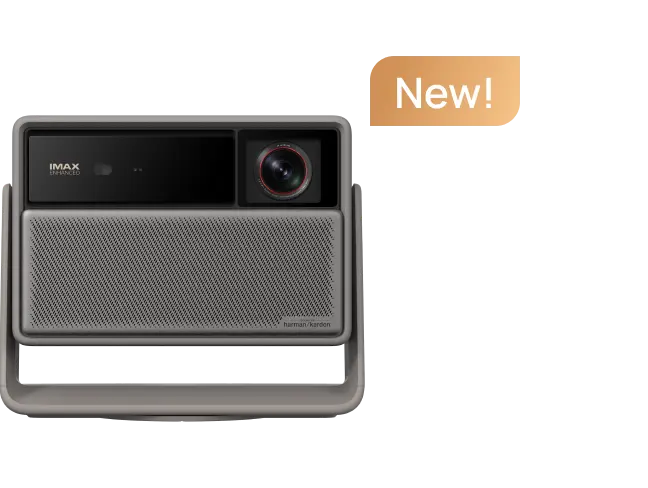
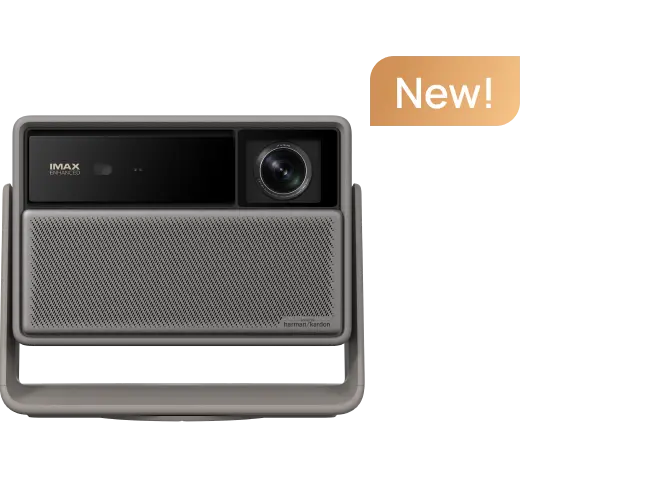
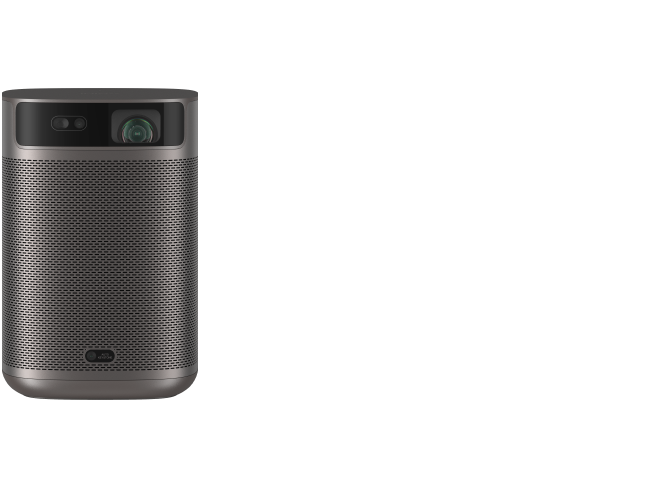
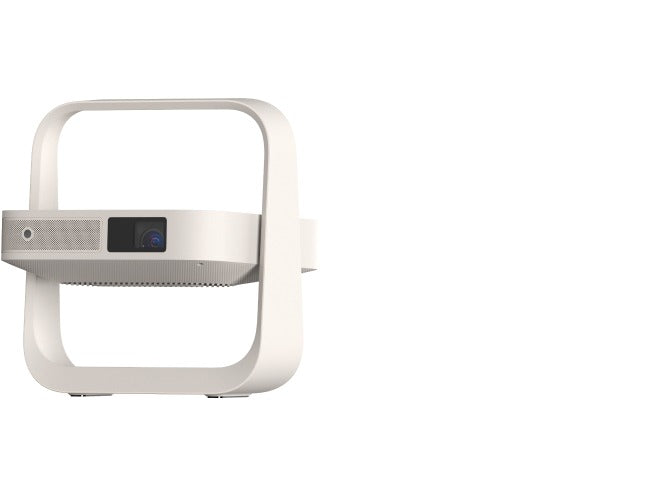
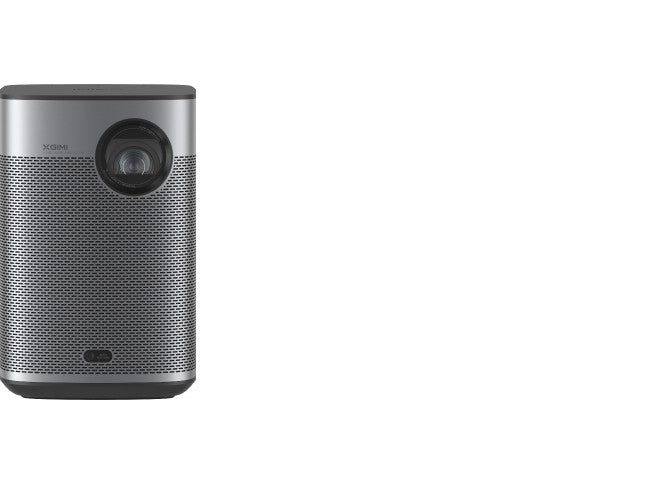
The three XGIMI models with confirmed noise ratings relevant to bedroom use are the Elfin Flip (28 dB), the Halo+ (30 dB), and the AURA 2 (32 dB). Each occupies a different position on the noise-performance spectrum.
Elfin Flip — 28 dB, 400 ISO Lumens
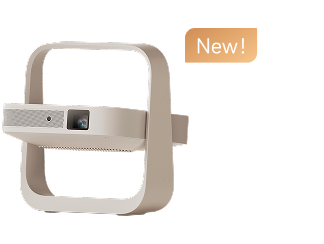
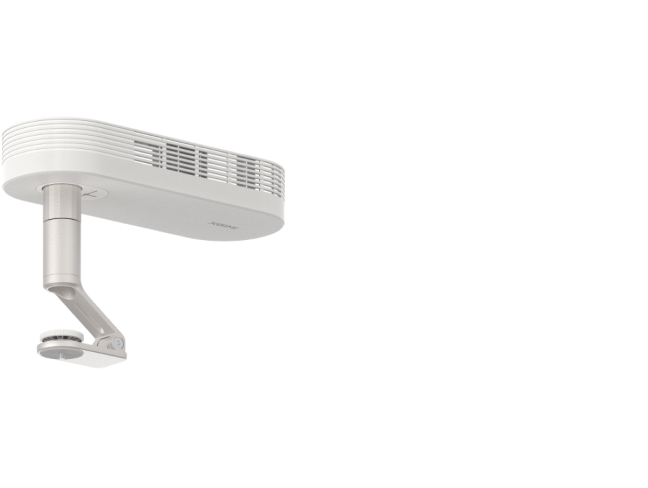
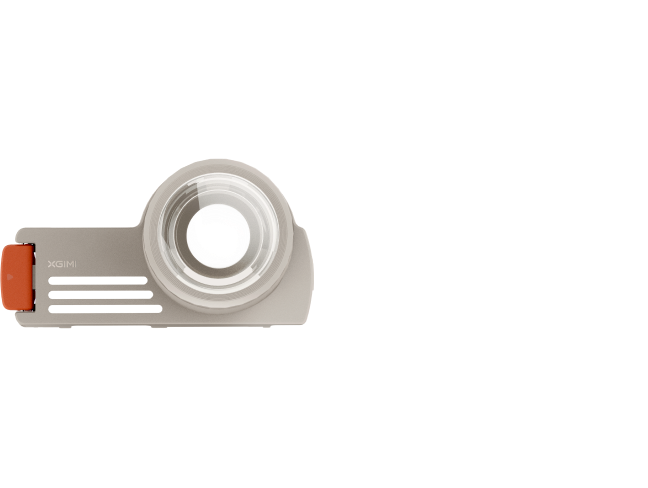
The quietest confirmed rating in the lineup. At 28 dB, it sits below the library threshold and is effectively inaudible over most film soundtracks. The trade-off is brightness: 400 ISO lumens means this projector is optimized for darkened bedrooms. The built-in 150° adjustable stand makes ceiling projection straightforward — a useful feature for bedroom use where projecting onto the ceiling while lying in bed is a common setup. The XGIMI bedroom projector setup guide specifically recommends this kind of flexible positioning for small spaces. For more on this topic, see How to Choose a Projector for Your Space: Room-by-Room Guide.
Halo+ — 30 dB, 700 ISO Lumens
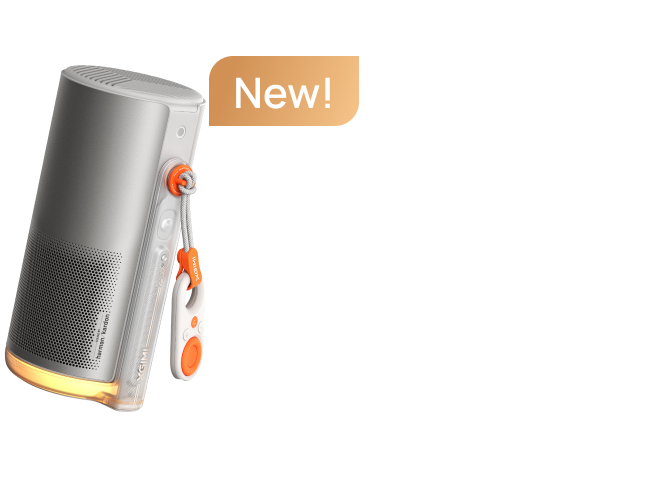
The Halo+ hits the library-equivalent threshold while delivering 75% more brightness than the Elfin Flip. Its built-in 59.45 Wh battery adds genuine portability — move it between rooms or take it outdoors without hunting for an outlet. At 30 dB, the fan is present but sits at the boundary where most viewers stop consciously noticing it, especially once audio from the film begins. This makes it the most versatile option for bedroom users who occasionally watch with a lamp on or want the flexibility of battery operation.
AURA 2 — 32 dB, 2,300 ISO Lumens
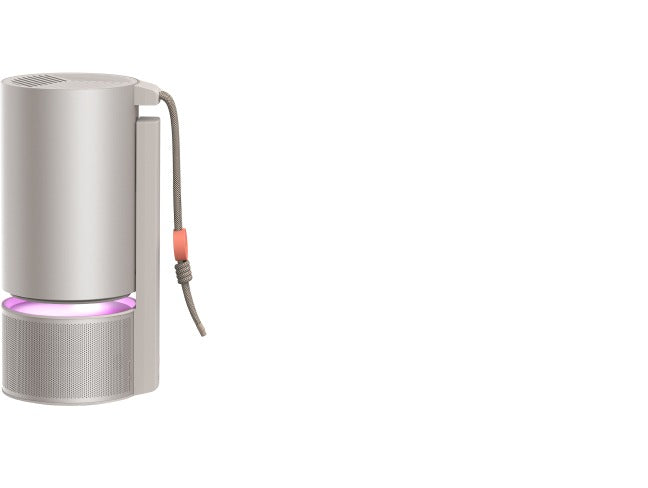
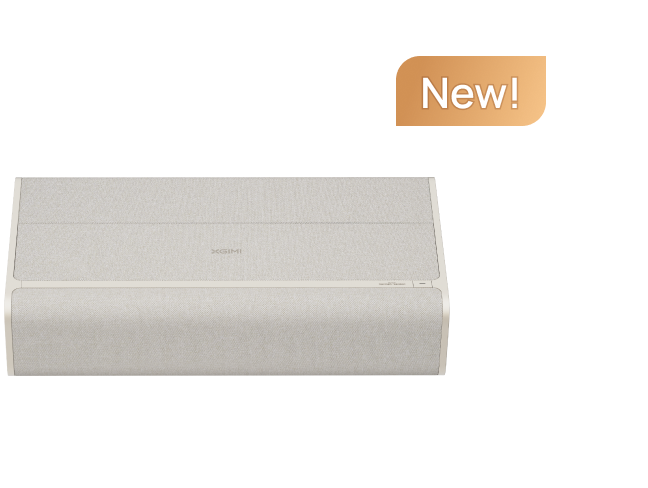
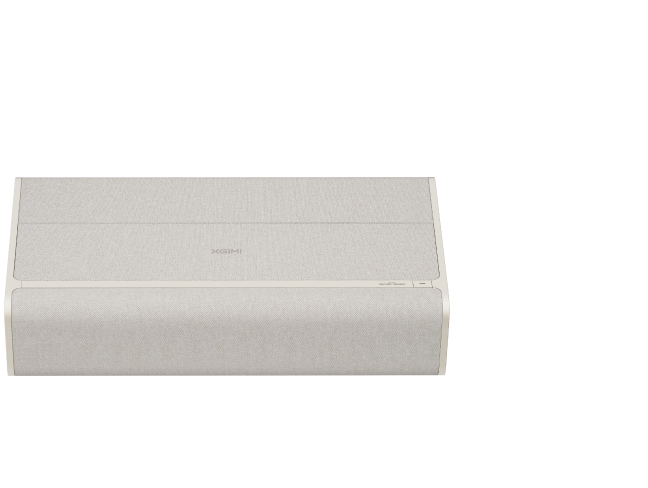
The AURA 2 is an ultra-short-throw model designed as a TV replacement, not a bedroom portable. Its 32 dB rating is still within acceptable range for bedroom use, but its design intent — sitting close to a wall, projecting a 90–150 inch image — makes it less suited to the typical bedroom setup where the projector is placed on a nightstand or shelf. The 2 dB difference over the Halo+ is at the edge of perceptibility (recall: 3 dB is the just-noticeable threshold), so in practice it's not dramatically louder. But its size, weight (9 kg), and UST-specific placement requirements make it the wrong tool for most bedroom scenarios.
Eco Mode: Does Reducing Fan Speed Actually Help?
Most projectors offer an eco or low-brightness mode that reduces the light engine output and, consequently, fan speed. The theory is sound — less heat, slower fans, less noise. In practice, the community's experience is mixed.
One reviewer noted on r/projectors:
"I found the eco modes far too loud. Again, my use case is often to use it in a bedroom setting where quiet operation is important, and the fan noise was distracting during quiet movie scenes."
This reflects a real limitation: eco mode on a projector designed for 1,500+ lumens may still run fans faster than a projector natively designed for 400–700 lumens. A projector built from the ground up for quiet, low-brightness operation (like the Elfin Flip) will generally outperform a high-brightness projector in its eco mode on both noise and thermal efficiency.
The practical takeaway: don't buy a high-brightness projector and rely on eco mode to make it bedroom-quiet. Choose a model whose native operating range matches your bedroom brightness needs.
Placement Distance Changes Everything
Manufacturer dB ratings are measured at 1 meter from the unit. In a bedroom, your projector might be 0.5–1.5 meters from your head depending on setup. The inverse-square law for sound means that halving the distance roughly doubles the perceived sound intensity — approximately a 6 dB increase.
A projector rated at 30 dB at 1 meter, placed 0.5 meters from your head on a nightstand, will measure closer to 36 dB at your ears. That's still below the refrigerator-hum threshold, but it's meaningfully louder than the spec suggests.
Practical mitigation options:
- Place the projector at the foot of the bed rather than beside it — even 1.5–2 meters of additional distance drops perceived noise by 3–6 dB.
- Use ceiling projection with a gimbal-equipped model, which positions the projector above and behind the viewing angle, reducing direct noise exposure.
- Point the exhaust vent away from the viewer — most projectors exhaust hot air from one side; orienting this away from the bed reduces perceived noise even if measured dB is unchanged.
Evidence: XGIMI's bedroom projector setup guide recommends using a built-in gimbal to project onto the ceiling — this naturally increases the distance between projector and viewer, which has the secondary benefit of reducing perceived fan noise.

Who Should Prioritize Noise Ratings (and Who Shouldn't)
This guide is written for casual streamers and apartment renters watching in bedrooms or small quiet spaces — people who are close to the projector, in a low-ambient-noise environment, watching content with dynamic audio (including quiet scenes). For this group, fan noise is a legitimate first-order concern.
It's less relevant if you're setting up in a dedicated home theater room with a sound system running at moderate volume — at 65–75 dB playback, a 30–32 dB fan is completely masked. Similarly, if you're projecting outdoors where ambient noise (wind, insects, distant traffic) floors at 40–50 dB, fan noise becomes irrelevant.
If you're a console gamer using the projector primarily for gaming sessions with headphones or a soundbar, fan noise tolerance is higher because audio feedback from the game masks the fan. The XGIMI first projector buying guide covers these different use cases in more depth.
The Quiet Bedroom Projector Decision Framework
Before choosing based on noise spec alone, work through these three questions:
1. How dark is your bedroom during viewing?
If you close blackout curtains and turn off all lights, 400–700 lumens is sufficient and keeps you in the 28–30 dB range. If you watch with a bedside lamp on, you'll need 700+ lumens — accept slightly higher fan noise or use an ALR screen to compensate.
2. How close will the projector be to your head?
Under 1 meter: prioritize the quietest model available (Elfin Flip at 28 dB). 1–2 meters: the Halo+ at 30 dB is comfortable. Over 2 meters: the 2 dB difference between models becomes imperceptible.
3. Are you sensitive to tonal noise or just volume?
If you've noticed coil whine or high-pitched fan noise bothering you in other electronics, read community reviews specifically for noise character, not just the dB spec. A smooth 30 dB airflow is preferable to a 28 dB whine.
Logic Summary: This framework is a decision heuristic, not a guarantee. Individual hearing sensitivity varies significantly. Official noise ratings are measured under controlled conditions; real-world bedroom acoustics (hard floors, bare walls, low ambient noise) can make fans sound louder than specs suggest. When in doubt, the lower the native brightness rating, the lower the fan noise — this relationship holds across the XGIMI lineup.


