


Can You Project a UST Image Directly Onto a Wall?
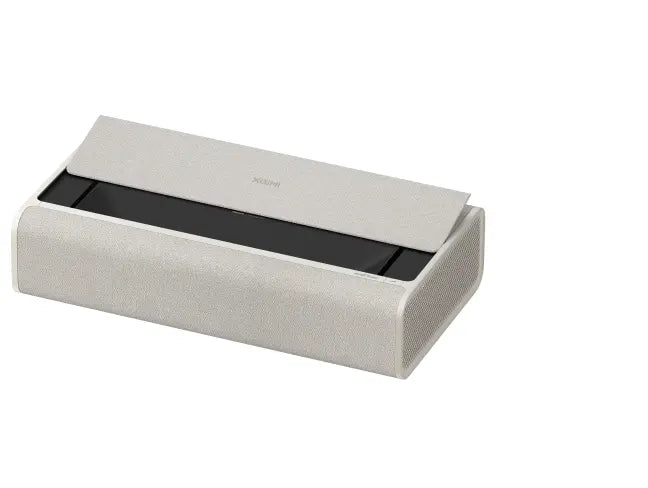
The short answer is yes: you can use an ultra-short throw (UST) projector on a regular wall. However, the real-world experience depends heavily on your wall's texture, the room's ambient light, and your personal tolerance for image distortion. While many users start with a bare wall to save on the initial cost of an ambient light rejecting (ALR) screen, most eventually find that a wall introduces visible compromises—such as "wavy" lines or washed-out colors—that an ALR screen is specifically engineered to fix. For more on this topic, see How to Choose a Projector for Your Space: Room-by-Room Guide. For more on this topic, see Projector Throw Ratio Explained: Standard vs. Short Throw vs. Ultra....

For casual viewing in a dark bedroom with a perfectly smooth, matte-painted wall, the results can be surprisingly good. But in a typical living room with windows and standard drywall, the steep angle of a UST projector often highlights every bump and imperfection. Understanding these trade-offs is the key to deciding whether you need to budget for a screen immediately or if you can get by with a "DIY" surface for now.
Why UST Projectors Are Uniquely Sensitive to Walls
Unlike traditional long-throw projectors that beam light nearly perpendicular to the screen, UST projectors sit just inches away and throw light upward at an extremely steep angle (often 30 to 45 degrees). This geometry is what makes them convenient for small spaces, but it also makes them "micro-sensitive" to surface flatness.
On a standard wall, even a 1mm deviation in the drywall or a heavy "orange peel" paint texture can cast tiny shadows or create a "wavy" effect at the top of the image. While a long-throw projector might hide these flaws, a UST projector amplifies them. Furthermore, standard white paint is designed to scatter light in all directions (diffuse reflection), which means it also catches light from your windows and lamps, significantly reducing the contrast of your projected image.
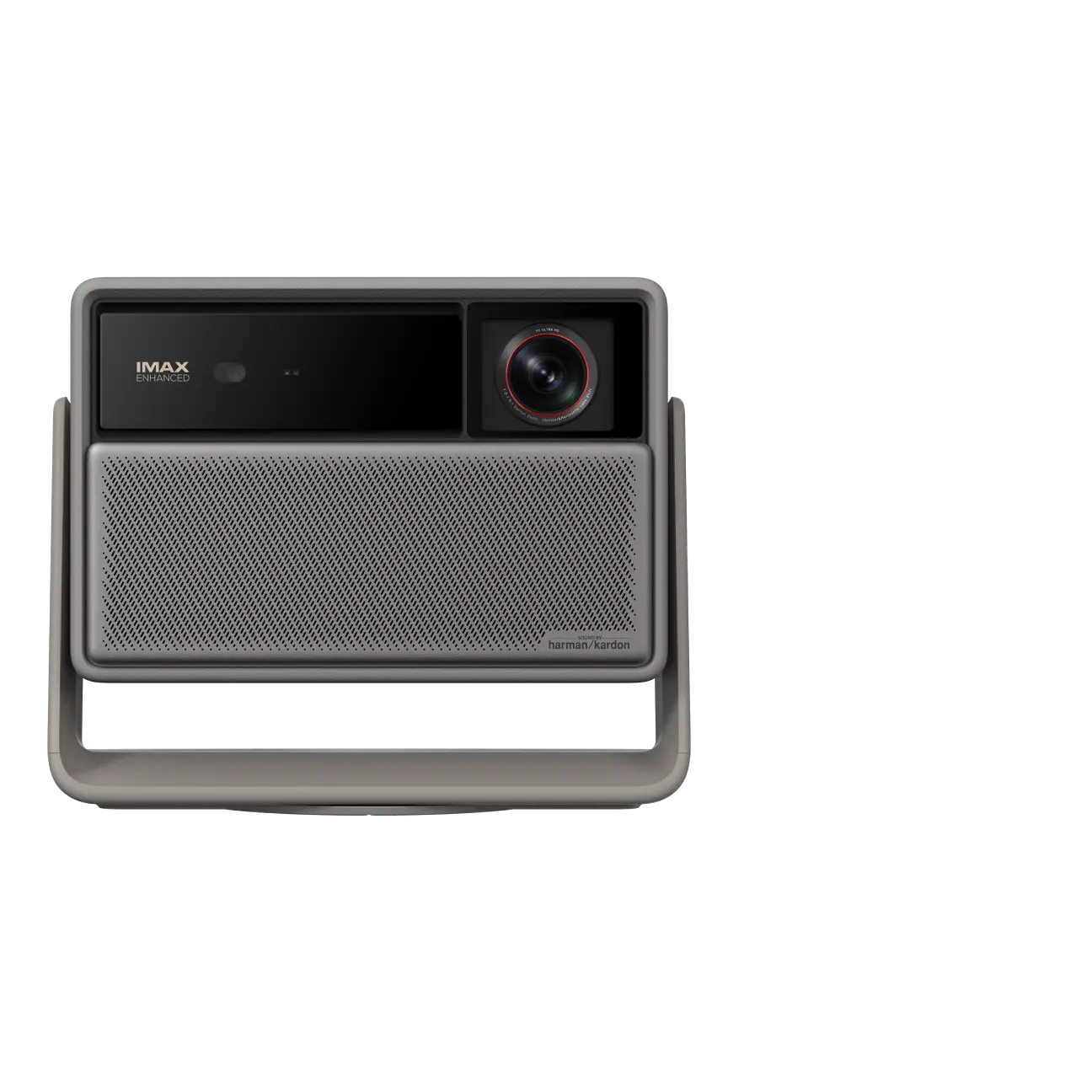
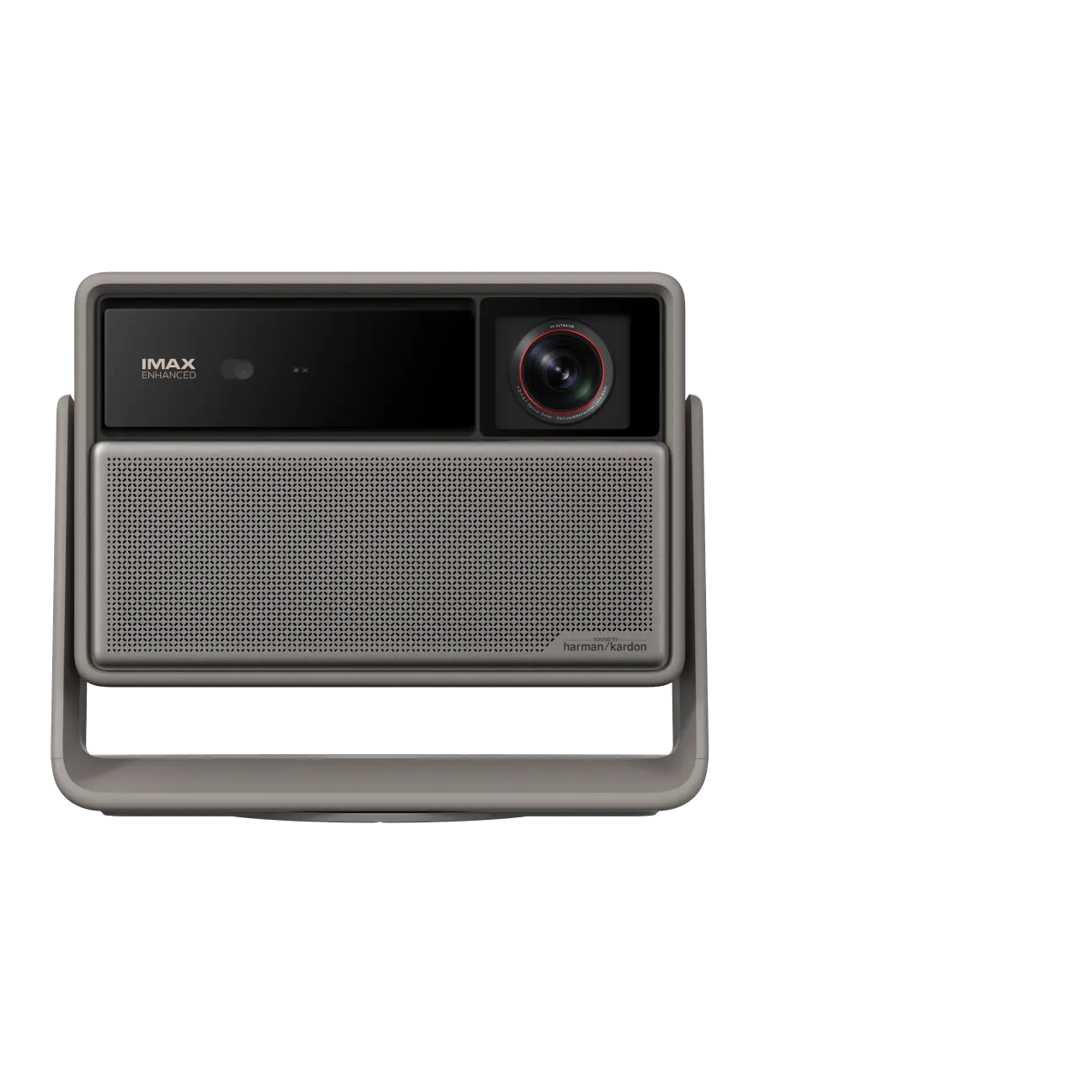
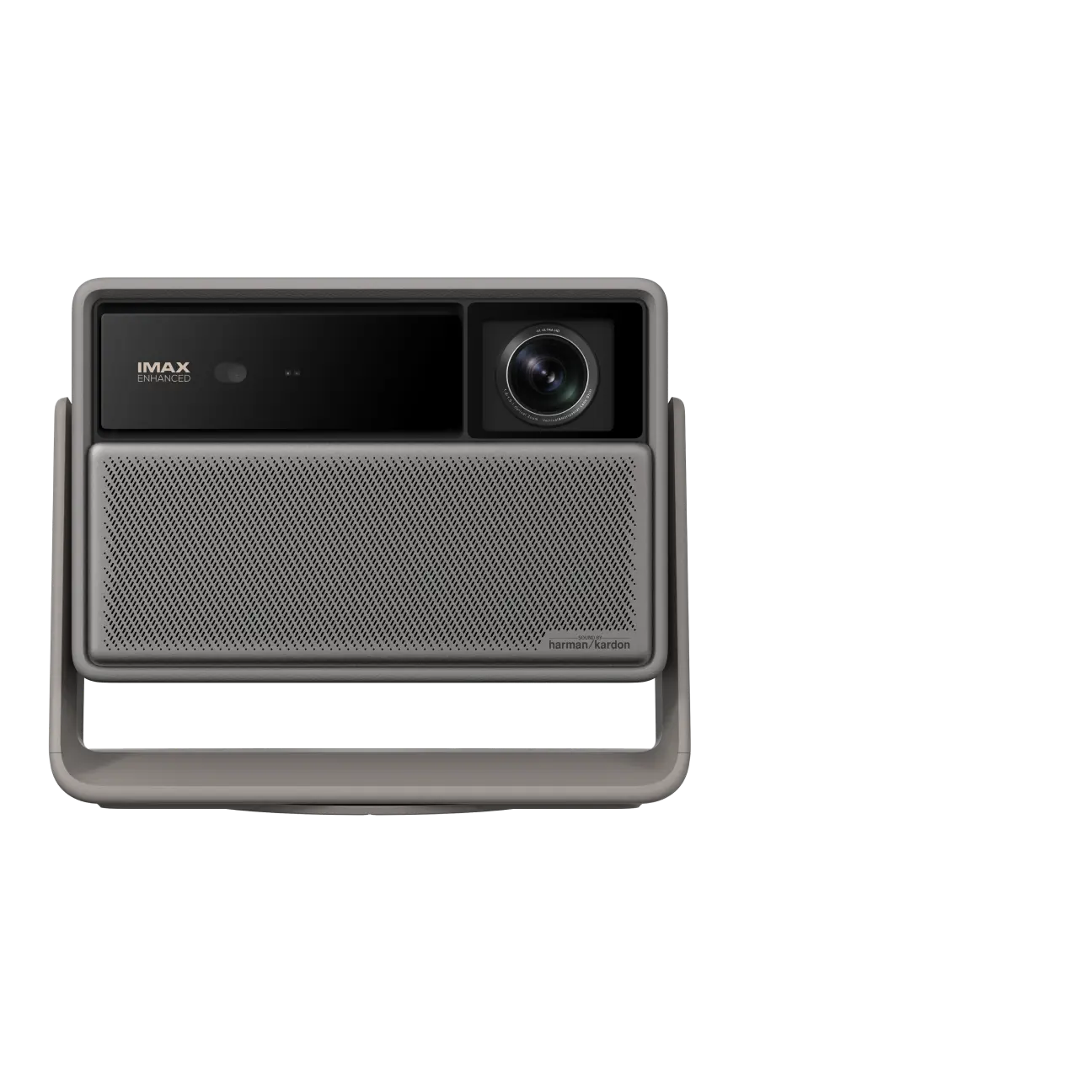
If you are using a high-performance model like the XGIMI AURA, the high brightness and 4K resolution will make these wall imperfections even more apparent compared to a lower-resolution unit.
The Benefits of Starting with a Bare Wall
For many, the "wall-first" approach is a practical choice rather than a permanent one.
- Cost Savings: High-quality UST-specific ALR screens can cost between $600 and $2,000. Skipping this initially allows you to put more of your budget into the projector itself.
- Zero Footprint: A bare wall maintains the "stealth" look of a living room. There is no large gray or black frame hanging on the wall when the projector is off.
- Flexibility in Image Size: Projecting on a wall allows you to zoom the image in or out to find your preferred viewing size (e.g., 100" vs. 120") before committing to a fixed-frame screen size.
- Rental Friendly: If you cannot drill holes for a heavy screen frame, a smooth white wall is your only viable option.
The Visual Trade-offs: What You Lose Without a Screen
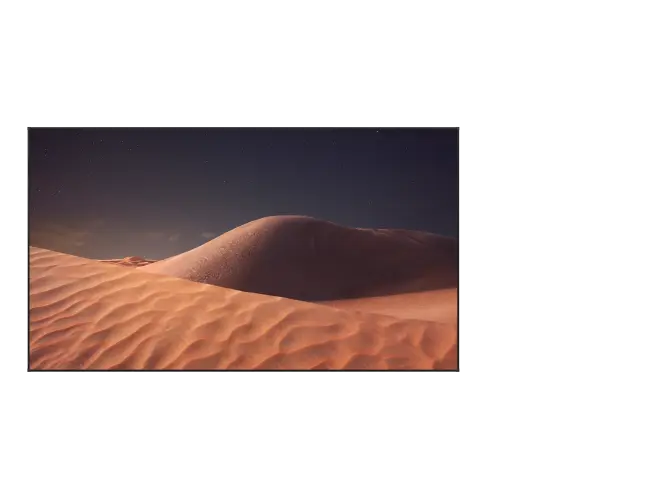
While a wall is "functional," it rarely delivers the "TV-like" experience shown in marketing photos. Common issues observed in home setups include:
- Geometric Distortion: Because walls are rarely perfectly flat, the top edge of your image may look like a gentle wave rather than a straight line.
- Reduced Contrast: In a room with any light (even a small lamp), the black levels on a white wall will turn into a muddy gray.
- Hotspotting: You may notice the bottom of the image (closest to the projector) is significantly brighter than the top, creating an uneven viewing experience.
- Texture Interference: In bright scenes, you might actually see the "grain" of the paint or the drywall texture, which can make the image look "dirty" or less sharp than 4K.
Wall vs. ALR Screen: A Heuristic Comparison
To help visualize the performance gap, the following table compares a standard matte white wall against a dedicated UST ALR screen. These ratings are qualitative estimates based on common user experiences in mixed-lighting environments.
| Feature | Bare Wall (Matte White) | UST ALR Screen |
|---|---|---|
| Ease of Setup | 5/5 (Instant) | 2/5 (Requires assembly/mounting) |
| Ambient Light Rejection | 1/5 (Poor) | 5/5 (Excellent) |
| Image Flatness | 2/5 (Depends on drywall) | 5/5 (Tensioned surface) |
| Contrast & Black Levels | 2/5 | 5/5 |
| Color Accuracy | 3/5 (Depends on paint) | 5/5 |
| Cost Effectiveness | 5/5 (Free) | 2/5 (Significant investment) |
UST Projector: Bare Wall vs ALR Screen (Illustrative Trade-offs)
Illustrative relative comparison only; not lab measurements.
View chart data
| Category | Bare Wall | With ALR Screen |
|---|---|---|
| Contrast | 2.0 | 4.0 |
| Uniformity | 3.0 | 4.0 |
| Ambient Light Tolerance | 1.0 | 4.0 |
| Ease of Setup | 5.0 | 3.0 |
| Best Fit for Movie Use | 2.0 | 5.0 |
Illustrative relative scoring based on the article's scenario matrix and threshold notes: a flat smooth matte wall is the minimum for acceptable results, bare wall can work for dark casual viewing, and ALR screen adds value in brighter or movie-focused use. Scores are normalized 1-5 for comparison only, not measured performance.
The "Flashlight Test": Is Your Wall Good Enough?
Before you buy a screen, you can perform a simple expert-level check to see if your wall is a candidate for UST projection:
- The Side-Light Test: Take a high-powered flashlight and hold it against the wall, shining the beam parallel to the surface. This will reveal every bump, ripple, and texture. If the wall looks like a "moon landscape," a UST projector will struggle.
- The Color Check: Hold a piece of pure white printer paper against your wall. If your wall looks yellow or gray by comparison, your projected colors will be shifted.
- The Daytime Trial: Project an image during the time of day you usually watch. If the image is washed out to the point of being unwatchable, a wall is not a viable long-term solution for your room.

When You Should Definitely Invest in a Screen
While a wall works for casual use, an ALR screen becomes a necessity if:
- You use the projector as your main TV: If you watch during the day or with lights on, a wall will likely be frustrating.
- You want 4K clarity: To actually see the detail you paid for in a 4K UST projector, you need a surface smoother than standard paint.
- Your wall has "Orange Peel" texture: This common US wall texture is the enemy of UST projection, as it creates micro-shadows across the entire image.
For those looking for a middle ground, some users opt for "projector screen paint," though this requires professional-level sanding and application to be effective, often making a fixed-frame screen a simpler and more reliable choice.
Decision Checklist: Wall or Screen?
- Is your wall perfectly flat and smooth? (Yes = Wall possible | No = Screen needed)
- Do you have total light control (blackout curtains)? (Yes = Wall possible | No = ALR Screen needed)
- Is your budget strictly limited to the projector? (Yes = Start with Wall | No = Buy Screen)
- Are you sensitive to "wavy" lines at the top of the image? (Yes = Screen needed | No = Wall possible)
Conclusion: Start Small, But Plan for an Upgrade
A UST projector on a regular wall is a functional starting point, especially for those transitioning from a smaller TV to a massive 100-inch+ display. If your wall is smooth and your room is dark, you may find the experience perfectly adequate for movies and gaming. For more on this topic, see Projector Brightness Standards and Measurement: A Comprehensive Ref....
However, to truly unlock the "laser TV" experience—with deep blacks and vibrant colors even when the lights are on—a dedicated ALR screen is the single most impactful upgrade you can make. We recommend testing your projector on your wall first; if the texture or light interference bothers you, you'll know exactly why a screen is worth the investment.
Note: This guide is based on general home theater heuristics. Always refer to your projector's manual for specific throw distance and alignment requirements to ensure a safe and optimal installation.


