


If you're wondering how to connect a tablet to a projector, there are several options depending on your tablet model and the projector's supported connections.
A tablet can connect to a projector using a compatible HDMI adapter, AirPlay, Google Cast, or another supported wireless display method. Whether you want to connect iPad to projector equipment for a presentation or connect Android tablet to projector screens for entertainment, the correct setup depends on the device's video-output capabilities.
A USB-C or Micro-USB port does not automatically guarantee external video support. Before purchasing a cable or adapter, check your tablet manufacturer's specifications and the projector's available inputs.
This guide explains the main tablet to projector HDMI and wireless connection methods, how to mirror tablet to projector screens, and what to do when the connection does not work.
Choose a Connection Method for Your Tablet
Before connecting your tablet, determine whether a wired or wireless connection is more suitable for your device and viewing needs.
The available options depend on the tablet's operating system, hardware capabilities, and the projector or receiving device.
Wired HDMI connection
A wired connection is often a straightforward option for presentations, photos, and compatible video playback.
To establish a tablet to projector HDMI connection, the tablet must support video output through its port, and you need a compatible adapter or cable.
For example, some USB-C tablets support DisplayPort Alternate Mode or another manufacturer-documented external-display method.
However, USB-C describes the physical connector rather than guaranteeing video-output functionality.
AirPlay screen mirroring
AirPlay can be useful when you want to connect iPad to projector devices wirelessly.
This method requires an AirPlay-compatible projector or a compatible receiver, such as an Apple TV connected to the projector through HDMI.
Google Cast and other wireless casting methods
Some Android tablets and iPads can cast supported media through compatible apps to Google Cast receivers.
Other wireless display technologies, including Miracast, may be available on certain Android or Windows tablets.
Remember that casting selected content is different from mirroring the entire tablet screen.
Windows display connections
Windows and Surface tablets may support wired video output or wireless projection, depending on the specific model.
Some devices can duplicate or extend the display, while others have different connection limitations.
For a broader explanation of wireless display options, read XGIMI's guide to screen mirroring on projectors.
Always confirm that the tablet and receiving device support the same connection method before proceeding.
Connect an iPad to a Projector
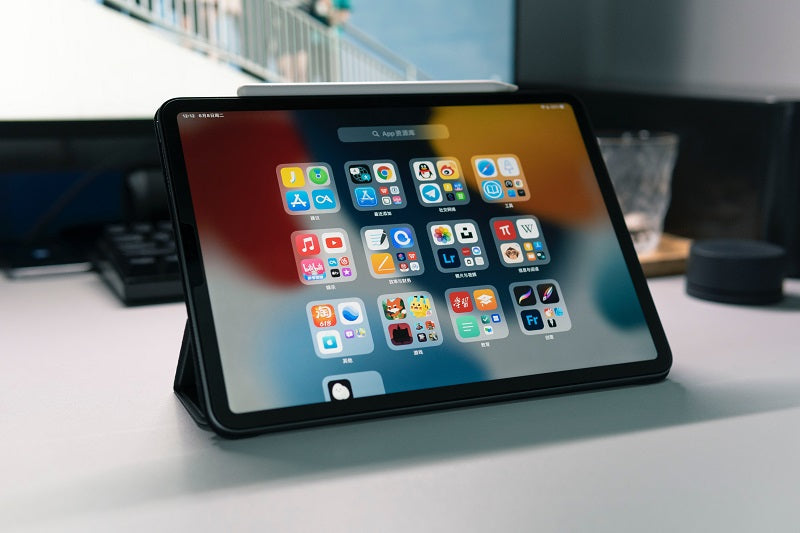
If you want to connect iPad to projector equipment, you can use a compatible wired video adapter or a supported wireless method such as AirPlay.
The correct approach depends on whether your iPad has a USB-C or Lightning connector and which external-display features the model supports.
Method 1: Connect an iPad using HDMI
Follow these steps to establish a wired connection.
- Identify your iPad model and port. Check whether your iPad uses USB-C or Lightning.
- Select a compatible video adapter. Use Apple's current documentation to confirm which digital AV adapter or USB-C video connection works with your model.
- Connect the adapter. Plug the compatible adapter into your iPad and connect an HDMI cable to its output.
- Connect the projector. Insert the other end of the HDMI cable into the projector's HDMI input.
- Select the correct input. Turn on the projector and choose the corresponding HDMI source.
- Test the display. Unlock your iPad and open a photo, presentation, or other supported content to confirm that the connection works.
If the adapter supports pass-through charging, connect power according to the manufacturer's instructions when needed.
Do not assume that a standard USB charging cable can transmit video.
Method 2: Mirror an iPad using AirPlay
If you prefer wireless projection, AirPlay provides another option.
First, confirm that the projector supports AirPlay or that you have a compatible AirPlay receiver connected to it.
Connect the iPad and receiver to the same Wi-Fi network when required.
Then open Control Center on the iPad, tap Screen Mirroring, and select the available AirPlay receiver.
If an onscreen verification code appears, enter it on the iPad to complete the connection.
Once connected, compatible content from the iPad can appear on the projector screen.
For more detailed instructions, see XGIMI's guide to casting iOS devices to a projector.
Note that some streaming apps restrict external playback or screen mirroring, even when photos and presentations display correctly.
Connect an Android Tablet to a Projector
To connect Android tablet to projector equipment, first check whether your tablet supports wired video output, wireless screen mirroring, or compatible app casting.
Android tablets vary significantly between manufacturers and models. A connection method supported by one device may not work on another.
Method 1: Use a wired HDMI connection
If your Android tablet supports external video output, you may be able to connect it directly through a compatible adapter.
Follow these steps:
- Identify the tablet model. Check the device's model number and manufacturer specifications.
- Verify video-output support. Look for documented external-display capabilities, such as DisplayPort Alternate Mode over USB-C or another supported video-output method.
- Choose the correct adapter. Use a manufacturer-recommended video adapter or cable compatible with the tablet.
- Connect the equipment. Connect the tablet's supported video output to the projector's HDMI input.
- Select HDMI on the projector. Turn on the devices and choose the correct HDMI source.
- Approve any display prompt. Some tablets require confirmation before sending video to an external display.
- Test the content. Open a photo or presentation before trying a streaming app.
A tablet to projector HDMI connection requires more than matching connector shapes. The tablet, adapter, cable, and projector must support compatible video signals.
A Micro-USB port generally should not be treated as an HDMI output unless the manufacturer explicitly documents a supported video-output technology.
Method 2: Use supported wireless display features
Some Android tablets support wireless screen mirroring through technologies such as Miracast or manufacturer-specific features.
For example, certain Samsung tablets offer Smart View or other supported display features, while other Android devices may use Google Cast or different wireless methods.
To mirror tablet to projector screens wirelessly:
- Confirm which wireless display technology your tablet supports.
- Check whether the projector or connected receiver supports the same method.
- Connect the devices to the required network, if applicable.
- Open the tablet's supported casting or screen-mirroring feature.
- Select the compatible receiver.
- Follow any connection prompts and test the projected image.
If your tablet does not support full-screen mirroring, you may still be able to cast selected media from supported apps.
For related guidance on Android device connections, explore XGIMI's guide to connecting an Android phone to a projector.
The exact menus and available features will vary by tablet manufacturer and Android version.
Connect a Windows or Surface Tablet
Windows and Microsoft Surface tablets can offer different display options depending on their generation and hardware configuration.
Some models support external displays through USB-C, Mini DisplayPort, or another video-output connection.
Others also support compatible wireless display receivers.
Method 1: Connect through a wired video adapter
To connect a supported Windows or Surface tablet through HDMI:
- Identify the exact tablet model and available display-output ports.
- Check Microsoft's documentation for supported external-display connections.
- Choose a compatible USB-C-to-HDMI, Mini DisplayPort-to-HDMI, or other appropriate adapter.
- Connect the adapter to the tablet and the HDMI cable to the projector.
- Turn on the projector and select the corresponding HDMI input.
- Open Windows display settings or press Windows + P.
- Choose Duplicate or Extend when those options are supported.
Duplicate displays the same content on the tablet and projector.
Extend treats the projector as an additional workspace, allowing compatible applications to use separate screen areas.
For a presentation, Extend mode may allow the audience to view slides while you use presenter tools on the tablet.
Method 2: Use wireless projection
If the Windows tablet supports a compatible wireless-display method and an appropriate receiver is available, you may be able to connect without HDMI.
For supported Miracast connections, press Windows + K to open available wireless display options.
Select the compatible receiving device and follow the connection prompts.
Not every Surface or Windows tablet supports every wireless-display feature, so consult the model's current specifications.
For additional instructions, read XGIMI's guide to connecting a laptop to a projector.
Connect Wirelessly Using a Supported Receiver
If you want to mirror tablet to projector screens without cables, you need a wireless method supported by both the tablet and the receiving device.
The receiving device may be built into the projector or connected externally through HDMI.
Common wireless options include AirPlay, Google Cast, and Miracast.
AirPlay for compatible iPads
For an iPad, connect to an AirPlay-compatible projector or receiver.
When required, connect both devices to the same Wi-Fi network, open Control Center, tap Screen Mirroring, and choose the receiver.
An Apple TV connected through HDMI can serve as an AirPlay receiver, but it does not automatically make the projector itself AirPlay-compatible.
Google Cast for supported apps
Google Cast allows compatible tablets to send supported media from Cast-enabled apps to a Google Cast receiver.
To use it:
- Connect the tablet and receiver to the same Wi-Fi network.
- Open a supported casting app.
- Tap the Cast button within the app.
- Select the compatible receiver.
- Start playback.
On some devices and apps, additional permissions may be required to discover receivers.
Casting selected media does not necessarily provide full-screen tablet mirroring.
Miracast and other wireless display systems
Some Android and Windows tablets support Miracast or other manufacturer-specific wireless display technologies.
Before attempting a connection, confirm that both devices support the same protocol.
Also check whether the receiver requires separate power, initial setup, or firmware updates.
Network compatibility matters
Wireless projection can fail even when both devices appear to have internet access.
For example, guest Wi-Fi networks may isolate connected devices and prevent them from discovering one another.
If the receiver does not appear, verify the network configuration and any relevant app permissions.
For other connection alternatives, see XGIMI's guide to connecting a phone to a projector without HDMI.
Fix Tablet-to-Projector Problems
Even after following the steps for how to connect a tablet to a projector, you may experience a missing image, wireless connection failure, or audio problems.
Troubleshoot the physical connection, device compatibility, and app behavior separately.
Problem 1: No signal over HDMI
If the projector displays "No Signal":
- Confirm that the tablet supports wired external video output.
- Verify that the adapter is compatible with the exact tablet model.
- Check that the HDMI cable is securely connected.
- Select the correct HDMI input on the projector.
- Approve any external-display prompts on the tablet.
- Test a different compatible adapter or cable if available.
- Restart both devices and test the connection again.
A charging-only or file-transfer cable cannot replace a video adapter when HDMI output is required.
For additional troubleshooting, read XGIMI's projector HDMI no-signal troubleshooting guide.
Problem 2: The wireless receiver does not appear
If you cannot mirror tablet to projector screens wirelessly:
- Confirm that the tablet and receiver support the same wireless protocol.
- Check that the receiver is powered on and configured correctly.
- Verify the required Wi-Fi connection.
- Review available app and network permissions.
- Restart the casting app or wireless receiver.
- Check whether the network prevents devices from discovering each other.
Remember that Google Cast, AirPlay, and Miracast are not interchangeable technologies.
Problem 3: Picture appears, but there is no sound
If video works but audio is missing:
- Check the tablet's selected audio playback destination.
- Confirm the projector volume and mute settings.
- Check whether sound is being routed to Bluetooth headphones or external speakers.
- Review the audio settings in the app.
- Test another video or audio source.
If you're using an external audio system, verify the relevant connection and audio-output configuration.
Problem 4: Photos display, but a movie does not
If the tablet's home screen or photos appear correctly but a streaming video remains black, the basic display connection may be functioning.
The streaming service may restrict external displays, screen mirroring, or playback through certain adapters.
Check the app's current external-playback and content-protection requirements.
When available, using the streaming service's native app on the projector or a compatible external streaming device may be an alternative.
Do not attempt to bypass content-protection restrictions.
Frequently Asked Questions
1. Can I Connect Any USB-C Tablet to HDMI?
No. A USB-C connector does not guarantee that the tablet supports external video output.
For a tablet to projector HDMI connection, the tablet must support a compatible video-output method, and the adapter must match that capability.
Check the manufacturer's specifications for your exact tablet model before purchasing a USB-C-to-HDMI adapter.
2. Can I Mirror an iPad Wirelessly?
Yes. You can connect iPad to projector devices wirelessly when the projector or a connected receiver supports AirPlay.
Connect the iPad and receiver to the required network, open Control Center, select Screen Mirroring, and choose the compatible receiver.
Some apps may restrict external playback even when ordinary screen content mirrors successfully.
3. Can I Use Chromecast with a Tablet?
Yes. You can connect Android tablet to projector devices through Google Cast when the app and receiving device support the same casting technology.
Open a Cast-enabled app, select the receiver, and start supported playback.
However, app casting is not necessarily the same as full-screen mirroring. Available features depend on the tablet, app, and receiver.
4. Does a USB Cable Charge and Project at the Same Time?
Only when the tablet, adapter, cable, and power arrangement support simultaneous video output and charging.
Some compatible adapters or hubs include a separate power input that allows charging during a wired video connection.
However, a standard charging cable does not automatically support video projection.
Always review the manufacturer's compatibility and power requirements before connecting additional accessories.
Check the Exact Tablet Before Buying Cables
Understanding how to connect a tablet to a projector begins with checking the exact hardware and display capabilities of your tablet.
Before purchasing an adapter or setting up wireless projection, confirm four details: the tablet model, supported video-output or casting method, projector input or receiver, and the app or content you plan to display.
For a tablet to projector HDMI connection, use a verified video adapter and test the projector's HDMI input.
If you prefer to mirror tablet to projector screens wirelessly, confirm that both devices support the same wireless-display technology.
Finally, test the actual presentation, streaming service, or video before a class, meeting, or movie night.
For more device-specific instructions, explore XGIMI's iPhone-to-projector connection guide or smartphone HDMI connection guide.
With compatible hardware, the correct adapter or wireless receiver, and proper display settings, you can use your tablet for presentations, photos, and supported entertainment on a larger screen.


