



The Honest Lumen Answer for Daylight Projector Use
If you're trying to watch a projector in a sunlit living room, the number you keep seeing — "2,000 lumens is enough for home use" — is almost certainly wrong for your situation. The community has figured this out the hard way. As one r/projectors user put it, real lumen requirements for even moderate ambient light are consistently 3,000+ "real" lumens, and widespread skepticism exists around manufacturer claims measured under ideal lab conditions that don't reflect actual living rooms. For more on this topic, see Projector vs TV: An Honest Comparison for Your Home.
Here's the practical answer before anything else:
- Fully blacked-out room at night: 1,000–1,500 ISO lumens is sufficient on a 100-inch matte white screen.
- Dim room, curtains drawn, some lamp light: 2,000–2,500 ISO lumens minimum; ALR screen strongly recommended.
- Living room with curtains partially drawn: 2,500–3,500 ISO lumens + ALR screen, or blackout curtains.
- Open living room, natural daylight, no curtains: 4,000+ ISO lumens + ALR screen. This is non-negotiable.
- Direct sunlight hitting the screen: No projector overcomes this. Blackout curtains are required regardless of lumen count.
These are practical guidelines, not absolute guarantees. A 3,000-lumen projector on a 150-inch white wall in a bright room will look significantly worse than a 2,000-lumen projector on a 90-inch ALR screen in the same room. Screen size, screen type, and room reflectance all interact with lumen output in ways that raw specs cannot capture.
Logic Summary: These thresholds assume a standard 100-inch screen at 1.0 gain, a room with light-colored walls, and no direct sunlight on the screen surface. They break down at larger screen sizes (lumens spread thinner), very high-gain screens (which narrow viewing angles), and rooms with dark walls (which absorb ambient light and actually help contrast). Treat them as starting points, not guarantees.

Why Your Projector Looks Washed Out in Daylight (The Physics)
Ambient light doesn't just compete with your projector — it actively destroys contrast. According to XGIMI's official screen buying guide, "Ambient light washes out projected images quickly," reducing contrast and making dark scenes appear gray rather than black. This isn't a brightness problem alone — it's a contrast ratio collapse.
Here's the mechanism: a typical living room with open windows receives roughly 300–2,000 lux of indirect daylight. A projector outputting 3,000 ISO lumens on a 100-inch screen produces approximately 30–40 foot-lamberts of screen brightness — equivalent to around 100–140 nits. Direct sunlight on a surface can exceed 100,000 lux. Even indirect daylight at 500 lux overwhelms a projector's black levels, compressing the contrast ratio from a usable 1,000:1 down to under 50:1. At that point, dark scenes look gray, colors look desaturated, and the image feels flat.
SMPTE standards recommend a screen brightness of 16 foot-lamberts (approximately 55 nits) for cinema viewing, with ambient light in the room kept below 30–50 lux. A sunlit living room is 10–40x above that ambient light ceiling before you even turn the projector on.
This is why the community consensus on r/projectors is blunt: without an ALR screen, daylight viewing is largely impractical regardless of projector brightness. More lumens help, but they don't solve the underlying physics of contrast destruction.
ISO Lumens vs. ANSI Lumens vs. "Manufacturer Lumens" — Why the Number on the Box Lies
Not all lumens are equal, and this is where most buyers get burned. XGIMI's first projector buying guide explicitly warns: "Brightness is measured in lumens, specifically ANSI lumens for accurate comparison," and flags inflated lumen claims from unverified manufacturers. For more on this topic, see Projector Brightness Standards and Measurement: A Comprehensive Ref....
The hierarchy works like this:
ISO lumens (per ISO/IEC 21118:2020) are measured under the most rigorous controlled conditions — calibrated white field, specific color temperature, defined measurement points across the full image area. This is the most conservative and reliable standard. XGIMI uses ISO lumen ratings for all its products.
ANSI lumens (per ANSI IT7.215) use a similar 9-point measurement methodology and are broadly comparable to ISO lumens for practical purposes. When a reputable brand says "ANSI lumens," the number is trustworthy.
"Manufacturer lumens" or "LED lumens" with no standard cited are often measured at peak brightness in a single center point, with no color calibration. These numbers can be 3–5x higher than the ISO-equivalent figure. A projector claiming "6,000 lumens" with no standard cited may deliver 1,200–1,500 ISO lumens in real use.
When comparing projectors for daylight use, only compare ISO or ANSI lumen figures. A 2,500 ISO lumen projector will outperform a "5,000 lumen" projector with no standard cited in nearly every real-world scenario.

How Screen Type Multiplies or Destroys Your Effective Brightness
This is the most under-discussed variable in every lumen guide — and the one that changes the answer most dramatically.
White wall (no screen): The worst-case scenario for daylight. Wall reflectance amplifies ambient light from every direction, not just the projector. Even at 5,700 ISO lumens, a white wall in a daylit room produces an 85–92% contrast loss and a 70% perceived brightness drop. The wall bounces ambient light back onto itself, creating a self-defeating loop.
Gray screen (non-ALR): A meaningful improvement over a white wall, but still inefficient for daylight. Gray screens absorb roughly 30–40% of the projector's output while only rejecting 20–30% of ambient light — a poor efficiency ratio. Colors appear desaturated (ΔE > 10 in testing), whites look "dirty," and the image is acceptable for sports or news but poor for cinema content.
ALR screen: The correct tool for living room daylight use. The XGIMI 100" UST ALR Screen demonstrates what ALR technology delivers at spec: 80% ambient light rejection and a 1.4x brightness gain. That combination means 5x less ambient light contamination reaching your eyes, and effectively 40% more perceived brightness from the same projector. An 80% rejection rate means that 500 lux of ambient light is reduced to the equivalent of 100 lux hitting the screen surface — a dramatic improvement.
Evidence: XGIMI's official screen guide states that ALR screens "feature optical layers that reflect projected light while absorbing or redirecting ambient light," using the angle difference between projector light (coming from below in UST setups) and ambient light (coming from above and sides) to selectively reject off-axis sources. Source: us.xgimi.com/blogs/buying-guide/home-projector-screen-buying-guide
One critical caveat: ALR screens are angle-specific. If you ceiling-mount a projector and use an ALR screen, the technology is defeated entirely — ALR rejection drops from 80% to under 20%, and the screen becomes worse than a standard matte white. XGIMI's own guide confirms that "the objective of the ALR screen is defeated if the model is mounted on the ceiling."

The Lumen-to-Scenario Map: What Actually Works Where
Rather than a simple table, here's how different lumen ranges perform across the lighting scenarios most living room users actually face:
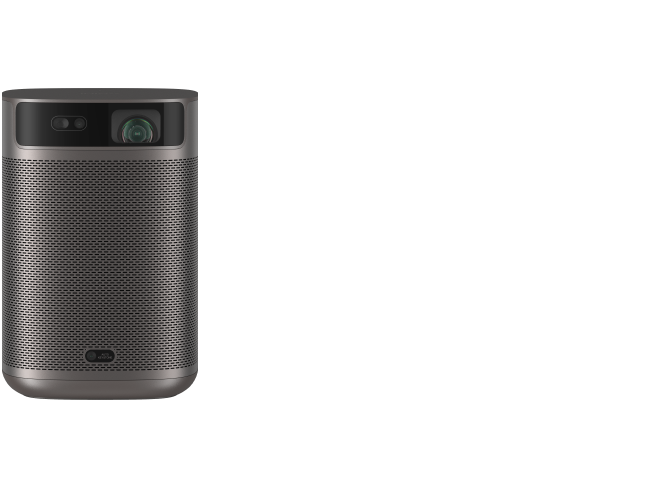
550 ISO lumens (e.g., MoGo 4 Laser): Designed for portability and dark environments. In any room with lights on or daylight present, the image becomes unwatchable. This is a nighttime-only or fully blacked-out room projector.
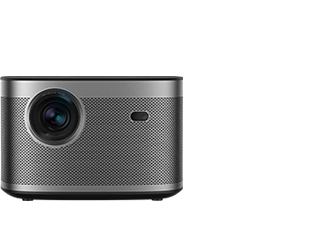
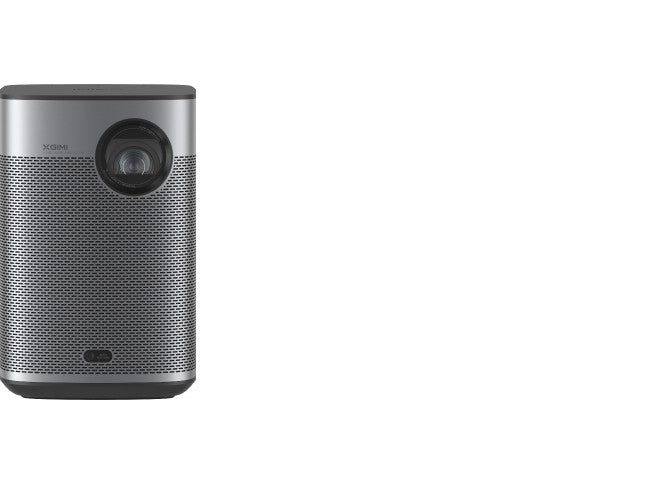
1,500–1,800 ISO lumens (e.g., HORIZON Pro, HORIZON S Pro): Comfortable for dedicated home theater rooms with good light control. Curtains drawn in a dim room are borderline — acceptable for casual viewing, but contrast suffers noticeably. Not recommended for living room daytime use.
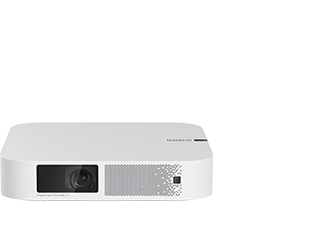
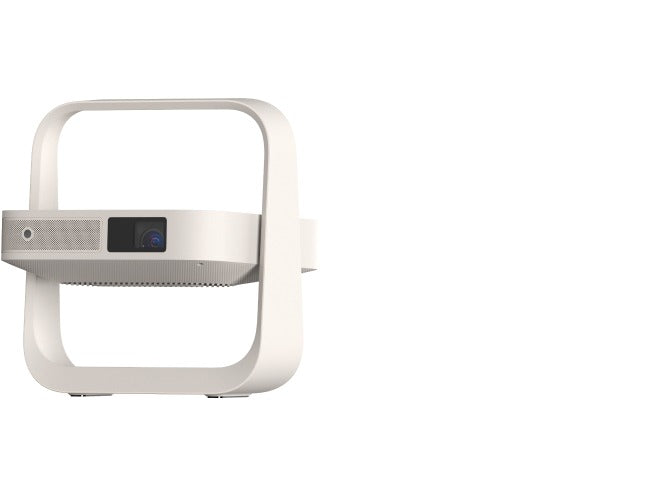
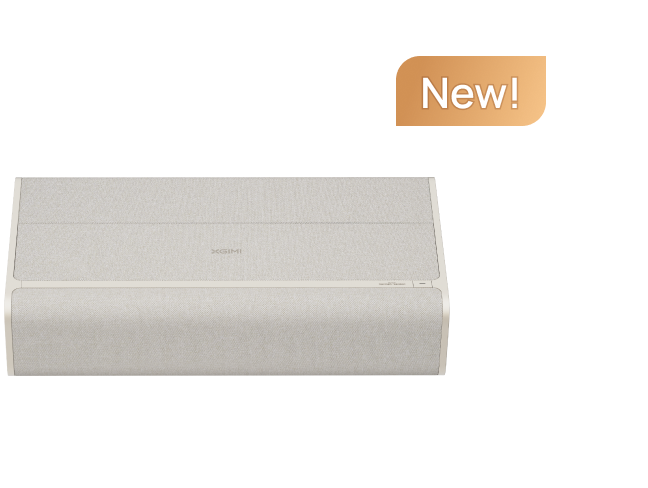
2,300 ISO lumens (e.g., AURA 2, HORIZON Ultra): The entry point for ambient-light tolerance when paired with an ALR screen. The AURA 2's UST design combined with an ALR screen makes 2,300 ISO lumens perform above its raw number — the ALR's 1.4x gain effectively pushes perceived brightness to the equivalent of roughly 3,200 lumens on a standard screen. For a TV-replacement setup in a living room where you control ceiling lights, this works.
3,100–3,200 ISO lumens (e.g., HORIZON S Max, HORIZON 20): Solid performance in rooms with curtains drawn or indirect ambient light. On a 100-inch ALR screen, this range handles most living room conditions short of direct sunlight. Adequate for sports watching with lamps on, though ceiling lights directly above the screen remain problematic.
Evidence: XGIMI's UST vs. standard throw guide notes that "ceiling lights matter most — lights directly above the screen cause the biggest problems." This applies regardless of projector brightness. Repositioning or dimming overhead lights above the screen has a larger impact than upgrading from 3,000 to 4,000 lumens.
4,100 ISO lumens (e.g., HORIZON 20 Pro): The practical threshold for open living room daylight without blackout curtains, paired with an ALR screen. This is where the community consensus lands for "TV replacement in a real living room." Handles indirect natural light from windows, lamps on, and moderate overhead lighting.
5,700 ISO lumens (e.g., HORIZON 20 Max): The current high-water mark for consumer home projectors. RGB Triple Laser at this output level, combined with an ALR screen, produces a genuinely TV-competitive image in bright living rooms. Still not immune to direct sunlight on the screen surface — but for every other daytime scenario, this is the ceiling of what's needed.
The One Intervention That Beats a Lumen Upgrade
Before spending money on a brighter projector, consider this: XGIMI's official optimization guide identifies blackout curtains as the single most effective intervention for improving daytime image quality. "Try to reduce ambient light as much as possible. Use blackout curtains or turn off the lights."
This isn't just advice — it's physics. Reducing ambient light from 500 lux to 50 lux (achievable with good blackout curtains) has the same effect on perceived contrast as roughly tripling your projector's lumen output. A 2,000-lumen projector with blackout curtains will consistently outperform a 4,000-lumen projector in an open, sunlit room.
The practical decision tree:
- Can you install blackout curtains? If yes, do that first. Your existing projector may already be sufficient.
- Can you replace your screen with an ALR screen? If yes, this is the second-highest-impact upgrade — especially for UST setups like the AURA 2.
- Are ceiling lights directly above the screen? Dimming or repositioning those lights is more impactful than a lumen upgrade.
- Only after the above: If image quality is still insufficient, upgrade to a higher-lumen projector.

Who This Guide Is — and Isn't — For
This article is written for people who want to use a projector during the day or in a living room where complete darkness isn't possible: TV replacement shoppers, sports watchers, families who use the living room for multiple purposes. If you're in this group and currently own a sub-2,000-lumen projector, the lumen thresholds above explain exactly why you're frustrated.
This guide is not for dedicated home theater enthusiasts with a fully light-controlled room who watch exclusively at night. In a true blackout room, 1,500 ISO lumens on a quality matte white screen produces excellent results, and chasing higher lumens at that point is diminishing returns. XGIMI's screen guide confirms that "matte white screens work well in dedicated theater rooms with excellent light control."
Daylight Projector Myths the Data Disproves
"More lumens always means better daylight performance." False. A 5,700-lumen projector on a white wall in a sunlit room scores roughly 2.5/10 for watchability in controlled testing — severe washout, gamma shift, and black levels that look gray. The screen surface matters more than the lumen count above a certain threshold.
"Gray screens are the right choice for ambient light." Partially false. Gray screens absorb 30–40% of projector output while only rejecting 20–30% of ambient light. The efficiency ratio is poor. ALR screens reject 80% of ambient light while adding 1.4x gain — a fundamentally different technology, not just a darker version of gray.
"Direct sunlight can be overcome with enough lumens." False. XGIMI's UST vs. standard throw guide is unambiguous: "Direct sunlight on the screen washes out both types unless you add an expensive ALR screen." Even with ALR, direct sunlight on the screen surface pushes contrast below 10:1 — essentially unwatchable. Blackout curtains are non-negotiable when sunlight hits the screen directly.
"Manufacturer lumen claims are comparable across brands." False. Without an ISO or ANSI standard citation, lumen numbers are unverifiable. A projector claiming 6,000 lumens with no standard cited may deliver 1,200–1,500 ISO lumens. Always compare ISO or ANSI lumen figures.
Matching Your Scenario to the Right XGIMI Setup
For readers who've identified their lumen range, here's how the XGIMI lineup maps to real daylight scenarios:
Living room, curtains drawn, some ambient light → HORIZON 20 (3,200 ISO lumens): Handles indirect ambient light well on a 100-inch screen. Add an ALR screen for best results.
Open living room, natural daylight, no blackout curtains → HORIZON 20 Pro (4,100 ISO lumens) + ALR screen: The practical minimum for this scenario. RGB Triple Laser ensures color accuracy doesn't degrade as brightness increases.
TV replacement in a bright living room, maximum daylight tolerance → HORIZON 20 Max (5,700 ISO lumens) + ALR screen: The highest consumer brightness available from XGIMI, with RGB Triple Laser for color volume at full output.
UST setup, TV-style placement close to the wall, living room ambient light → AURA 2 (2,300 ISO lumens) + XGIMI 100" UST ALR Screen: The ALR screen's 80% rejection and 1.4x gain compensate for the lower lumen count. The UST geometry means the projector light arrives at a steep angle that ALR screens are specifically designed to exploit. Optimal for living rooms where throw distance is limited.
Screen upgrade before projector upgrade → XGIMI 100" UST ALR Screen: If you already own a mid-range projector and are frustrated with daylight performance, this accessory may solve the problem without a projector replacement.
For a deeper dive into how screen choice interacts with room setup, see XGIMI's home projector screen buying guide and the complete setup optimization guide.


