





Experiencing lip-sync issues with your projector and external speakers can quickly spoil an otherwise immersive movie night or gaming session. The good news is that most audio-video desynchronization problems stem from connection choices, device settings, or processing latency rather than a hardware defect. By identifying whether Bluetooth, HDMI ARC, or eARC is in use and making targeted adjustments one step at a time, you can usually restore perfect synchronization without expensive replacements.
Why Audio-Video Sync Problems Happen with Projectors
When you connect external speakers to a projector, the video and audio signals often travel through separate paths. Video is rendered on the projector while audio is routed to a soundbar, Bluetooth speaker, or AV receiver. Any mismatch in processing time creates visible delay, especially noticeable during dialogue.
Bluetooth connections frequently introduce the most latency because of wireless encoding, transmission, and decoding steps. HDMI-based systems use built-in coordination tools like the Latency Indication Protocol (LIP) to help devices align timing, yet actual performance still depends on compatible firmware, cables, and correct settings on each component.
Many users worry that persistent lag means their projector is faulty. In reality, the issue is more often found in the audio path, codec choice, or an unadjusted delay setting. As this HDMI specification overview explains, eARC offers improved audio transport and sync control compared with older ARC implementations, making it a stronger option for modern home theater setups.

Choosing the Right Connection for Minimal Latency
Your connection type largely determines how easy it is to achieve tight sync. Bluetooth is convenient for casual use but tends to be the most problematic for speech-heavy content. HDMI ARC or eARC generally provides better coordination when the projector, source device, and audio system all support the necessary protocols.
The chart below illustrates how different connections perform across common use cases. Scores are illustrative heuristics based on typical user experiences and manufacturer guidance, not laboratory measurements. Higher values indicate better expected sync reliability or fit for that scenario.
Connection Method vs Use Case: Illustrative Sync Priority
Use the chart as a decision aid, not a benchmark: higher scores indicate better fit for the use case or higher sync reliability, based on article guidance.
View chart data
| Category | Bluetooth | HDMI ARC/eARC | Recommended Path |
|---|---|---|---|
| Casual Streaming | 3.0 | 2.0 | 1.0 |
| Movie Night | 1.0 | 5.0 | 5.0 |
| Gaming | 1.0 | 5.0 | 5.0 |
| Soundbar Setup | 2.0 | 5.0 | 5.0 |
Illustrative heuristic only, not measured data. Scores reflect the article's scenario matrix and troubleshooting guidance: Bluetooth is more friction-prone and mainly acceptable for casual use; HDMI ARC/eARC is preferred for movies/gaming and stability-sensitive setups; adjustment should be incremental and one variable at a time, with test patterns used to isolate offset issues.
For casual family streaming in a relaxed setting, Bluetooth can sometimes suffice if the delay remains small. However, for dedicated movie nights, gaming, or when using a soundbar or AV receiver, switching to HDMI ARC or eARC usually delivers noticeably tighter synchronization. If your equipment supports eARC, enable it for the cleanest audio routing and improved timing control.
Step-by-Step Troubleshooting for Lip-Sync Issues
Follow this sequence to isolate and correct the delay. Change only one setting at a time and test after each adjustment using a dialogue-heavy scene or a calibration pattern from sources like Spears & Munsil.
1. Verify Basic Connections and Firmware
- Confirm all cables are securely connected and undamaged.
- For Bluetooth speakers, ensure the device is properly paired and within range.
- Update firmware on your projector, source device (streaming stick, console, or Blu-ray player), and audio system. Outdated software is a frequent source of timing mismatches.
- Restart every component in the chain.
Before assuming any hardware defect, verify pairing, cabling, firmware, and the full audio output path end to end.
2. Test Different Connection Types
Switch between Bluetooth and HDMI to determine whether the problem is connection-specific. If lag disappears when using HDMI ARC or eARC, Bluetooth latency is the culprit. Many users find that moving to a wired audio path resolves the majority of noticeable lip-sync complaints.
3. Adjust Audio Delay Settings
Most projectors, soundbars, and AV receivers include a lip-sync or audio delay control measured in milliseconds. Start with small increments (10–20 ms) and test repeatedly. Many AV receivers include audio delay or lip-sync controls so you can align sound with the picture during setup.
If the required correction is large or keeps changing, the issue is likely a path or codec mismatch rather than a simple offset. In that case, changing the connection method is usually more effective than continued menu tweaking.

4. Check Source Device and Projector Output Settings
- On your streaming device or console, look for audio output format options. Some formats add extra processing delay.
- In the projector menu, confirm the audio output is set to the correct port (HDMI ARC, Bluetooth, or optical) and that any “audio delay” or “lip-sync” option is enabled.
- Disable unnecessary video processing features on the projector, as they can increase overall latency.
5. Advanced Calibration for Persistent Issues
Use a known sync reference such as a dialogue-heavy scene or test pattern to confirm whether the delay is in the projector chain or the content source. If your AV receiver offers automatic calibration, run it with the microphone placed at the main viewing position.
When sync cannot be corrected with settings, the most likely cause is usually the connection path or codec/processing latency rather than a defect in the projector panel itself.
Common Scenarios and When to Switch Approaches
- Bluetooth speaker in a bedroom or dorm: Acceptable for background viewing but often requires delay compensation for movies. Consider a wired connection for critical listening.
- Soundbar via HDMI ARC in the living room: Enable ARC and lip-sync features first. If available, upgrade to eARC for better performance.
- Gaming with external speakers: Prioritize low-latency wired connections. Bluetooth is usually unsuitable for responsive gameplay.
- Family movie night with multiple sources: Create a quick checklist for each input. Consistent problems across inputs point to a global setting; issues isolated to one source suggest that device’s configuration.
External speakers and soundbars are a common part of projector setups, so audio sync tuning is a normal part of getting a home theater system dialed in.
XGIMI Projector Setup Tips for Better Audio Sync
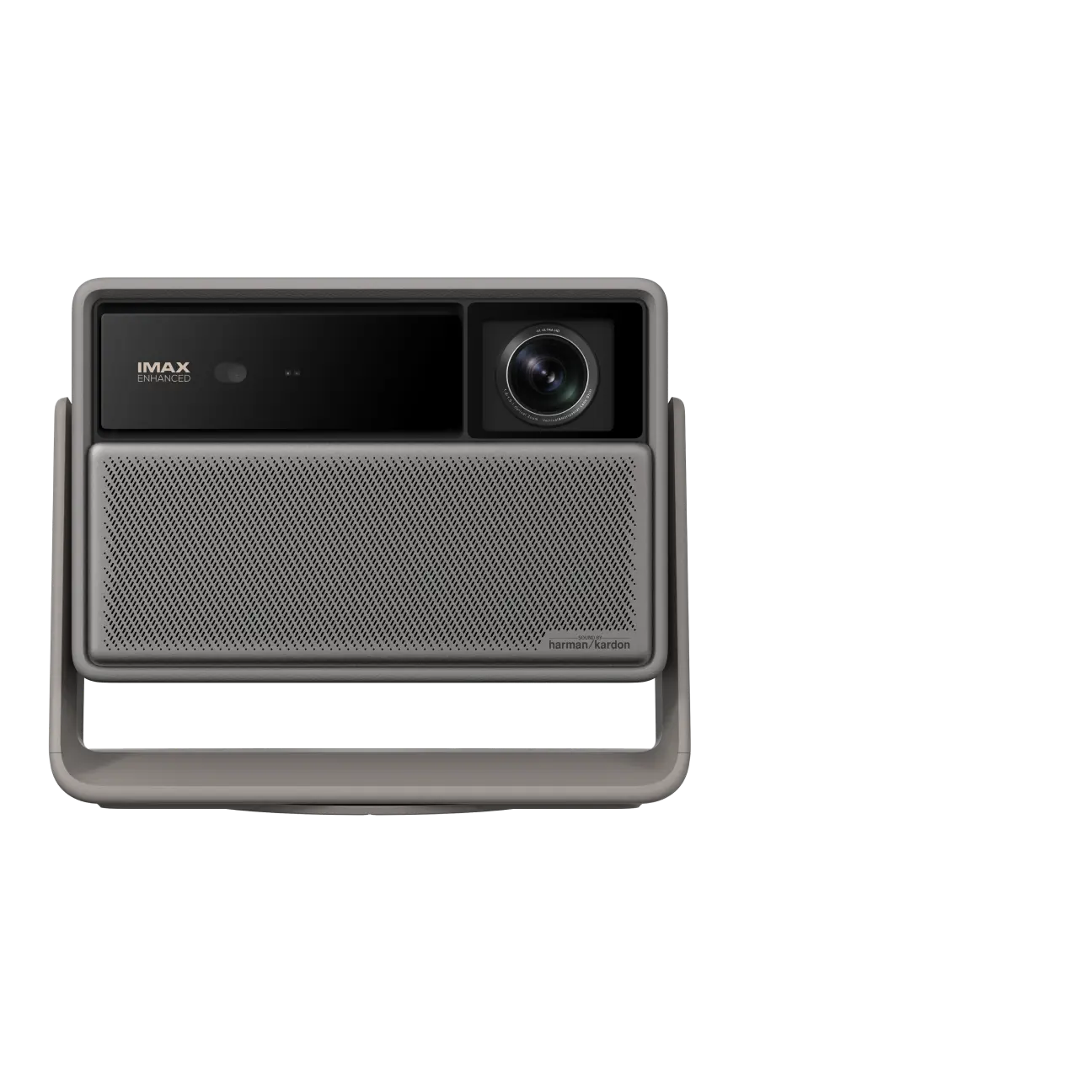
XGIMI projectors include built-in tools that simplify external audio integration. When setting up your device, review the audio output options carefully and test with both HDMI and Bluetooth paths. For the most reliable results, connect compatible soundbars or AV receivers using HDMI ARC or eARC and enable any available lip-sync adjustment.
Many owners pair their projectors with external audio to enhance the experience. Following the incremental adjustment approach described above helps avoid frustration and unnecessary returns.
If you own or are considering a low-latency XGIMI model, check our guide to the best low latency projectors for games and movies for models that perform particularly well in combined video and audio setups.
For complete initial configuration, refer to our setting up your XGIMI projector tutorial, which covers optimal placement and basic audio connections.
When to Seek Further Help
If you have followed the full troubleshooting sequence—including testing alternate connections, updating all firmware, and adjusting delay settings incrementally—yet the sync issue remains, contact support with details about your exact equipment chain, connection type, and observed delay behavior. In rare cases, a specific device incompatibility or cable quality problem may require replacement parts.
Remember that this article discusses comfort and setup advice only. It does not constitute technical support, diagnosis, or hardware repair guidance. For persistent problems, consult the manufacturer’s documentation or a qualified audiovisual professional.
Restoring perfect audio-video synchronization transforms your projector setup from frustrating to cinematic. Start with the connection type and one-change-at-a-time testing method, and most users see significant improvement within minutes.
Related Resources
- Ensuring an excellent viewing experience with your XGIMI projector
- Dual HDMI projector vs single HDMI port projector
- Explore home projectors designed for seamless integration with external audio systems.


