

Choosing the Best Brightness For Your Projector
By XGIMI Tech - 2022-08
The Role of Brightness in Enhancing the Viewing Experience
The degree of brightness a projector can produce is important, given that flexibility in daytime use demands increased amounts of brightness. A projector's light source does not exclusively determine how bright its display will be. Other elements like ambient light and screen size have a huge role to play and equally affect brightness quality.
Ambient light, for instance, can deplete or increase the overall image brightness of a projector. During the daytime and in open spaces, only a 1000+ projector ANSI lumens (2000+ LED lumens) will be suitable (successfully negate the effects of ambient light) on an 80"–120" screen. For outdoor/portable projectors, a brightness of at least 500 ANSI lumens is ideal for low-lit outdoor and—perhaps—mildly-lit indoor arrangements.
This article will expand on the subject of brightness as it relates to projectors and give valuable insight into brightness-impacting factors like projector lumens, ambient light, and screen size. Additionally, the article will explore the ideal brightness of home and outdoor projectors and recommend XGIMI smart home and outdoor projectors that can deliver an excellent viewing experience anywhere, anytime.
All You Need to Know About Lumens
Brightness is a derived quantity (scientifically) and, like others in its category, has a unit of measurement. Projector brightness is measured in lumens, and 'ANSI lumens' is the standard expression in the industry (ANSI is short for American National Standards Institute). In projector technology, some of the known brightness measures are ANSI lumens, LED lumens, and light source lumens.
ANSI Lumens
The term 'ANSI lumens' is the measurement of the brightness of a projector's display over a certain area after the light from the source has gone through the processing required to produce the image. ANSI lumens refer to the brightness of the projected image.
LED Lumens
For projectors with an LED light source, LED lumens measures the brightness of the LED light as it relates to the HK (Helmholtz-Kohlrausch) effect.
Light Source Lumens
Unlike ANSI lumens, which measure the brightness of the projected image, light source lumens measure the brightness of the projector's light source, which can be lamps, lasers, or LED bulbs.
You can convert ANSI lumens to light source lumens, and LED lumens and vice-versa. A projector with 1000 ANSI lumens will typically have 2400 LED lumens (ANSI lumens value × 2.4) and 16,667 light source lumens (ANSI lumens ÷ 0.06).
For clearer understanding, the table below will show you a few conversions of ANSI lumens values of some XGIMI smart projectors to LED lumens and light source lumens values:
| Converting ANSI Lumens to LED Lumens and Light Source Lumens |
|---|
| ANSI Lumens | LED Lumens
(ANSI Lumens ×2.4) | Light Source Lumens (ANSI Lumens ÷ 0.06) |
|---|---|---|
| 300 | 720 | 5000 |
| 800 | 1,920 | 13,300 |
| 900 | 2,160 | 15,000 |
| 2,200 | 5,280 | 36,700 |
| 2,400 | 5,760 | 40,000 |

How Much Brightness Suits Your Needs?
Projectors have come in handy in various settings, ranging from living rooms to classrooms, movie nights in the backyard to camping nights in the woods. Different settings require varying brightness levels, especially with factors like ambient light and screen size. Note that a high ANSI lumens value does not always translate to an excellent viewing experience.
Ambient Light
Ambient light impacts projector brightness in different viewing conditions. At night, with lights on, the ambient light interference can dilute the display's brightness, resulting in a slightly whitewashed display. The result is similar to a mid-afternoon home theater session with the windows wide open, during outdoor sunset settings, and classroom sessions with lights on and open windows.
Projected images are reflected off the screen, and with a lot of ambient light, the reflection becomes less solid, frail, and whitewashed. In rooms or outdoor settings with a lot of lighting, you need projectors with high brightness. Darker rooms or spaces like nights in the backyard require lower brightness. In summary, more ambient light requires higher brightness, while low lighting requires lower brightness levels. Thus, it would be important to know where and when (in the evenings after work, on a Saturday morning, etc.) you want to use the projector before settling for a particular product.
Screen Size
Another factor that affects a projector's brightness is the image/screen size. If you switch on a flashlight and focus the beam within a small portion of a wall, the reflected light is brighter than when you turn it on the entire wall. Some projectors can fill a 200" screen, but large screen sizes often come at the expense of brightness.
As the screen widens, the light rays have more room to cover, making them lose their intensity. Enlarging the screen on the same brightness setting will likely yield a darker and paler display. This explains why you will likely get a brighter display on a 100" screen than on a 200" screen with the same brightness setting. Thus, large screens require higher projector ANSI lumens.
Ideal Brightness For Home and Outdoor Projectors
Concerning brightness, home projectors have a significantly higher entry level than outdoor projectors, mostly due to the former's emphasis on great, cinematic viewing experiences.
With a home projector with less than 2000 ANSI lumens, you can enjoy your favorite content on a high-quality display on an 80-120 inch screen with moderate ambient light interference (curtained windows and lights switched off). If you love watching movies during sunny afternoons, a brightness above 2000 ANSI lumens is sufficient for the same screen size with minimal degradation. It would help if you settled for any projector tailored to meet your brightness needs.
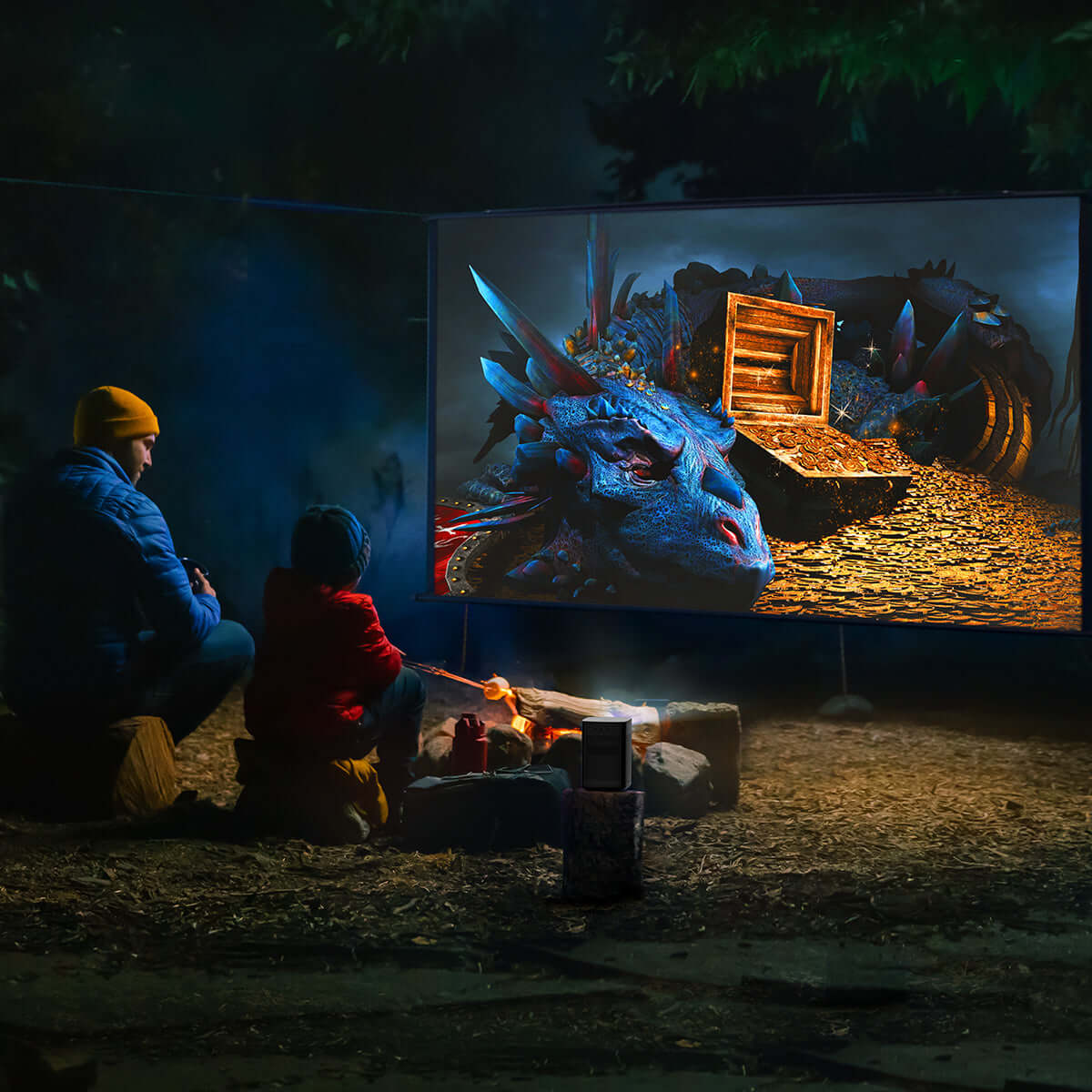
For outdoor projectors, the bar is much lower because you would need much larger spaces for projectors that have higher brightness values. If you are planning a backyard party or camping trip in low-lit settings and also mildly-lit spaces indoors, you would need portable projectors with 300+ ANSI lumens.
Experience Satisfyingly Bright Displays With XGIMI Smart Projectors
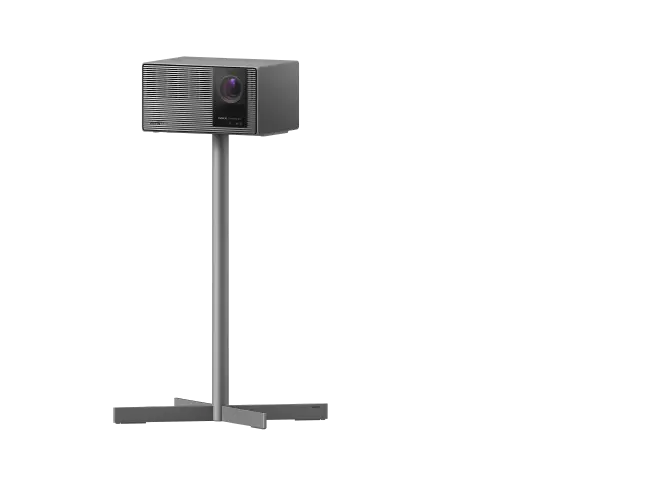
XGIMI Horizon Pro (4K Home Projector)
- 4K UHD/1500 ISO lumens: deliver a beaming bright and crystal-clear display in rooms with controlled ambient light. You will enjoy a bright and crisp display when watching your favorite action movies, sports, or an episode of Game of Thrones.
- Intelligent Screen Adaption Technology: delivers ease of setup and usage with
○ Auto Focus: for a sharp display at all times;
○ Auto Keystone Correction: for aligning the display horizontally and vertically to maintain a rectangular image;
○ Obstacle Avoidance: for detecting objects in the projection range and resizing the image to avoid them;
○ Intelligent Screen Alignment: resizes the display to fit the screen or marked portion of the wall in seconds. - MEMC (60Hz): delivers super low latency and image blurs to prevent image trailing in fast-action content.
- Max 200-inch Screen: delivers a comfortable widescreen viewing experience even with large audiences.
- HDR10: produces truer whites and blacks for more true-to-life visuals.
- X-VUE 2.0 Image Engine: uses image enhancement technology to produce vivid and lifelike colors for an enjoyable viewing experience.
- Multiple Ports: like 2x HDMI 2.0, 2x USB 2.0, 1x LAN, and 1x Headphone offer additional device connectivity options like TV sticks, hard drives, etc.
- Supports Chromecast Built-in: for mirroring Android, iOS, and laptop screens and wireless streaming with Bluetooth 5.0/WiFi compatibility.
- Android TV™: provides easy access to 5000+ apps, like HBO Max and Prime Video, for your viewing pleasure.



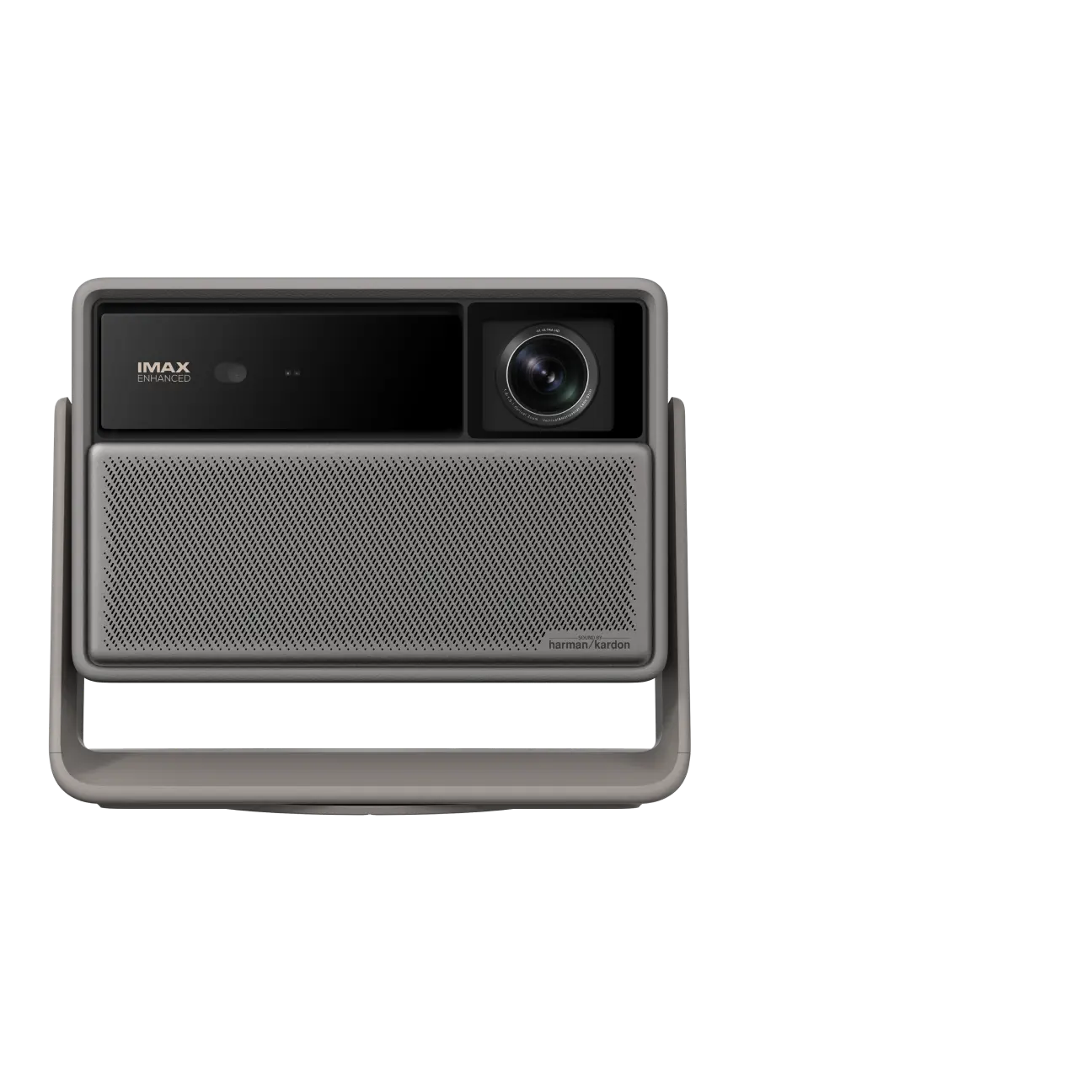
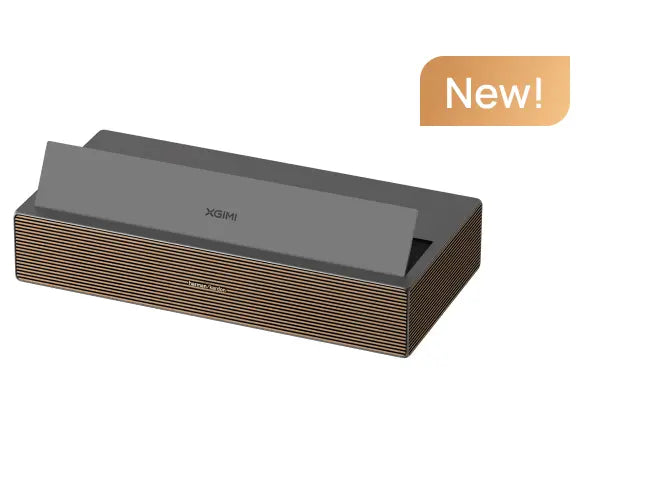
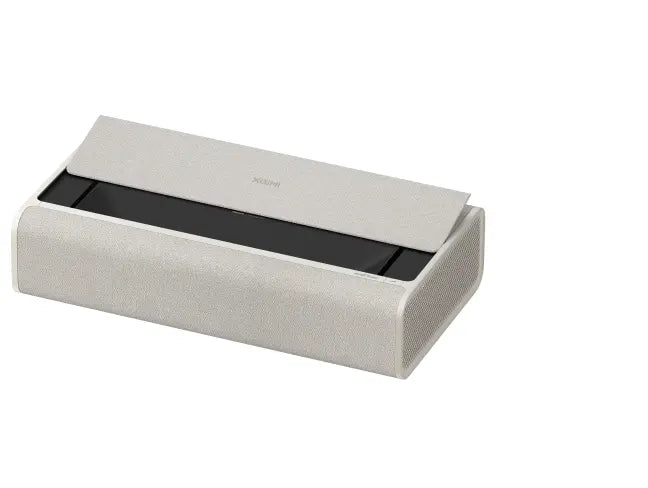
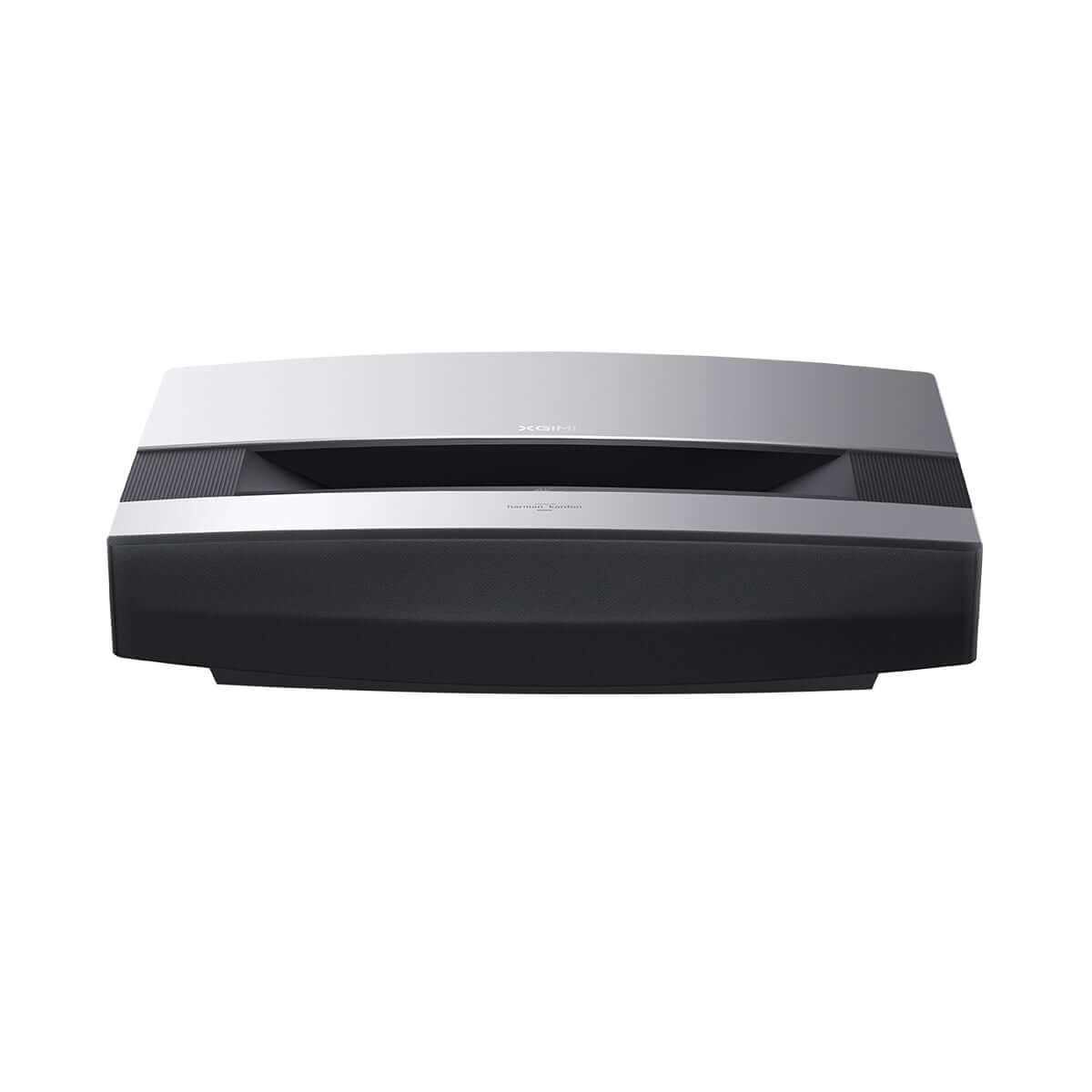
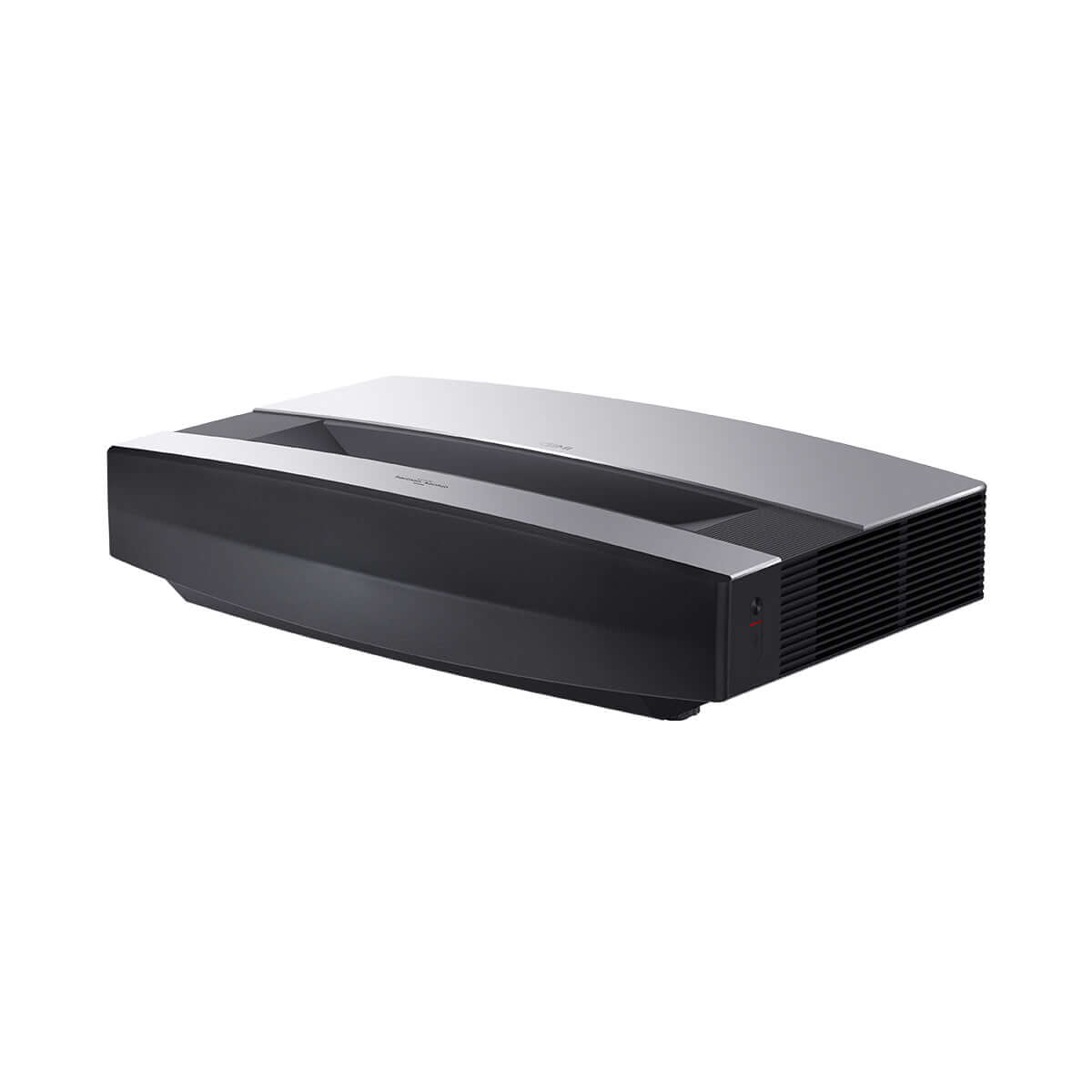
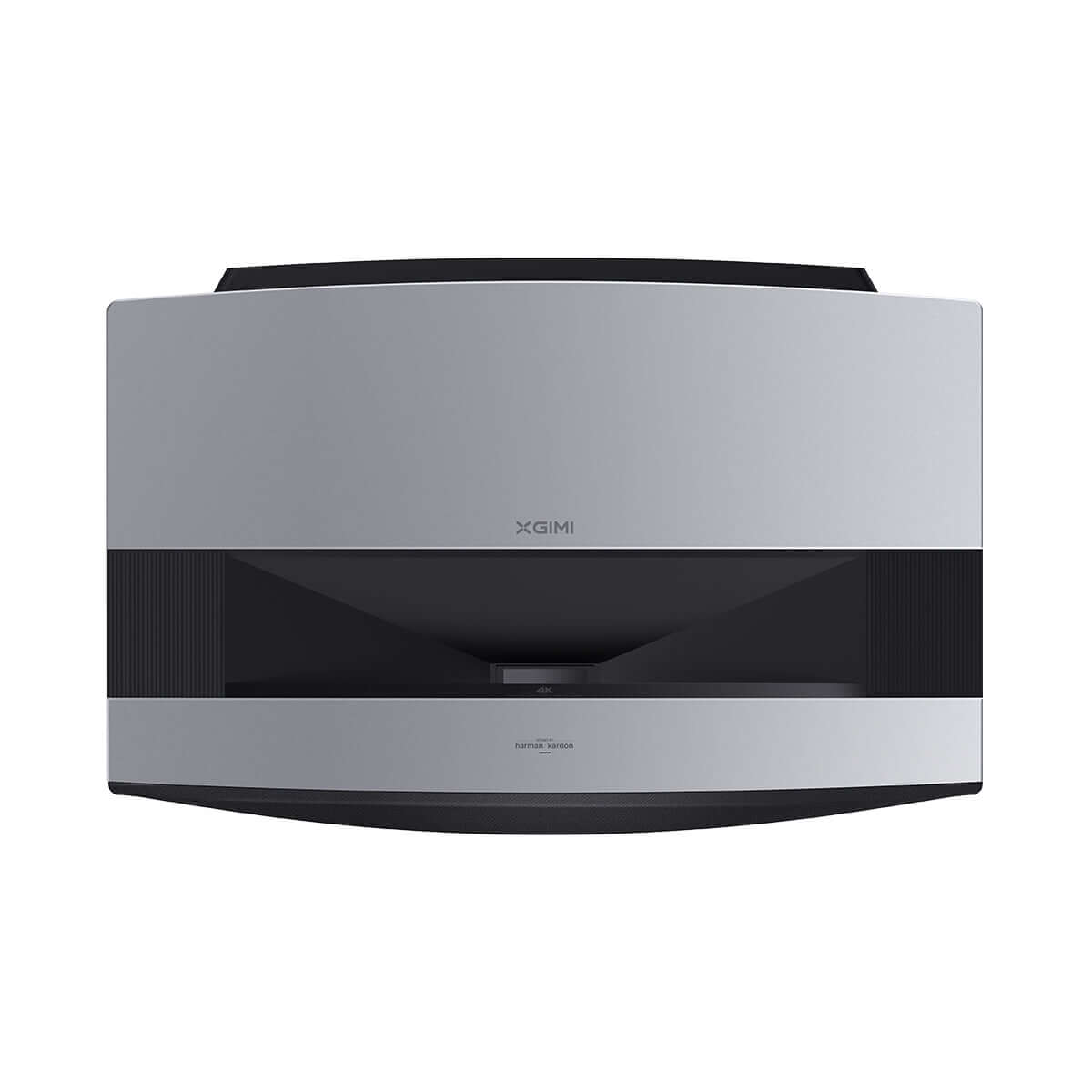
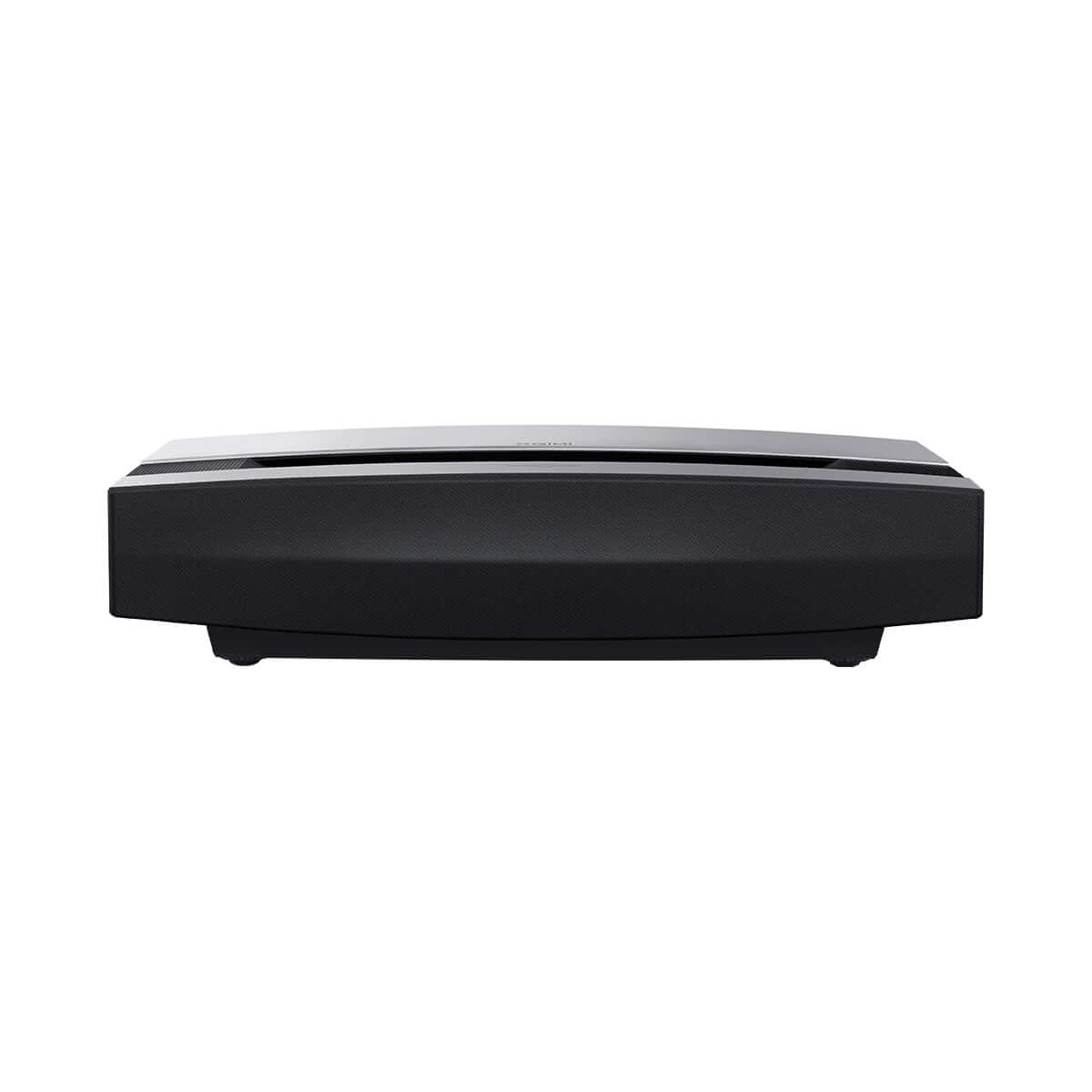
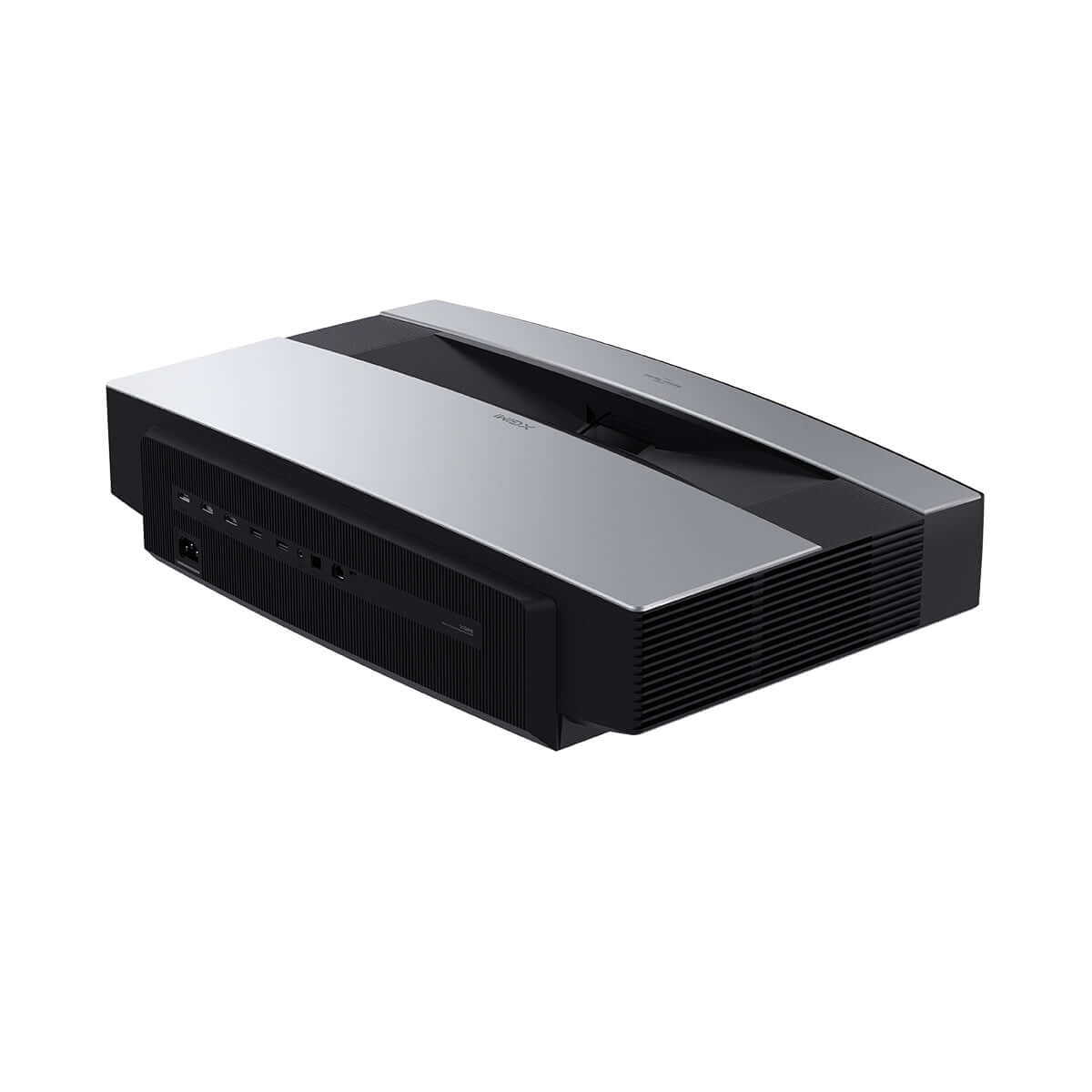
XGIMI AURA (4K Ultra Short Throw Laser Projector)
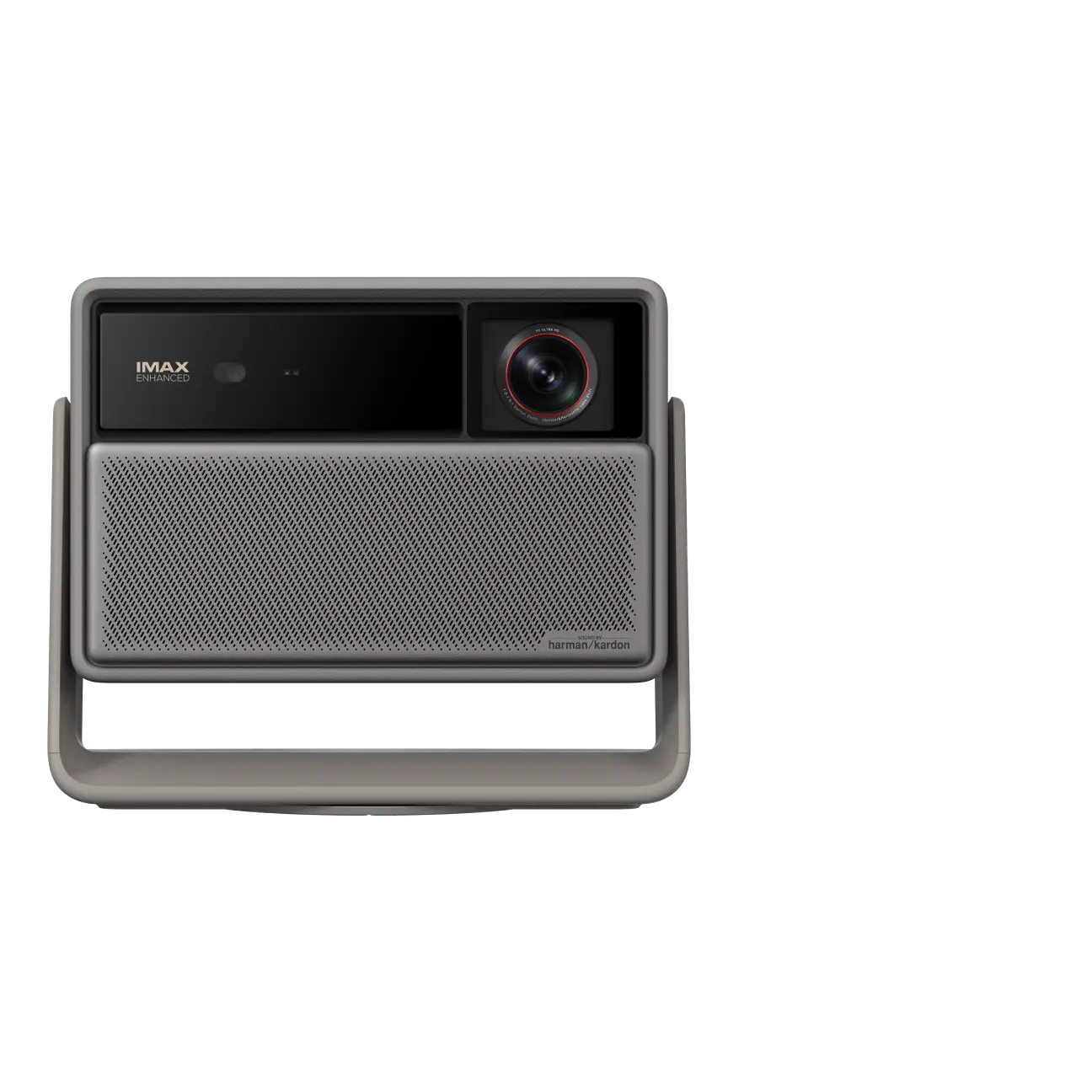
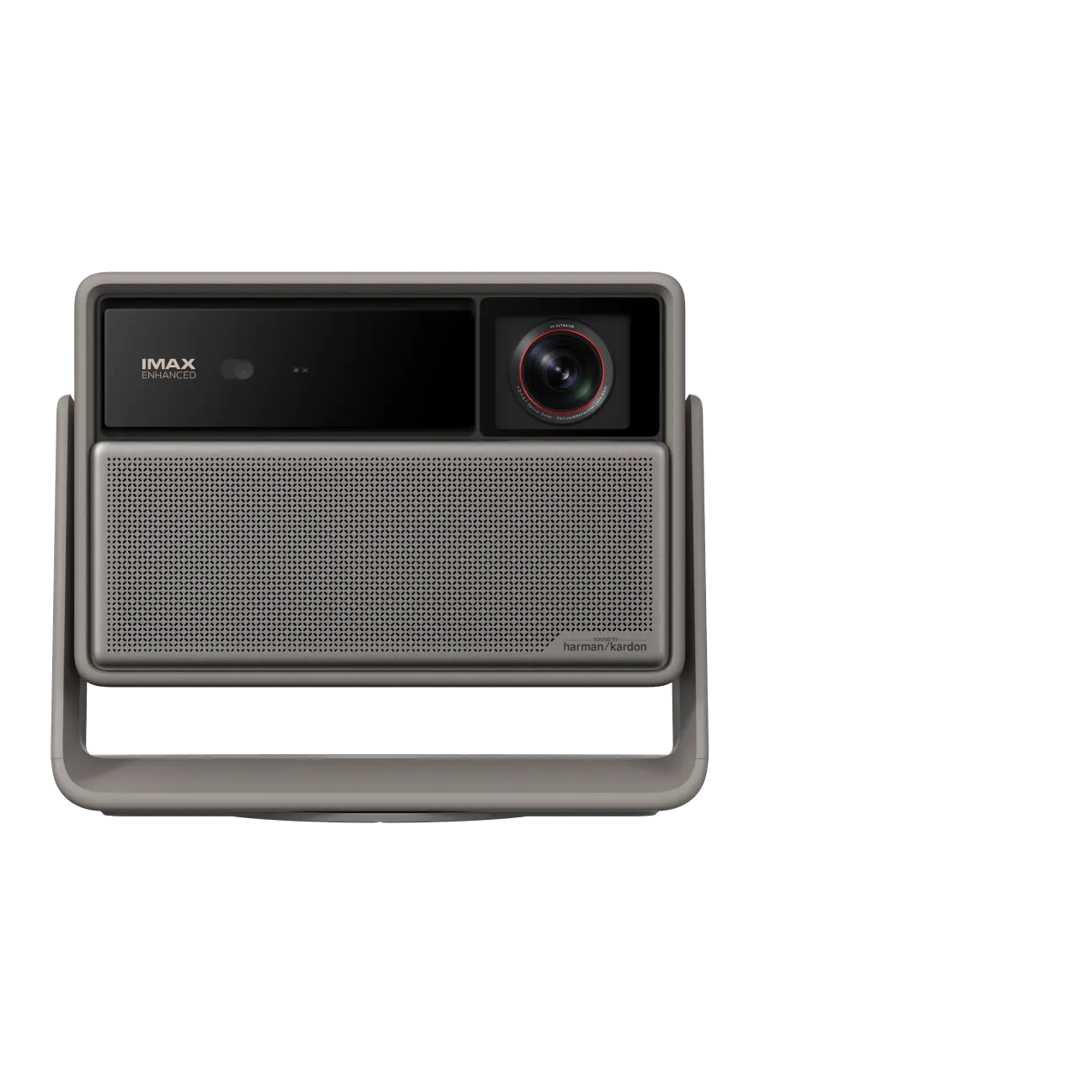
- 4K UHD/1800 ISO lumens: ensure you enjoy your favorite video content in exquisitely clear and bright displays. You can enjoy an immersive viewing experience with mesmerizing graphics when watching movies or TV shows in the day or at night.
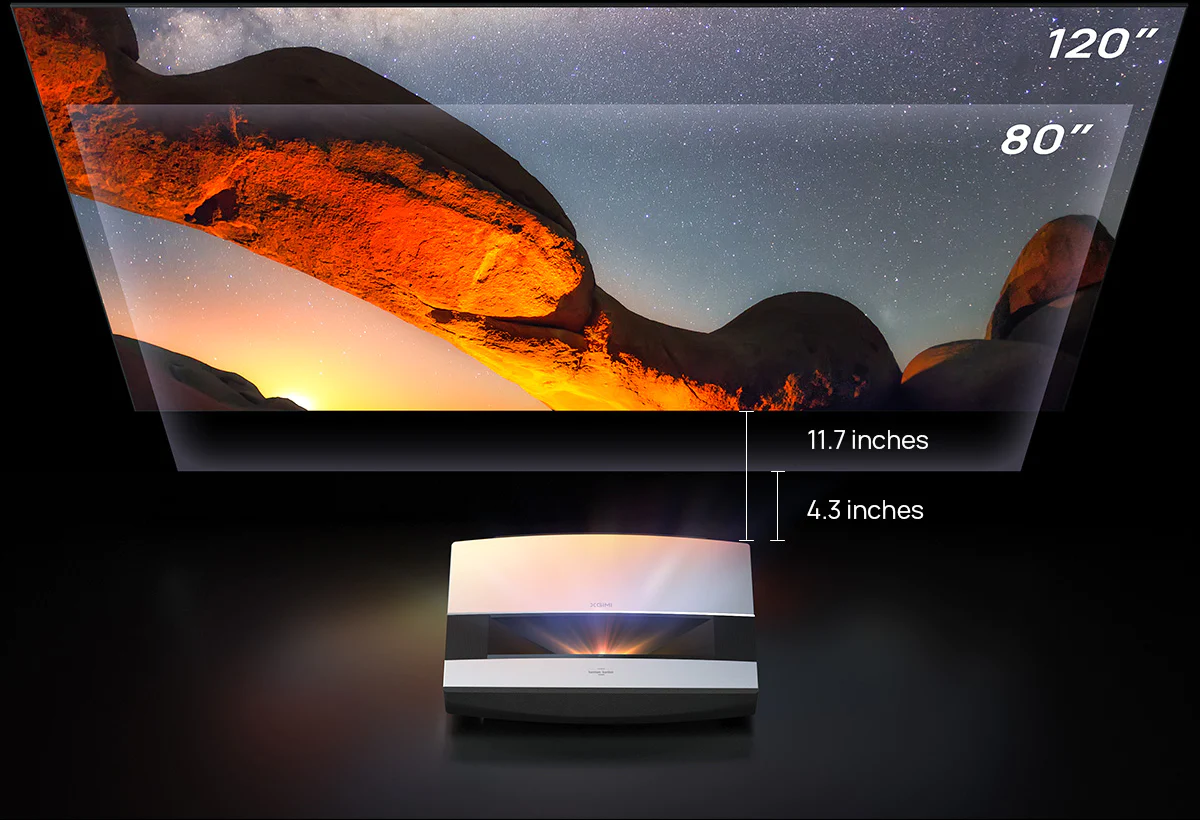
- Ultra Short Throw Technology (UST): gives you a stunningly bright 120” screen 11.7” away from any wall.
- X-VUE 2.0 Image Engine: delivers mesmerizing and rich colors with image noise reduction, color revivification, and clarity enhancement.
- Harman Kardon Sound: via four 15W built-in speakers keep you immersed in your favorite content throughout.
- MEMC (60Hz): ensures high-intensity visuals like action movies have minimal image blurs.
- Multiple Ports: including 3x HDMI 2.0, 3x USB 2.0, 1x LAN, and 1x Headphone (3.5mm), allow you to connect your favorite devices like gaming consoles and flash drives for added entertainment options.
- Supports Chromecast Built-in: for Android, iOS, and laptop screen mirroring, and Bluetooth 5.0/WiFi compatibility for cordless streaming.
- Android TV™: gives you access to over 5000 apps, including HBO Max and Disney+, for premium round-the-clock entertainment.
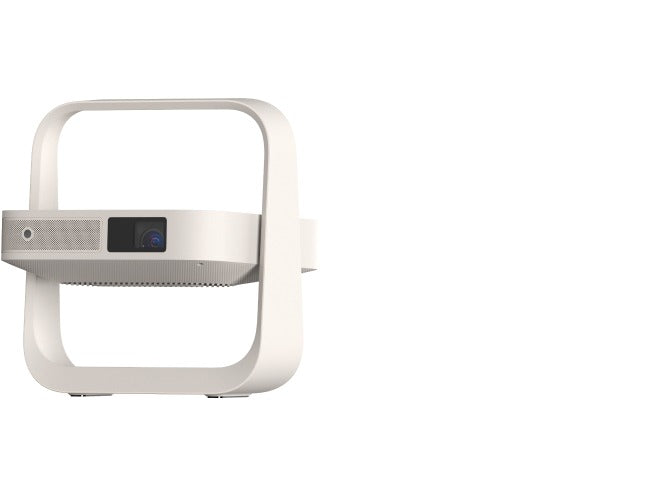
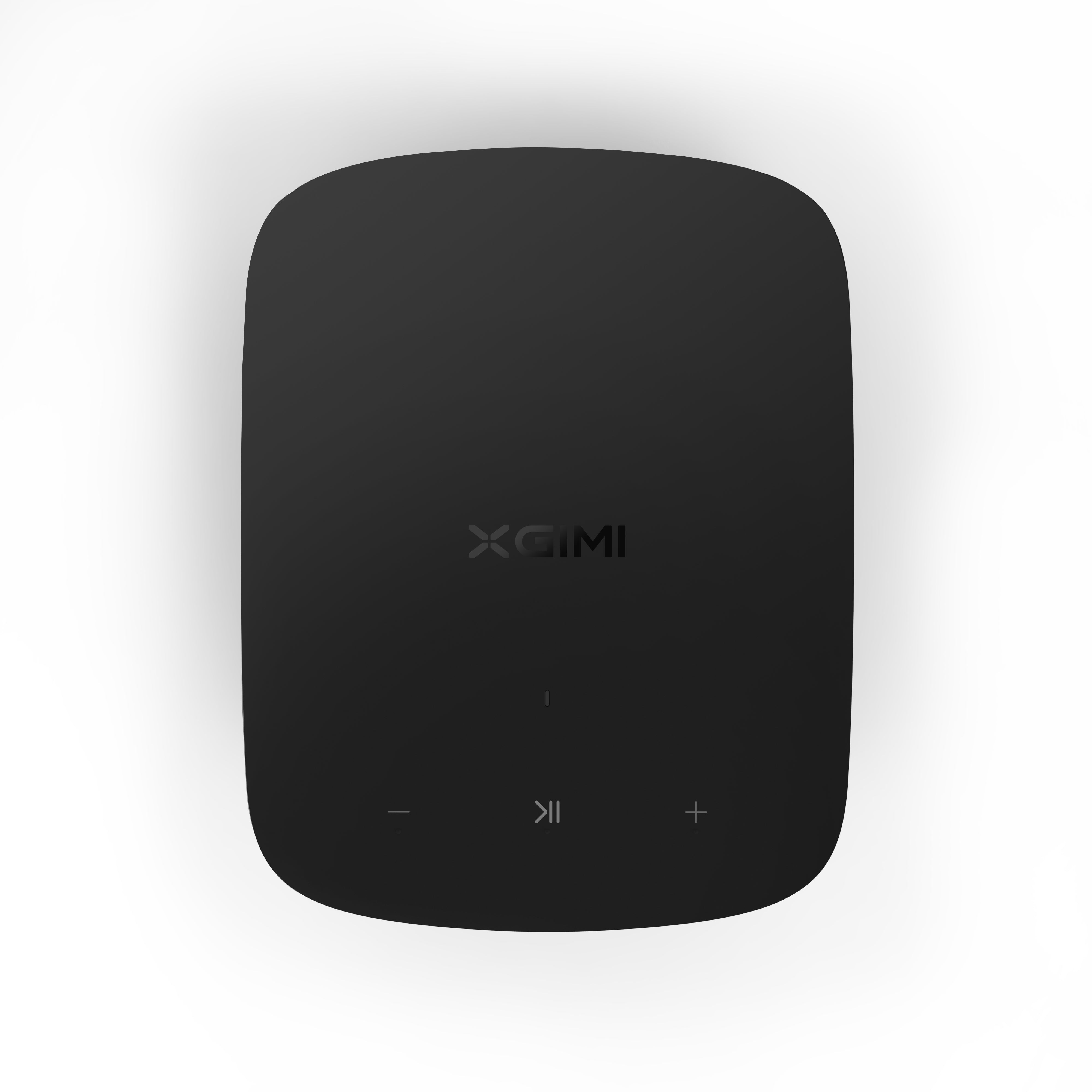
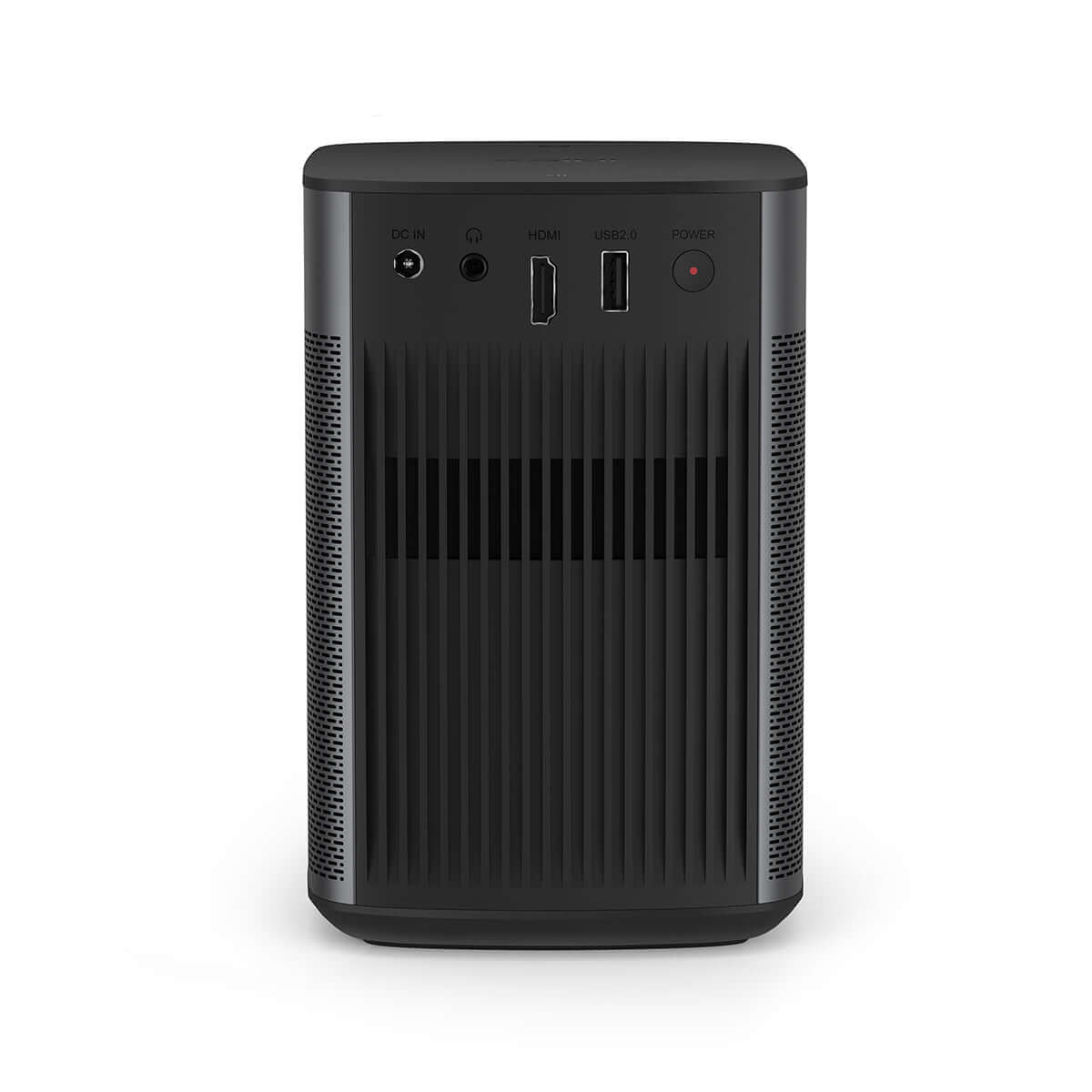
XGIMI Halo+ (1080p FHD Portable Projector)
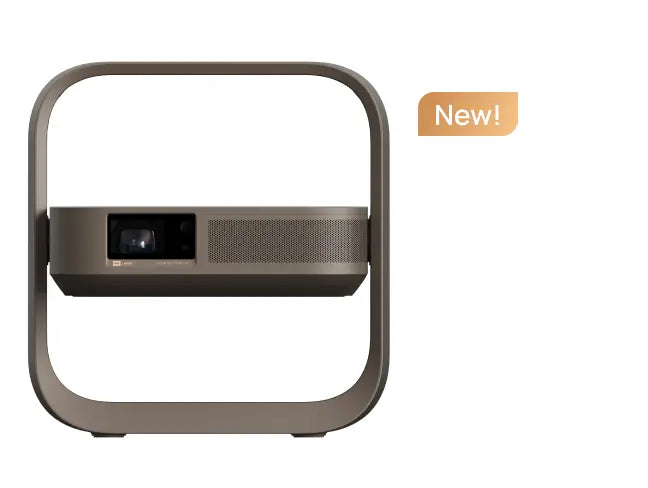
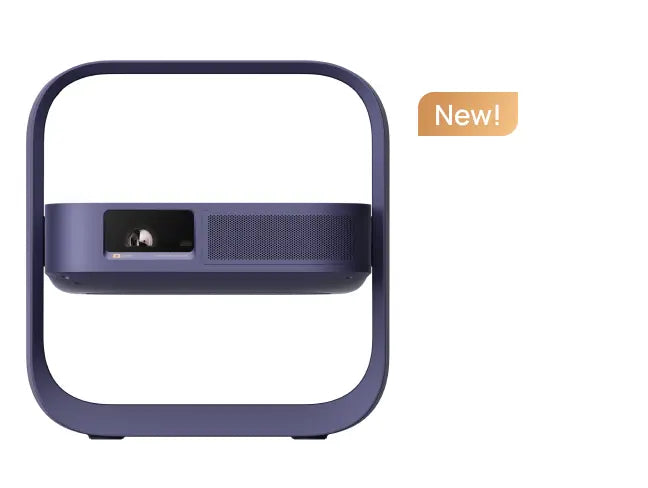
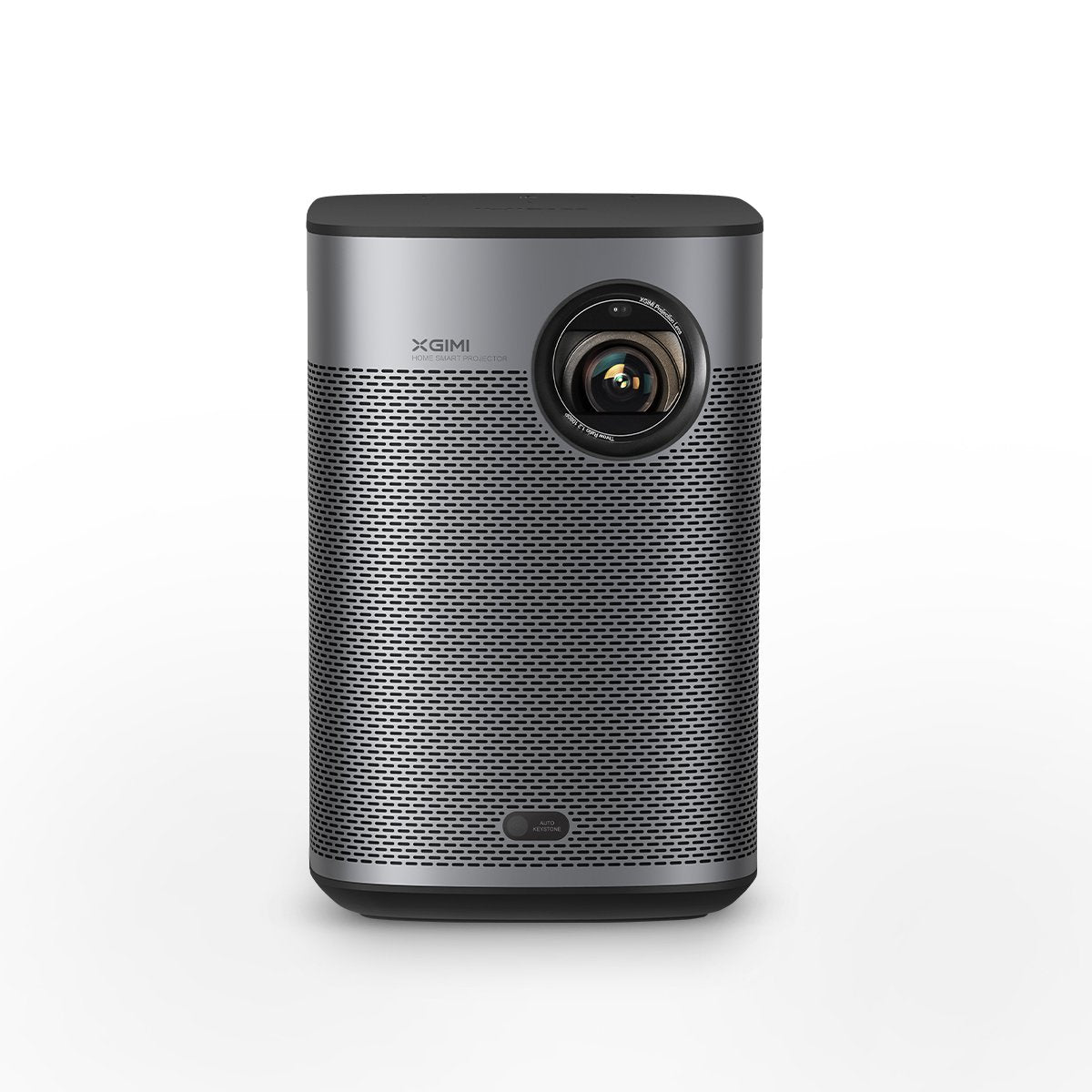
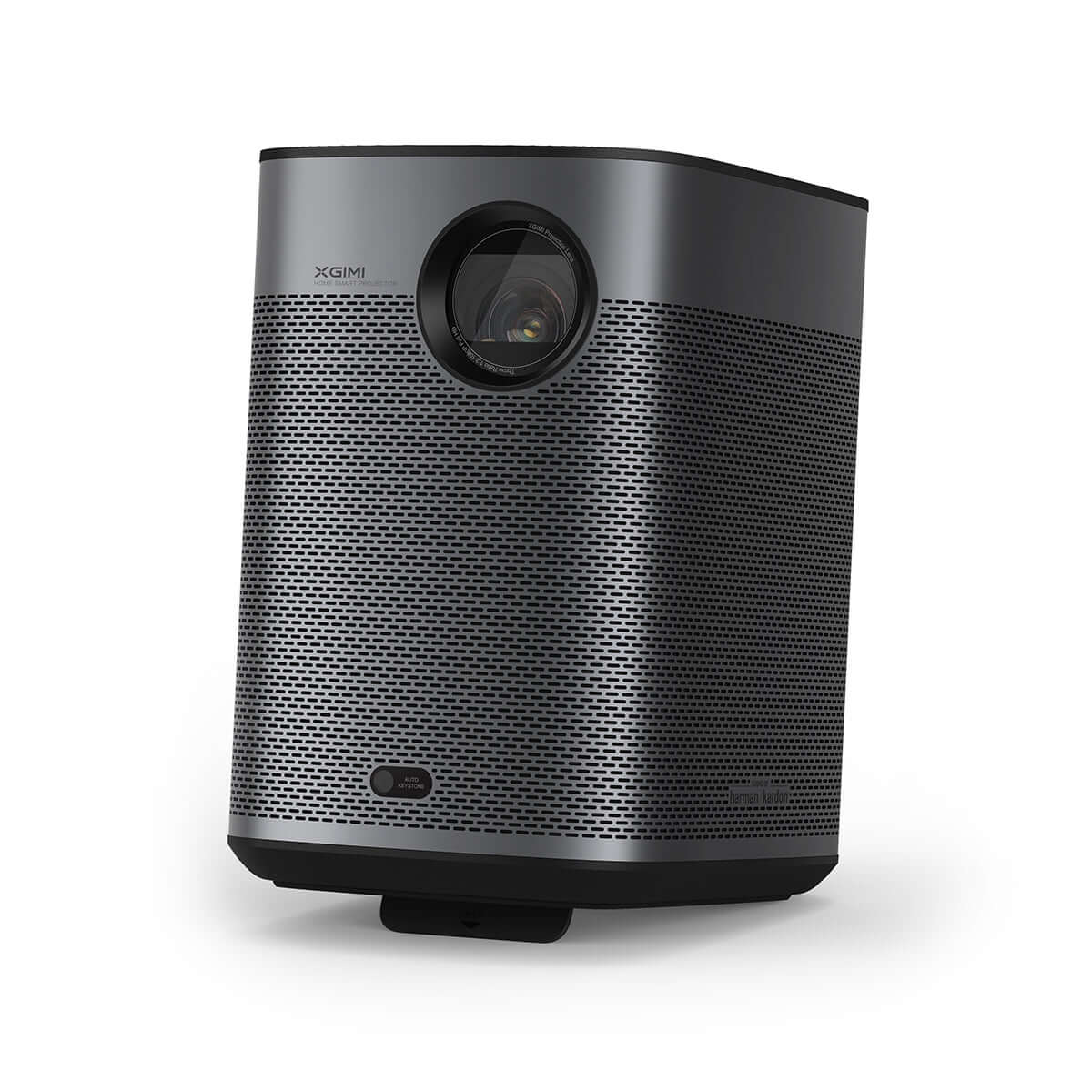
- 1080p resolution/700 ISO Lumens: produce excellent and radiant displays, great for movie nights and low-lit outdoor settings. Your camping movie nights will be memorable with bright and clear displays.
- Built-in Battery: provides about 2.5 hours of video/5hrs of music on a single charge for enjoying your favorite content in the brisk outdoors.
- Max 200-inch Screen: brings the cinema to the outdoors with a high-quality widescreen display.
- MEMC (60Hz): uses high refresh rates and low latency to mitigate image trailing in fast-moving content like sports and action movies.
- Harman Kardon Sound: from dual 5W built-in speakers with Dolby Audio and DTS-HD and DTS keep you engaged and set you up for an immersive viewing experience outdoors.
- X-VUE 2.0 Image Engine: uses image enhancement technology to make the display bounce and come alive with mesmerizing colors.
- Intelligent Screen Adaption (ISA) Technology: delivers ease of setup and usage through
○ Intelligent Screen Alignment: that fits the display to the screen's dimensions in seconds;
○ Auto Focus: for a crisp display a few seconds after turning on the projector;
○ Auto Keystone Correction: for delivering a rectangular image from side projection through vertical and horizontal correction up to ±45°;
○ Obstacle Avoidance: keeps the display free of obstacles in the projection zone by scaling it to avoid them. - Android TV™: brings premium entertainment from over 5000 apps, including Hulu and YouTube.
- Chromecast Built-in: supports screen mirroring of Android, iOS, and laptops for added content options, and Bluetooth/WiFi supports wireless connections for ease of use.
- HDR10: uses an extensive color depth and high contrast ratios to deliver true-to-life colors, brighter whites, and darker blacks.


Making Better Buying Decisions When You Understand Projector Brightness
Having a good understanding of projector brightness is beneficial when buying projectors. High ANSI lumens do not automatically translate to excellent viewing experiences. Hence, other factors like your needs, ambient light, and screen size should influence your projector choice.
Ambient light can cause projected displays to be less bright. Hence, you may need to consider projectors with ample ANSI lumens depending on your intended setting (indoor or outdoor) and when you want to use the projector (in the day or at night). Also, if you need a large screen size, remember that the wider the screen size, the more projector lumens required. For bright displays that suit your needs, XGIMI HORIZON Pro, AURA, and Halo+ are ideal home, laser, and portable projectors you can trust.
Related Products
Enjoy $10 off Your Next Purchase
Be the first to know about any news and sales!