


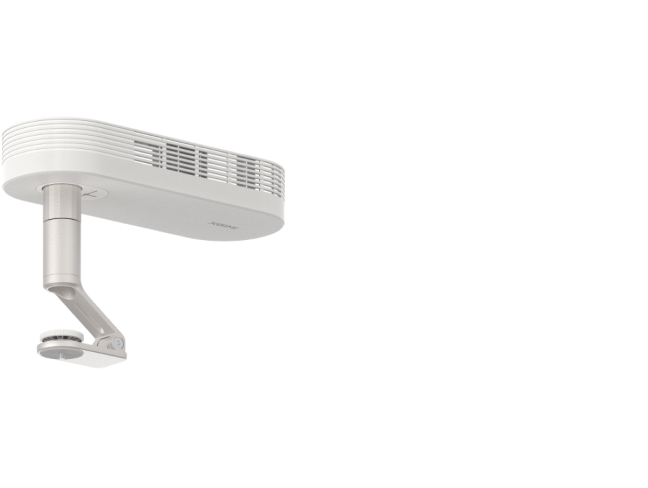





Choosing the right 4K gaming projector in 2026 means focusing on specs that directly affect responsiveness, image clarity on large screens, and real-world usability rather than chasing marketing numbers alone. For console and PC gamers seeking a 100-inch or larger display, the key is balancing ultra-low input lag, appropriate refresh rate support, sufficient brightness for your room, and convenient setup features so the experience feels fluid rather than compromised.
Low input lag remains one of the most critical factors because even small delays can ruin the feel of fast-paced games. Projectors that deliver input lag in the range of 16-20 ms or lower tend to satisfy competitive players, while 30-40 ms is often acceptable for most mixed console gaming and up to 50 ms can still work for slower, story-driven titles. These thresholds are heuristic guides based on typical player tolerance rather than universal standards, and actual perception depends on the game, your sensitivity, and whether the projector is in a dedicated low-latency game mode.
Refresh rate support matters too. A minimum of 60 Hz is the practical baseline for modern consoles, but 120 Hz becomes important for PS5, Xbox Series X, and PC gamers who want smoother motion in supported titles. HDMI 2.1 is the relevant specification here because it enables 4K at 120 Hz along with features like Variable Refresh Rate (VRR) and Auto Low Latency Mode (ALLM) that help eliminate tearing and reduce lag automatically.
On large screens, true 4K resolution (or a well-implemented 4K input path) helps maintain sharpness, but buyers should understand that some models use pixel-shifting techniques. These can look excellent from typical viewing distances yet may not match native 4K in fine detail or motion clarity for text-heavy PC use or very close seating.
Brightness, contrast, and HDR performance play major roles in how enjoyable gameplay feels, especially in rooms with ambient light. In fully controlled dark rooms, 1500-2000 ANSI lumens can deliver satisfying results, but mixed-light living rooms generally need 2500-3000 ANSI lumens or more to combat washout and preserve contrast. HDR support such as Dolby Vision or HDR10 can enhance highlights and color in games, but performance varies heavily with the projector's peak brightness and tone-mapping quality.
Setup convenience features like auto keystone correction, autofocus, and intelligent screen adaptation can dramatically reduce the frustration of installation, particularly in shared living spaces or when moving the projector. These technologies help the image snap into place quickly without manual tweaking every time.
Minimum Viable Specs for a 4K Gaming Projector
Heuristic threshold view for common gaming setups; labels are decision boundaries, not lab-certified measurements.
View chart data
| Category | Input lag target (ms, lower is better) | Refresh rate target (Hz) | Brightness target (ANSI lumens) | HDMI requirement |
|---|---|---|---|---|
| Fast action (FPS / racing) | 18.0 | 60.0 | 1800.0 | 0.0 |
| Mixed gaming | 35.0 | 120.0 | 2500.0 | 1.0 |
| Cinematic gaming | 50.0 | 60.0 | 1600.0 | 0.0 |
| Dark dedicated room | 18.0 | 60.0 | 1800.0 | 0.0 |
| Ambient living room | 35.0 | 60.0 | 2800.0 | 0.0 |
| Console / PC readiness | 30.0 | 120.0 | 2500.0 | 1.0 |
Derived from viewpoint-insighter threshold tables and scenario matrix. Input lag uses heuristic bands (fast action <=16-20ms, mixed <=30-40ms, cinematic <=50ms). Refresh uses 60Hz minimum and 120Hz preferred for PS5/Xbox/PC. Brightness uses 1500-2000 ANSI for dark rooms and 2500-3000+ for ambient rooms. HDMI requirement is binary: HDMI 2.1 for 4K/120/VRR.
Understanding Input Lag for Console and PC Gaming
Input lag is the delay between pressing a button and seeing the result on screen. For competitive FPS or racing games, aim for the lowest possible lag—ideally 20 ms or less—so the projector does not hinder your reaction time. Many modern gaming projectors include a dedicated game mode that bypasses heavy image processing to achieve these numbers. For more on this topic, see Ultrawide Gaming Monitor vs. 4K Projector: Which Is Better for Sim ....
For casual or cinematic games on PS5 or Xbox Series X, slightly higher lag is often tolerable. PC gamers using the projector as a large monitor should pay extra attention because mouse and keyboard inputs can feel less precise than on a gaming monitor or TV. Testing with your specific games is the best way to confirm comfort.
This official brightness standards reference helps contextualize how light output interacts with perceived clarity and contrast during gameplay.
Refresh Rates and HDMI Features That Matter in 2026
Higher refresh rates reduce motion blur and make fast action feel smoother. While 60 Hz is sufficient for many titles, 120 Hz support unlocks the full potential of PS5 and Xbox Series X in performance modes and benefits high-frame-rate PC games. For more on this topic, see How to Reduce Motion Blur in Fast-Paced Games on a Projector.
HDMI 2.1 is the feature to look for if you want 4K at 120 Hz, VRR to match the game's frame rate to the display, and ALLM to automatically switch to low-latency mode. Without these, you may be limited to 4K/60 or experience screen tearing in demanding scenes.
How 4K Resolution Affects Sharpness on Large Screens
A 100-inch or larger projected image makes resolution differences more noticeable. True 4K or high-quality pixel-shifting projectors maintain crisp details across the screen, which is important for both immersive worlds and in-game text or HUD elements.
Seating distance plays a role—viewers farther away are less likely to notice minor resolution compromises. For PC gaming involving desktop use or strategy games with small text, native 4K or excellent upscaling is preferable.
Gaming Projector vs Gaming TV: When Each Wins
Projectors excel when you want an enormous screen without the cost of a 100-inch TV. They can deliver a more cinematic, immersive experience in controlled lighting and are often easier on the eyes during long sessions due to the diffuse light source.
However, TVs generally maintain better contrast and brightness in bright rooms and typically offer lower input lag out of the box. A gaming projector is often the better choice for dedicated rooms or occasional big-screen nights, while a TV may be more practical for everyday living-room use with variable lighting.
The choice flips based on your room and priorities: dark dedicated spaces favor projectors for size, while bright shared rooms may favor TVs for consistency.
Brightness, Contrast, and HDR in Ambient Light
Ambient light is the enemy of projector contrast. In living rooms with windows or lamps, higher brightness (2500+ ANSI lumens) helps the image fight washout and keeps colors vibrant during gameplay.
HDR content in games looks best when the projector can deliver strong peak brightness and accurate tone mapping. Models with dynamic iris or advanced light control improve black levels, making dark scenes in horror or adventure games more impactful.
For best results, pair the projector with an ambient-light-rejecting screen if your room cannot be fully darkened.
Setup Convenience Features That Simplify Gaming
Modern projectors include auto keystone, autofocus, and intelligent screen adaptation that detect the wall or screen and adjust the image automatically. These features are especially valuable when the projector is moved or used in multi-purpose rooms.
Look for models with quick setup routines so you can start gaming within minutes rather than spending time on manual alignment.
Compatibility with PS5, Xbox Series X, and Gaming PCs
Most current 4K projectors work with next-gen consoles, but full performance requires HDMI 2.1 ports and support for the console's advanced features. Confirm that the projector accepts 4K/120 signals if you plan to use performance modes.
PC compatibility depends on your graphics card's output capabilities. Ensure the projector supports the resolutions and refresh rates your GPU can drive, and test for any signal handshake issues.
Specs That Matter Most by Gaming Genre
- FPS and racing games: Prioritize the lowest input lag and 120 Hz support. Motion clarity and fast response times are non-negotiable.
- Cinematic and story-driven games: Contrast, color accuracy, and HDR performance take precedence. Slightly higher lag is usually acceptable.
- Mixed or multiplayer: Look for a balanced projector that handles both responsiveness and visual quality well.
How to Choose a 4K Gaming Projector for Your Room
Use this checklist to evaluate options:
- Measure your room's lighting conditions at typical gaming times and match brightness accordingly.
- Identify your primary platforms (PS5, Xbox, PC) and confirm required HDMI version and refresh rate support.
- Decide on throw type: traditional for flexible placement in dedicated rooms, ultra-short-throw for clean living-room integration.
- Test or research the model's real-world input lag in game mode with your preferred titles.
- Consider setup ease—models with auto features save time in shared spaces.
- Factor in audio: built-in speakers like Harman Kardon can simplify setup, but many gamers pair with a soundbar or receiver for better immersion.
If your room has significant ambient light and you cannot control it, a high-brightness TV may be the more practical choice. In dark, dedicated gaming rooms, a capable projector often provides superior size and immersion.
Avoid buying solely on resolution or advertised lumens without checking verified input lag and HDMI capabilities. Some projectors advertise 4K and high brightness yet fall short on responsiveness for serious gaming.
This low latency projectors guide highlights models that perform well for both gaming and movies.
For a direct size comparison, see how projectors stack up against large TVs in value and comfort in this 4K projector vs TV comparison.
Final Thoughts
The best 4K gaming projector for you depends heavily on your room conditions, primary games, and tolerance for setup. Focus on low input lag, sufficient brightness for your lighting, HDMI 2.1 for future-proofing, and convenience features that match your lifestyle. With the right match, a projector can deliver an unforgettable big-screen gaming experience that TVs struggle to equal in scale.
Results vary by specific model, content, and environment, so verify current specifications and, where possible, test in your intended space. A well-chosen projector can elevate your PS5, Xbox Series X, or PC gaming without forcing trade-offs in speed or visual quality, but it must be the right fit for your setup.


