











Why Professional Cable Management is Essential for Ceiling Projectors
A ceiling-mounted projector offers a sleek, cinematic look, but visible, dangling wires can quickly disrupt the aesthetic of a well-designed home theater. Beyond the visual clutter, professional cable management serves several functional purposes. Exposed cables are prone to collecting dust, accidental snags during cleaning, and physical strain at the connection ports, which can lead to intermittent signal loss over time. For more on this topic, see Renter-Friendly Home Theater: How to Set Up a Projector Without Dri....
For most enthusiasts, the goal is to achieve a "floating" look where the technology performs without the distraction of its infrastructure. Planning your cable path during the initial installation phase—rather than as an afterthought—ensures that the setup remains durable, safe, and easy to maintain as your hardware evolves.

Assessing Your Room and Structural Constraints
Before purchasing materials, evaluate your environment to determine which cable management strategy is feasible. Your choice will largely depend on your ceiling construction and whether you have the flexibility to make permanent modifications.
- Ceiling Type: Drywall ceilings with an accessible attic or crawl space above are ideal for full concealment. If you have a finished floor above the ceiling, routing becomes more complex, often requiring "fishing" tools. Drop ceilings (suspended tiles) are the easiest to work with, as they provide ample space to hide and secure cables.
- Ownership Status: Renters should generally avoid cutting into drywall. In these cases, surface-mounted solutions are the standard recommendation. Homeowners have more freedom but should still consider the long-term resale impact of any structural changes.
- Power Proximity: Identify the nearest grounded outlet. Most projectors come with a standard 6-to-10-foot power cord. If the mounting point is further away, you will need a solution that complies with local electrical codes—standard extension cords should typically not be run inside walls or ceilings.
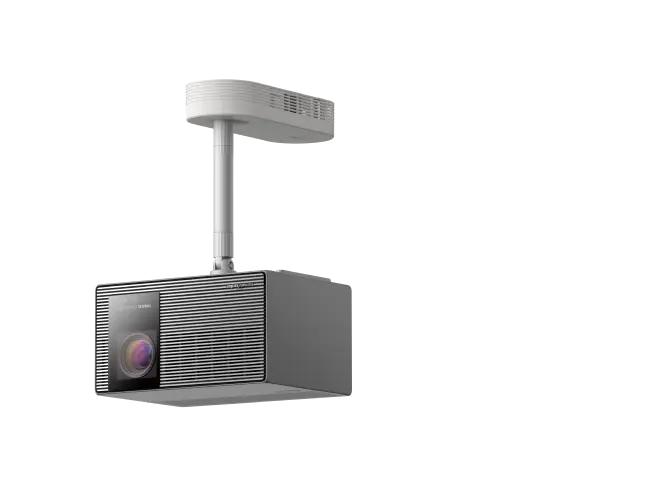
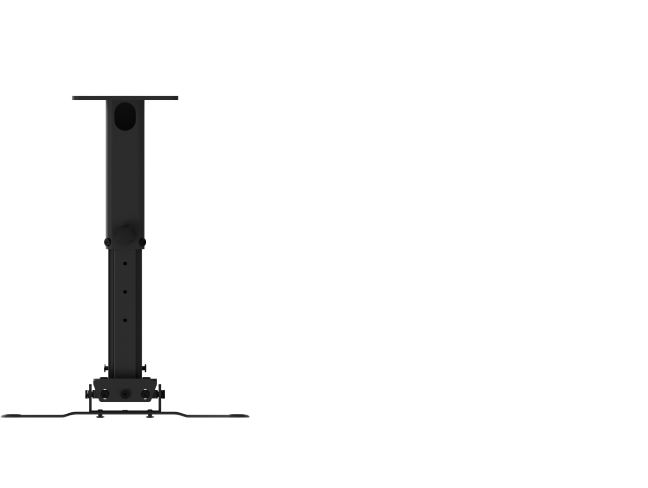
When selecting a mount, look for models like the XGIMI ceiling mount that offer integrated cable management features to help transition wires from the projector body to the ceiling surface. For more on this topic, see Projector Brightness Standards and Measurement: A Comprehensive Ref....
Common Cable Management Methods Compared
There is no one-size-fits-all solution. The following methods represent the most common industry practices for residential setups:
1. Surface-Mounted Raceways (Best for Renters)
These are plastic or metal channels that adhere to the ceiling or wall. They enclose the cables in a tidy, paintable track.
- Pros: Non-invasive, easy to install, and allows for quick cable swaps.
- Cons: Remains visible as a slight protrusion on the ceiling.
2. In-Wall/In-Ceiling Routing (Best for Homeowners)
This involves running cables through the hollow cavities of your walls or ceiling.
- Pros: Completely invisible; provides a high-end, professional finish.
- Cons: Requires specialized tools (fish tape), knowledge of joist locations, and potentially drywall patching.
3. Decorative Sleeves and Bundling
For very short runs or industrial-style lofts, bundling cables in a high-quality braided sleeve can make the "umbilical cord" look intentional rather than messy.
Heuristic Comparison of Routing Methods
The following chart provides a rule-of-thumb comparison based on typical DIY installation experiences.
Heuristic Comparison of Cable Management Methods for Ceiling-Mounted Projectors
Illustrative trade-off map for choosing a cable-management method; higher scores indicate a better outcome for each criterion, except installation difficulty where higher means easier.
View chart data
| Series | Aesthetics | Installation Difficulty | Cost | Reversibility | Code Friendliness |
|---|---|---|---|---|---|
| In-wall / in-ceiling | 5.0 | 1.0 | 2.0 | 1.0 | 3.0 |
| Surface raceway / conduit | 3.0 | 3.0 | 3.0 | 4.0 | 4.0 |
| Cable drop with management | 2.0 | 4.0 | 4.0 | 5.0 | 3.0 |
| Drop ceiling | 4.0 | 2.0 | 3.0 | 3.0 | 5.0 |
Heuristic comparison based on typical community patterns and common decision trade-offs for ceiling-mounted projector cable runs. Scores are illustrative only (1=less favorable, 5=more favorable) and should not be read as measured data or code advice.
Note: This visualization is for illustrative purposes. Actual difficulty and cost will vary based on local labor rates and specific architectural challenges.

Step-by-Step Guide to Professional Cable Routing
1. Preparation and Tool Kit
Before starting, ensure you have the following:
- Stud finder: To locate joists and avoid obstructions.
- Fish tape or glow rods: Essential for pulling cables through dark cavities.
- CL2 or CL3 rated HDMI cables: These are specifically designed with fire-resistant jackets for in-wall use.
- Recessed "Power Bridge" kit: If you need to move power into the wall, these kits allow you to extend power safely without violating most local fire codes.
2. Planning the Path
Map out the shortest route from the projector to your media source (AV receiver, gaming console, or PC). Avoid running signal cables (HDMI) parallel to high-voltage power lines for long distances, as this can occasionally cause electromagnetic interference (EMI), leading to "sparkles" or signal dropouts on the screen.
3. Executing the Run
- For Raceways: Clean the ceiling surface thoroughly before applying adhesive tracks. Use "elbow" connectors at 90-degree turns to maintain a clean line.
- For In-Wall: Cut your entry and exit holes. Use the fish tape to navigate past joists. Pro Tip: Always leave a "service loop"—about 6-12 inches of extra cable tucked into the ceiling—to allow for easy re-positioning or maintenance later.
- Bend Radius: Avoid sharp 90-degree kinks. A general rule of thumb is to maintain a bend radius of at least 2 inches to protect the internal copper or fiber optic strands of your HDMI cable.
4. Final Connection and Testing
Before closing any panels or finishing the paint, plug in the projector and run a 4K signal test. It is much easier to replace a faulty cable now than after the drywall is patched. If you are using a high-performance unit like the XGIMI HORIZON series, ensure your cables support the full bandwidth required for HDR and high refresh rates.
Safety Standards and Compliance
When managing cables, safety is the priority. In many jurisdictions, running a standard flexible power cord (the one that came with the projector) inside a wall is a violation of the National Electrical Code (NEC) because the jacket is not rated for the heat levels found inside wall cavities.
- Low-Voltage vs. High-Voltage: HDMI, Ethernet, and speaker wires are low-voltage and generally safe for DIY in-wall routing if they are CL2/CL3 rated.
- Power Solutions: For a truly professional and code-compliant setup, install a recessed outlet behind the projector mount. If you are uncomfortable with electrical wiring, hiring a licensed electrician for this single task is a worthwhile investment.
- Disclaimer: This guide provides aesthetic and general installation advice. It does not replace the expertise of a licensed professional or local building codes. Always consult a qualified electrician for power-related installations.
Common Mistakes to Avoid
- Ignoring Future Upgrades: Don't use a raceway or conduit that is exactly the size of your current cables. Leave 30% "wiggle room" for a future fiber-optic HDMI or Ethernet cable.
- Skipping the Stud Finder: Drilling blindly into a ceiling can damage HVAC ducts or existing electrical runs.
- Over-tightening Zip Ties: Pinching cables too tightly can damage the internal shielding. Use Velcro straps or loose-fitting ties instead.
Achieving the Ultimate Home Cinema Look
A clean installation is the final step in creating an immersive environment. By hiding the "how" of your technology, you allow the "what"—the stunning 4K visuals—to take center stage. For more tips on optimizing your viewing experience, check out our home projector setup guide or explore how to set up a movie theater at home.
Whether you choose a simple surface-mount or a complex in-wall routing, the effort you put into cable management today will ensure a safer, cleaner, and more enjoyable home theater for years to come.


