




The Short Answer: Match Screen to Throw Angle First, Room Lighting Second
If you own or are buying a UST (ultra short throw) projector, you need a CLR-type screen — full stop. If you own a standard throw projector in a living room with ambient light, you need an ALR screen. Buying the wrong type for your projector's throw angle will produce worse results than a basic matte white screen, not better. For more on this topic, see Projector Throw Ratio Explained: Standard vs. Short Throw vs. Ultra....
That's the core decision. Everything below explains the optical reasoning behind it, how your room's lighting pattern modifies the choice, and what trade-offs to expect at each price tier.
Who this is NOT for: If you have a fully light-controlled, blacked-out dedicated theater room, a standard matte white screen is the correct and most cost-effective choice — matte white screens work well in dedicated theater rooms with excellent light control. This guide is also not relevant for outdoor projector setups or casual bedroom viewers who watch exclusively at night.
How ALR and CLR Screens Actually Reject Light
Most buyers assume ALR and CLR are just marketing names for the same product. They are not — they reject light from fundamentally different angles, which is why throw compatibility matters so much.
ALR screens use optical layers — typically a combination of micro-structured surfaces and light-absorbing coatings — that reflect projected light while absorbing or redirecting ambient light. The key is angular discrimination: the optical layer is tuned to accept light arriving from the projector's specific throw angle (roughly horizontal, from the front of the room) while rejecting off-axis light from the sides and ceiling. This works because a standard throw projector fires light at a relatively shallow, near-horizontal angle toward the screen.
CLR screens use a lenticular microstructure — a surface of tiny horizontal lens-shaped ridges — that is optimized to absorb near-vertical light (light falling from directly above, i.e., ceiling fixtures). Independent measurements of lenticular CLR panels show overhead rejection reaching up to 90% at steep angles, with a typical gain of 0.6–0.8. That deliberately sub-1.0 gain is a design choice: the microstructure trades peak brightness for aggressive ceiling-light absorption.
The critical implication: a CLR screen pointed at a standard throw projector will absorb a significant portion of the projector's own light, because the projector beam arrives from a near-horizontal angle — exactly the direction the CLR layer is designed to suppress. The result is a dim, washed-out image. Conversely, an ALR screen used with a UST projector fails because the UST beam arrives from a steep upward angle that the ALR layer treats as ambient light to be rejected.
Evidence: XGIMI's official UST guidance states that UST projectors "shoot light upward at a sharp angle" and require "a flat, rigid screen" — the steep angle is precisely why a standard ALR layer cannot distinguish the projector beam from ceiling light. For more on this topic, see Can You Project on a Painted Wall? Best Wall Colors for Home Projec.... For more on this topic, see Projector vs TV: An Honest Comparison for Your Home.

CLR Is a Sub-Category of ALR — and the Naming Is Inconsistent
One of the most common sources of confusion in community discussions is the terminology itself. As one Reddit user noted in r/hometheater: "I'm also finding conflicting things — if I look up Elite Screens ALR and CLR it says it's not for UST." This confusion is legitimate: different brands use different names for the same optical behavior.
"CLR" (Ceiling Light Rejecting) is a trademarked term used by some manufacturers to describe a lenticular UST-optimized screen. Other brands call the same product "UST ALR," "laser TV screen," or "floor-rising ALR." For this article, the distinction is defined by optical behavior, not brand labels:
- Standard ALR = rejects side/overhead ambient light; designed for standard throw projectors
- CLR / UST ALR = rejects near-vertical ceiling light via lenticular layer; designed for UST projectors
When shopping, always check the manufacturer's compatibility statement rather than relying on the label alone.
Your Room's Lighting Pattern: The Second Decision Variable
Once you've matched screen type to throw angle, your room's dominant light source determines how much performance benefit you'll actually see — and whether the cost premium is justified.
Ceiling lights directly above the screen are the most damaging scenario for any projection setup. As XGIMI's own comparison guide states: "Your ceiling lights matter most. Lights directly above the screen cause the biggest problems." For UST setups, a CLR/UST-ALR screen directly addresses this by absorbing near-vertical light. For standard throw setups, an ALR screen helps but is less effective against pure overhead light than against side-angle sources.
Side windows and indirect daylight are where standard ALR screens perform best. The optical layer is tuned to reject off-axis light arriving from the sides of the room, which is exactly the profile of window light entering from the left or right.
Direct sunlight hitting the screen surface is the one scenario neither type solves well. XGIMI's guidance is explicit: "Direct sunlight on the screen washes out both types unless you add an expensive ALR screen" — and even then, performance degrades significantly. Blackout curtains remain the most effective solution for direct sun exposure.
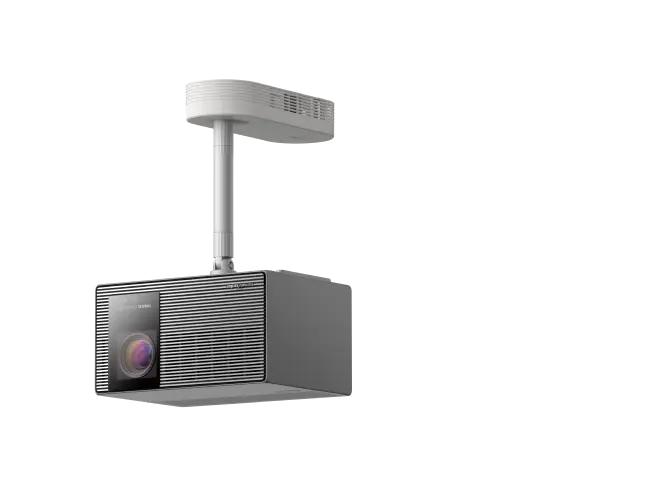
Ceiling-mounted projectors introduce a specific failure mode worth flagging: if you mount a standard throw projector on the ceiling and pair it with an ALR screen, the screen will not function as intended. XGIMI's ceiling projector guide states plainly: "The objective of the ALR screen is defeated if the model is mounted on the ceiling, hence the ALR will not function." In that configuration, a standard matte white screen is the correct choice.

Room Environment Checklist: Which Screen Type Fits Your Setup
Work through these questions in order before purchasing:
Step 1 — Identify your projector's throw type:
- Throw ratio below 0.5:1 (projector sits within 30 cm of the screen)? → You need a CLR / UST ALR screen
- Throw ratio 1.0:1 or higher (projector sits 2+ meters from the screen)? → You need a standard ALR screen (if ambient light is present) or matte white (if room is dark)
Step 2 — Identify your dominant light source:
- Ceiling fixtures directly above or in front of the screen → ALR helps for standard throw; CLR/UST ALR is essential for UST
- Side windows, indirect daylight → Standard ALR screens perform well here
- Direct sunlight on the screen surface → Neither type fully compensates; add blackout curtains first
- Projector ceiling-mounted → Do NOT use ALR; use matte white
Step 3 — Check your seating arrangement:
- Viewers seated directly in front of the screen (within ±30°)? → High-gain ALR/CLR screens are viable
- Viewers spread across a wide seating arc (beyond ±40°)? → High-gain screens will show brightness falloff and color shift for off-axis viewers (see trade-offs below); consider a lower-gain ALR option
Logic Summary: This checklist assumes a typical living room with 2–4 viewers, ceiling or recessed lighting, and no dedicated light control. It does not apply to outdoor setups, dedicated home theaters with blackout capability, or rooms where the projector is ceiling-mounted. The throw ratio threshold of 0.5:1 is a practical rule of thumb — always verify against your specific projector's spec sheet.
Gain and Viewing Angle: The Trade-Off No One Mentions Upfront
Screen gain is the ratio of a screen's reflectivity compared to a standard reference surface. A gain of 1.0 reflects light equally in all directions. Higher gain concentrates reflected light toward the center viewing position, making the image appear brighter from straight-on — but at a cost.
XGIMI's screen guide is direct about the downside: "viewers sitting at angles may notice brightness falloff and color shifting" with high-gain screens (typically 1.3–2.5 gain range). This is not a minor effect in a living room with a wide sofa — someone seated 45° off-center will see a noticeably dimmer, color-shifted image.
CLR/UST ALR screens typically have gain in the 0.6–0.8 range, which means they are actually dimmer than a matte white screen when measured straight-on. The trade-off is that they reject ceiling light aggressively enough that the net perceived contrast is higher in a lit room. XGIMI's 100-inch UST ALR Screen is rated at 80% ambient light rejection and 1.4x brightness gain — a brand-stated figure that reflects a design optimized for the specific optical geometry of UST projection. Independent lab comparisons across brands are not available within this article's scope, so treat manufacturer gain figures as directional benchmarks rather than absolute measurements.
Standard ALR screens for long-throw projectors typically land in the 1.0–1.3 gain range, which offers a better balance between brightness and viewing angle for multi-viewer living room setups.

UST Projectors and Screen Compatibility: Why the AURA 2 Requires a Specific Screen Type
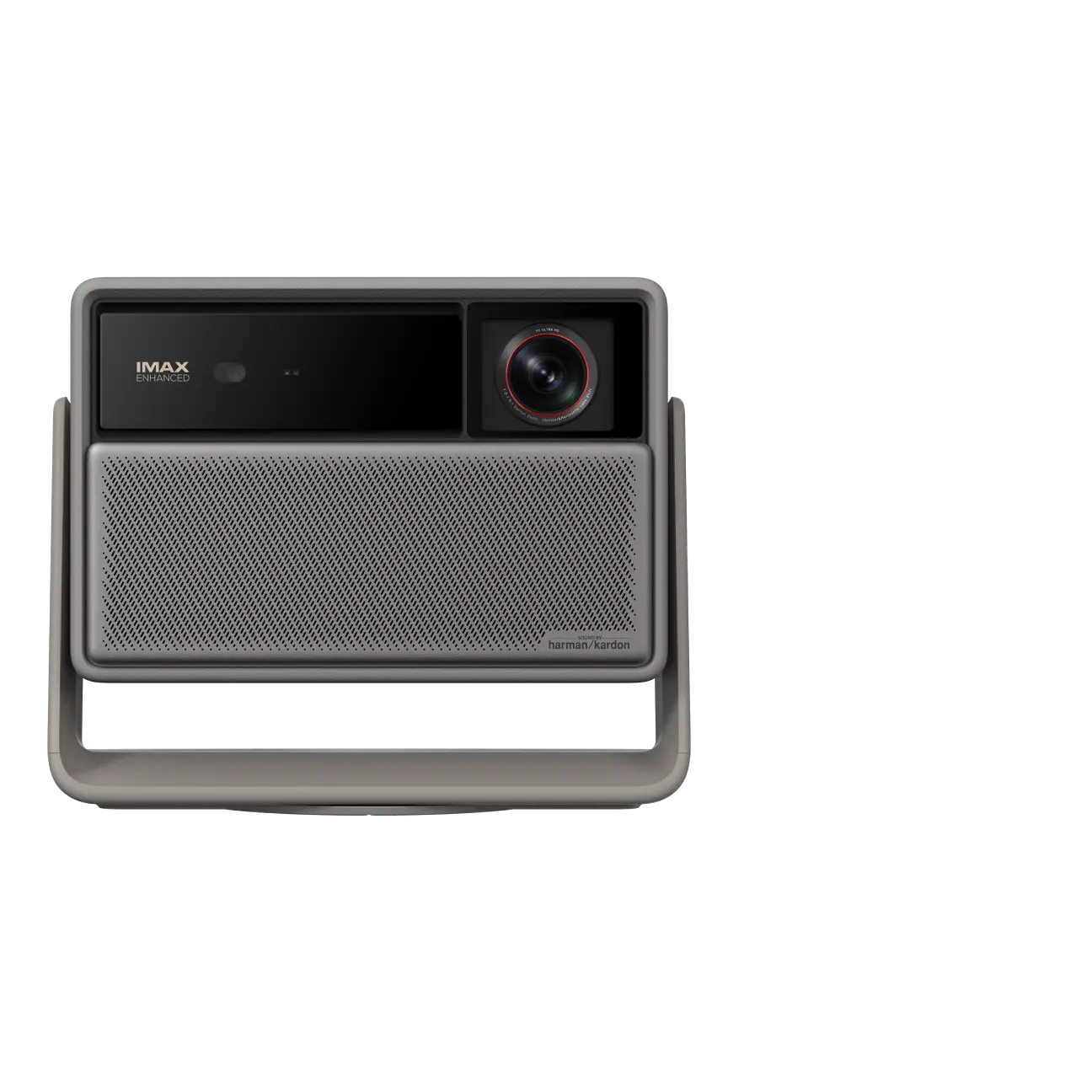
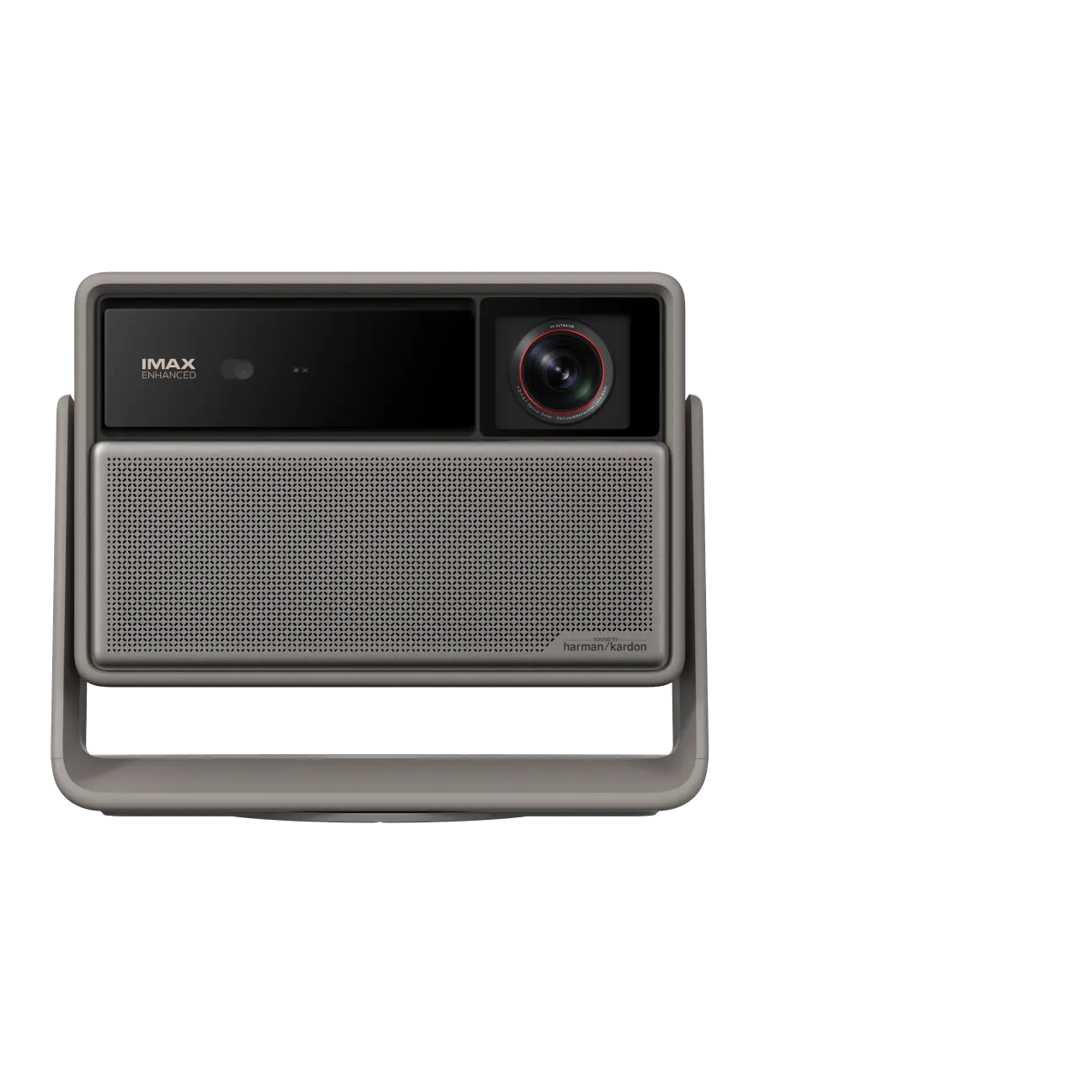
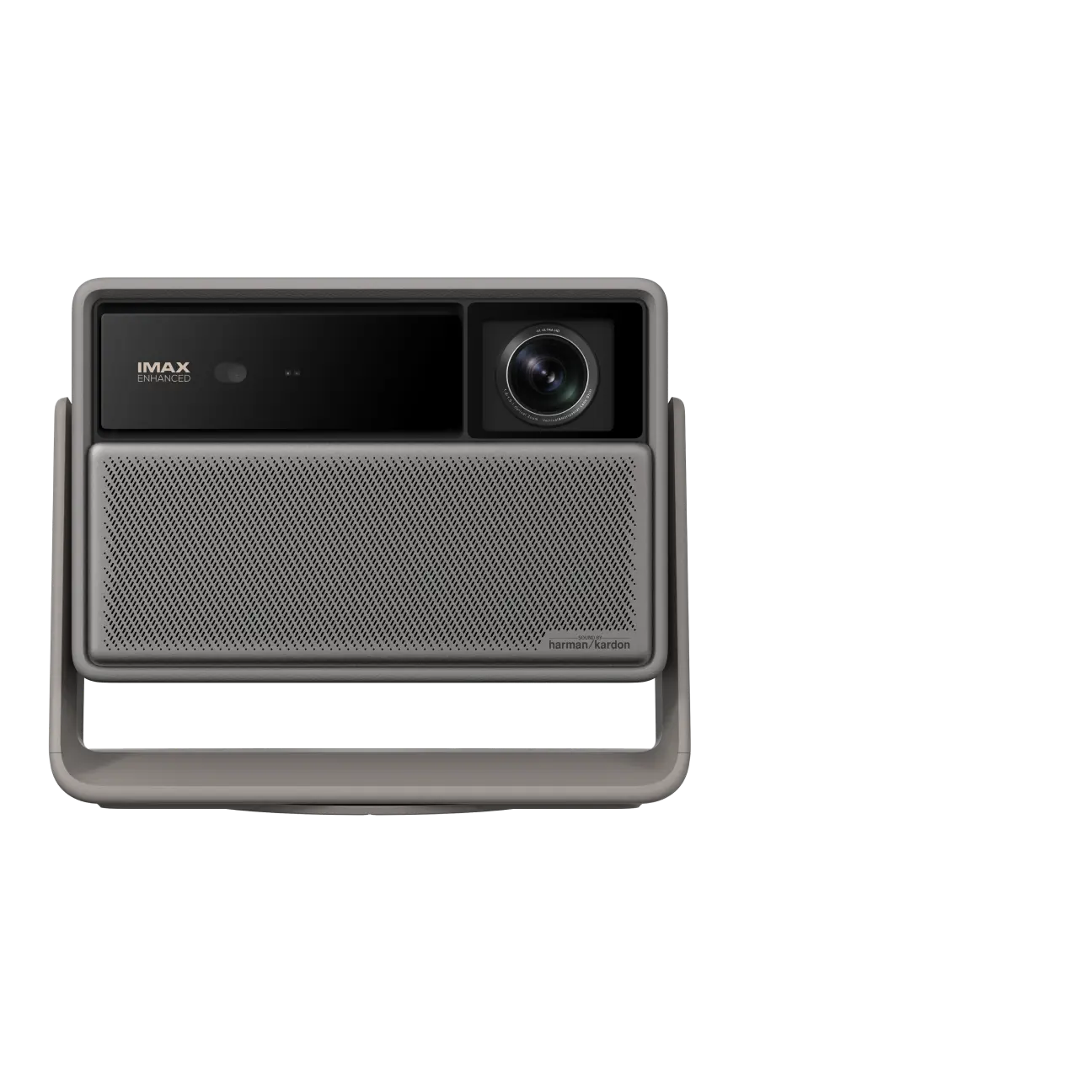
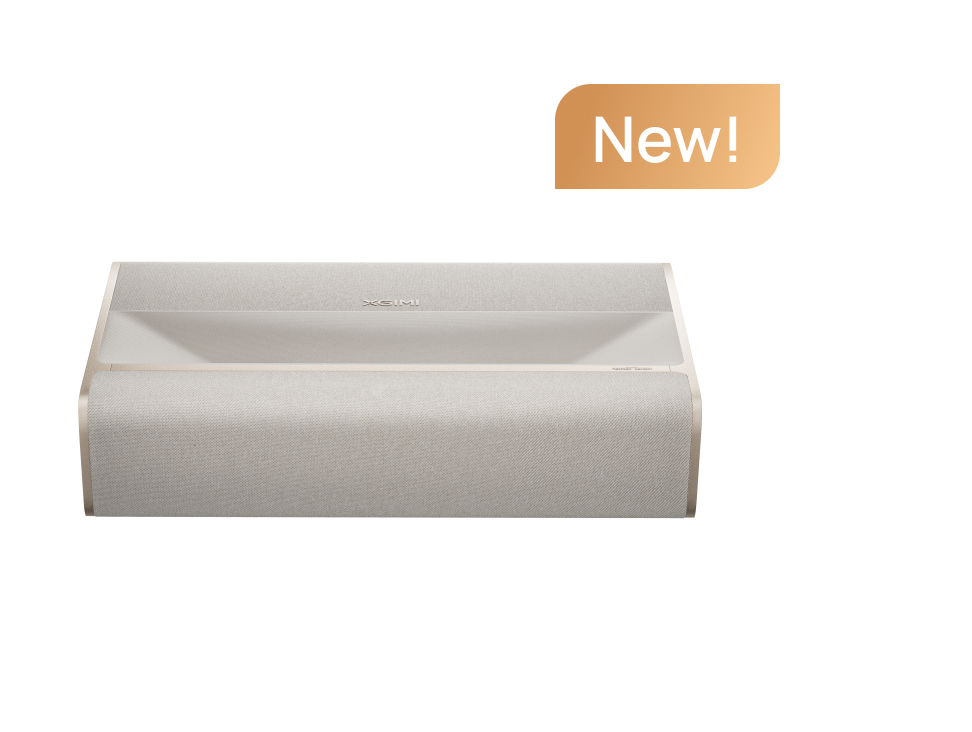
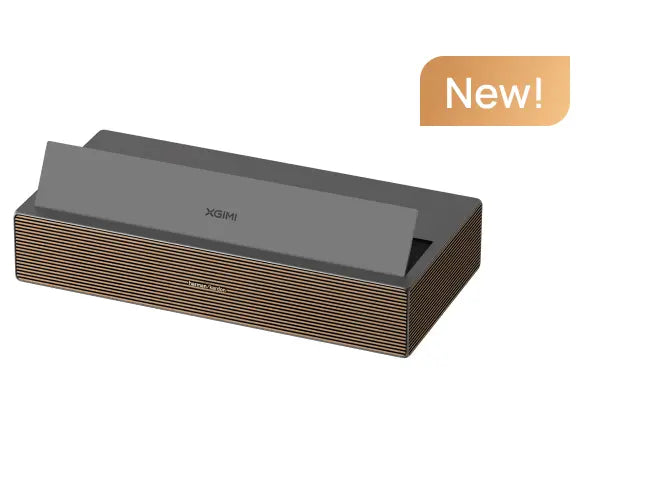
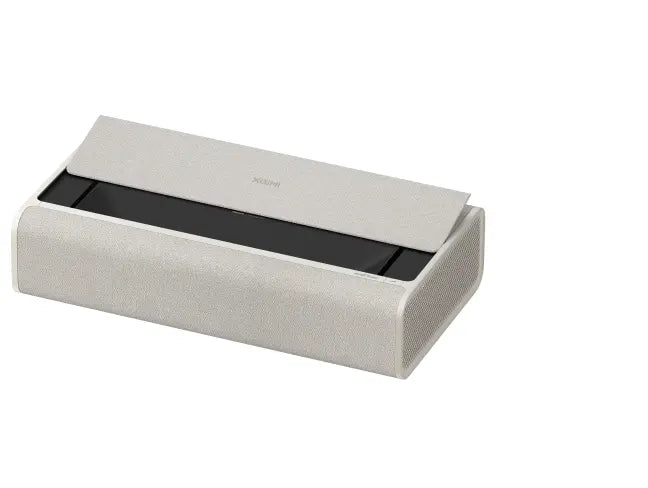
The XGIMI AURA 2 has a 0.177:1 throw ratio — it sits approximately 18 cm from a 100-inch screen. At that distance, the projector beam arrives at the screen surface at a near-vertical upward angle. This geometry creates two requirements that standard screens cannot meet:
- Surface flatness: Any wall unevenness is magnified at steep projection angles, creating visible wavy distortion. XGIMI's guidance for UST setups is unambiguous — "UST projectors create wavy, distorted images on walls" and require a flat, rigid screen surface.
- Optical layer orientation: The screen's light-rejecting layer must be tuned to accept light arriving from below (the projector's angle) while rejecting light from above (ceiling fixtures). Only a CLR/UST ALR lenticular screen achieves this.
XGIMI's official recommendation for the AURA series is to use an 88–100 inch ALR screen designed for laser projectors; ordinary electric screens and floor screens are explicitly noted as "not ideal" due to surface flexibility causing distortion.
For buyers considering the AURA 2 as a living room TV replacement, the XGIMI 100-inch UST ALR Screen is the matched accessory — rigid, flat, and optically tuned for the AURA 2's throw geometry. One practical installation note: the wall must support at least 30 kg for mounting, and hollow walls, tile, or marble surfaces require professional installation assessment.
Standard Throw Projectors in Ambient-Light Living Rooms
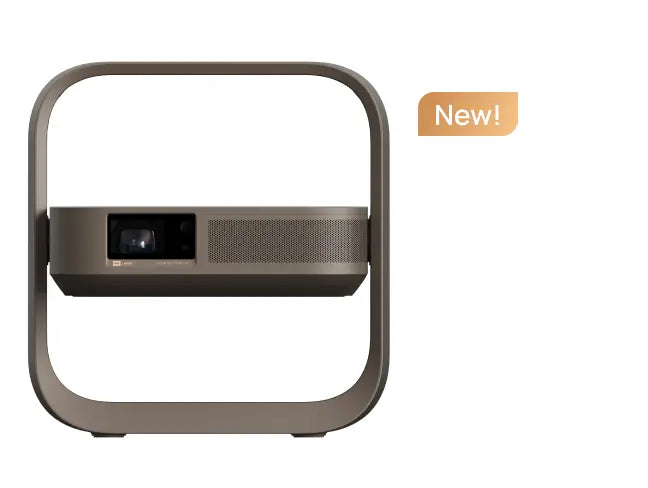
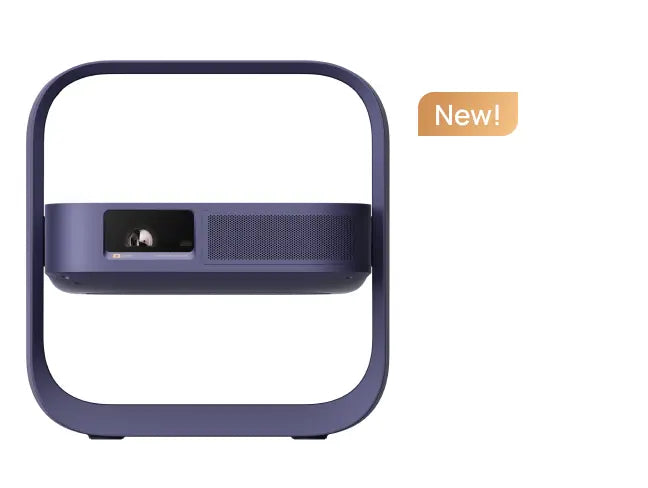
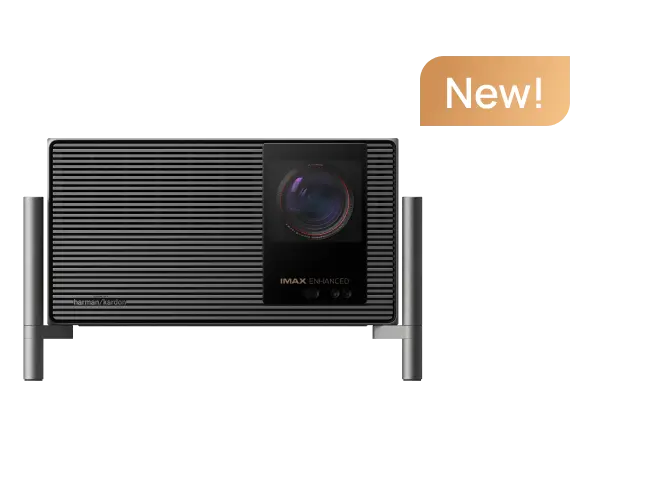
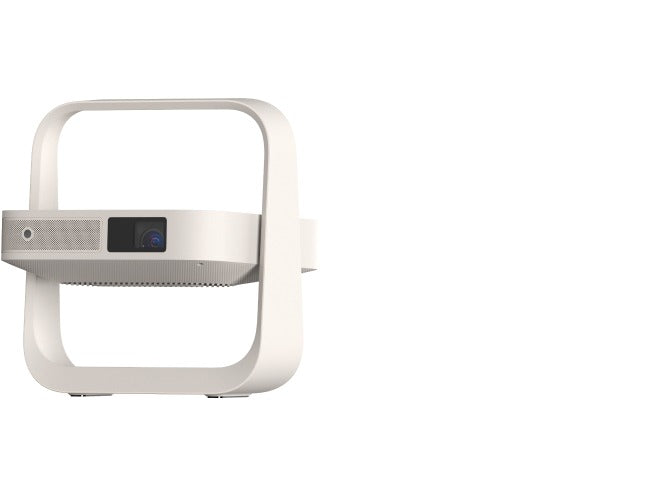
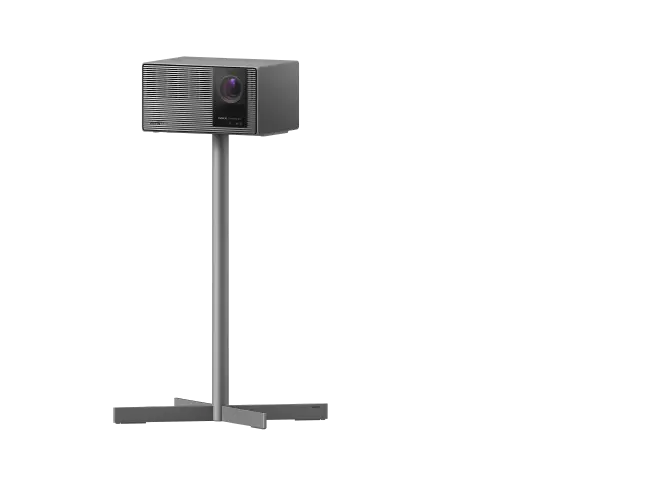
If you're using a standard throw projector — such as the XGIMI HORIZON 20 Max (5,700 ISO lumens) or the HORIZON 20 Pro (4,100 ISO lumens) — in a living room with ceiling lights and windows, a standard ALR screen is the appropriate upgrade path.
The calculus for whether the cost premium is justified: if you can achieve near-complete darkness with blackout curtains, a standard matte white screen will outperform an ALR screen because it offers better color accuracy and wider viewing angles. ALR screens make economic sense specifically when "you cannot dedicate a room to complete light control" — the typical living room scenario where ceiling lights stay on during viewing or windows admit daylight.
For standard throw buyers who want deeper guidance on screen material, gain, and size selection before committing, our comprehensive screen buying guide covers the full decision matrix. If you're still deciding between UST and standard throw as a projector category, the UST vs. standard throw comparison addresses throw distance, room layout, and image size trade-offs.
Common Misconceptions About ALR and CLR Screens
"Any ALR screen works with any projector." False. As covered above, a standard ALR screen used with a UST projector will reject a significant portion of the projector's own beam.
"CLR screens are brighter than standard screens." Generally false. CLR/lenticular screens have sub-1.0 gain by design. They appear to have better contrast in lit rooms because they suppress ceiling light — not because they produce more light.
"An ALR screen eliminates all ambient light problems." Overstated. XGIMI's own guidance notes that direct sunlight on the screen degrades both ALR and CLR performance. ALR screens reduce the impact of ambient light; they do not eliminate it.
"Ceiling-mounted projectors work fine with ALR screens." False. As noted above, ceiling mounting defeats the angular rejection mechanism of ALR screens entirely.
"Gray screens and ALR screens are the same thing." They are not. Gray screens improve contrast by absorbing some light uniformly — they have no angular rejection capability. ALR screens use structured optical layers to selectively reject off-axis light while preserving on-axis projector light. For a full comparison of gray vs. white vs. ALR screen materials, see how to choose the right projector screen.
Making the Final Call: A Practical Summary
The decision tree is short once you have the two key inputs:
- UST projector (throw ratio below 0.5:1) + any ambient light → CLR / UST ALR screen (rigid, flat, lenticular)
- Standard throw projector + living room ambient light → Standard ALR screen (gain 1.0–1.3 for wide seating, higher gain only for narrow front-row setups)
- Standard throw projector + fully dark room → Matte white screen (best color accuracy, widest viewing angle, lowest cost)
- Ceiling-mounted projector → Matte white screen only; ALR will not function
For living room TV replacement buyers evaluating the AURA 2, the projector and its matched screen are designed as a system — using a non-UST ALR screen or projecting onto a wall will produce measurably worse results than the intended pairing. For standard throw buyers in ambient-light living rooms, the HORIZON 20 series paired with a quality ALR screen covers the same use case from a different installation geometry. For more on this topic, see Do You Need a Screen for a 4K Projector? Wall vs. Screen Image Qual....


