

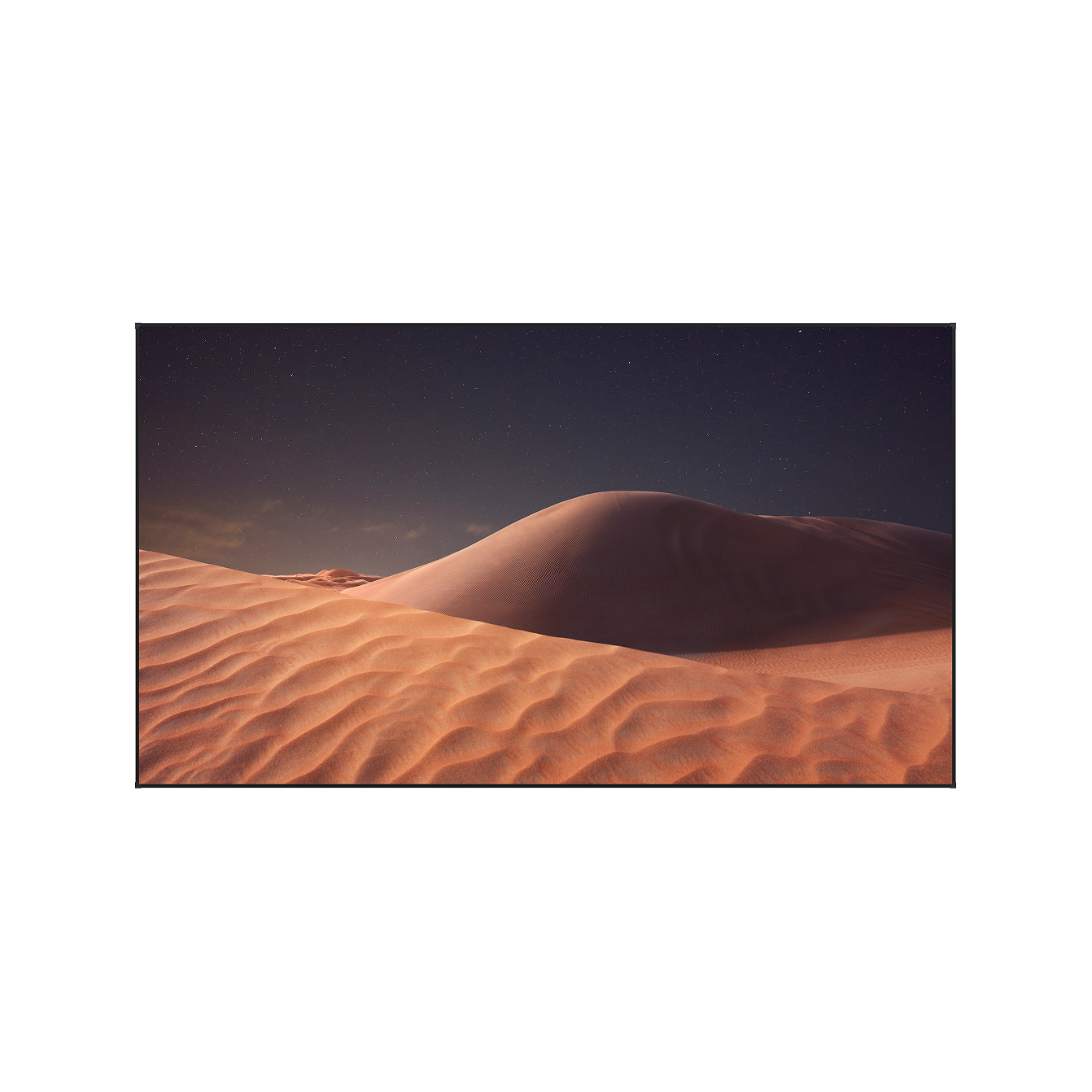



Getting the right projector screen size can make or break your viewing experience. Whether you are building a dedicated home theater, setting up a classroom, or hosting an outdoor movie night, screen size directly affects image clarity, viewing comfort, and overall immersion.

Projector Screen Size Matters
A projector's biggest advantage over a traditional TV is its ability to deliver a massive, cinema-scale image. However, bigger is not always better. A screen that is too large for your room will result in a dim, pixelated picture, while one that is too small defeats the primary purpose of using a projector.
Choosing the correct projector screen size matters for several reasons:
- Immersion: A properly sized screen fills your field of vision, creating a true cinematic experience—especially with 4K and Dolby Vision content.
- Image quality: When your screen size matches your projector's resolution and brightness, you get sharp, vivid images without visible pixels.
- Viewing comfort: Maintaining the correct screen size relative to your seating distance prevents eye strain during extended viewing sessions.
- Content clarity: In business presentations and classrooms, a well-sized screen ensures text, charts, and visuals are easily readable from every seat.
Projector Screen Size Chart: Quick Reference
Not sure what size projector screen you need? Here is a quick reference table matching screen size to the ideal viewing distance and room type.
| Screen Size (Diagonal) | Screen Width (16:9) | Screen Height (16:9) | Ideal Viewing Distance | Best For |
| 60–80 inches | 52–70 in | 29–39 in | 5–8 ft | Bedrooms, small offices |
| 80–100 inches | 70–87 in | 39–49 in | 8–12 ft | Living rooms, small meeting rooms |
| 100–120 inches | 87–105 in | 49–59 in | 10–15 ft | Dedicated home theaters, classrooms |
| 120–150 inches | 105–131 in | 59–74 in | 12–18 ft | Large home theaters, conference rooms |
| 150–200 inches | 131–174 in | 74–98 in | 15–25 ft | Auditoriums, outdoor screenings, event venues |
Rule of thumb: For a standard 16:9 widescreen, the ideal viewing distance is approximately 1.5× to 2× the screen width. If you sit 12 feet from the screen, a 100- to 120-inch display is typically perfect.
How to Calculate Projector Screen Size
You do not need complex tools to figure out the right screen size—just a tape measure and a few quick calculations.
Step-by-Step Calculation
Step 1: Determine your aspect ratio. The most common projector aspect ratios are:
- 16:9 — Standard for home theater, gaming, and streaming (Netflix, Disney+, YouTube).
- 4:3 — Commonly used for business presentations and legacy content.
- 2.35:1 (CinemaScope) — Ultra-widescreen for cinematic films.
- 16:10 — Common in education and office projectors.
Step 2: Measure your viewing distance. This is the distance from the screen to the primary seating position, measured in feet or inches.
Step 3: Calculate screen width.
- For a 16:9 aspect ratio: Width = Viewing Distance × 0.87
- For a 4:3 aspect ratio: Width = Viewing Distance × 0.75
Step 4: Calculate screen height.
- For 16:9: Height = Width ÷ 1.78
- For 4:3: Height = Width ÷ 1.33
Step 5: Calculate diagonal screen size. Use the Pythagorean theorem: Diagonal = √(Width² + Height²)
Example Calculation
If your viewing distance is 10 feet (120 inches) and you are using a 16:9 projector:
- Width = 120 × 0.87 = 104.4 inches
- Height = 104.4 ÷ 1.78 = 58.7 inches
- Diagonal = √(104.4² + 58.7²) = 119.8 inches — so a 120-inch screen is ideal.
Pro tip: Many premium projector brands, including XGIMI, offer free online projection calculators that factor in your specific projector model's throw ratio and zoom range. These tools take the guesswork out of the setup process.

Throw Distance and Its Impact on Screen Size
Throw distance—the physical space between the projector lens and the screen—is one of the most critical factors controlling how large your projected image will be.
What Is Throw Ratio?
The throw ratio describes the relationship between throw distance and image width: Throw Ratio = Throw Distance ÷ Image Width. For example, a projector with a 2.0 throw ratio needs to be placed 10 feet away to produce a 5-foot-wide image.
Projector Types by Throw Distance
| Projector Type | Throw Ratio | Distance for 100" Screen | Best For |
| Ultra-Short Throw (UST) | 0.2–0.4 | 1–2 feet | Small rooms, wall-mounted setups, and living rooms |
| Short Throw | 0.4–1.0 | 3–6 feet | Bedrooms, classrooms, apartments |
| Standard/Long Throw | 1.0–2.0+ | 8–15+ feet | Dedicated home theaters, conference rooms, and event venues |
Ultra-Short Throw (UST) projectors have become increasingly popular for modern homes. They sit just inches from the wall or screen and can produce a massive 100- to 120-inch image, making them perfect for apartments and rooms where ceiling-mounting a traditional projector is not practical.
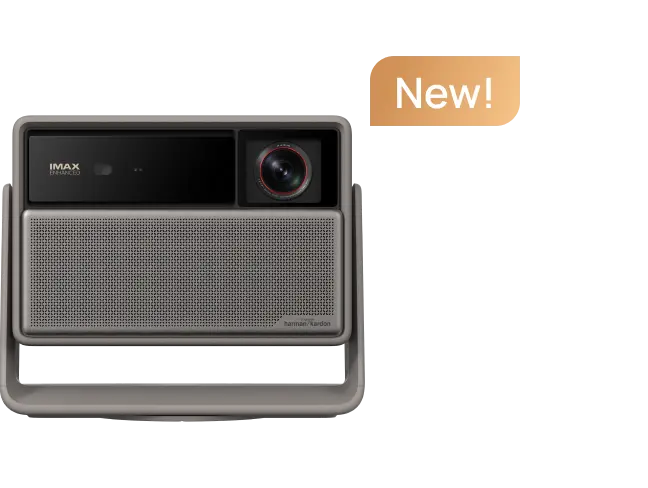
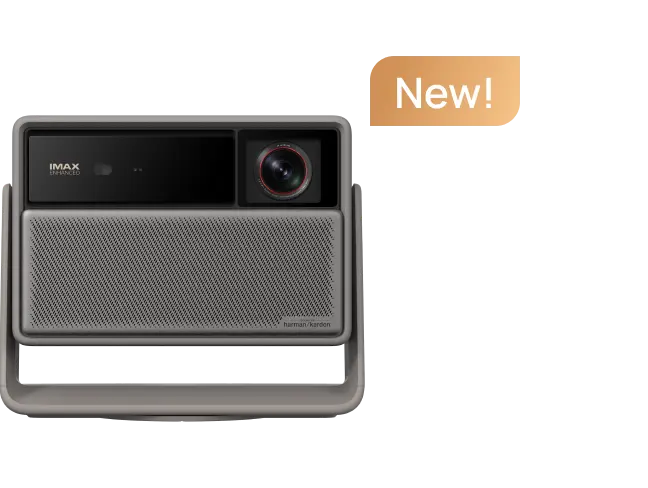
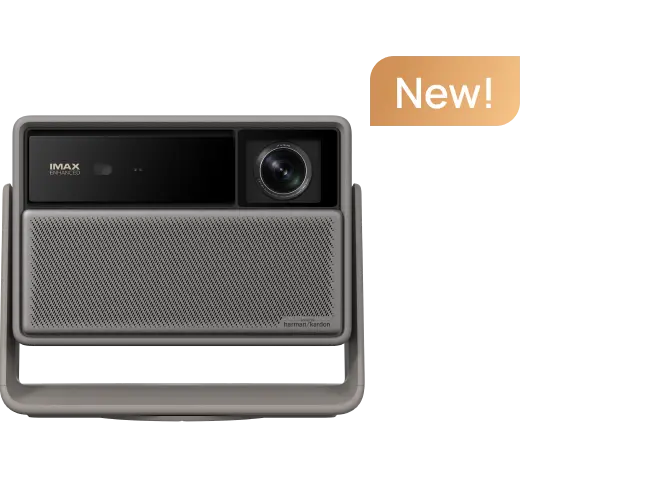
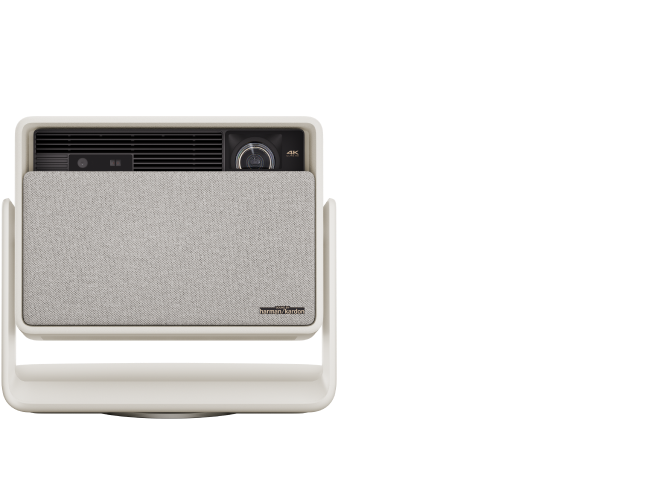
Long-throw projectors remain the go-to choice for dedicated home theater rooms. Models like the XGIMI HORIZON Ultra can project screen sizes ranging from 40 to 200 inches, giving you maximum flexibility depending on your room layout.
6 Ways to Adjust Your Projector Screen Size
Already have a projector and need to fine-tune your screen size? Here are six effective techniques:
1. Change the Throw Distance
The simplest method is physical placement: move your projector closer to shrink the image, or further away to enlarge it. This works exceptionally well if your projector is placed on a portable stand or shelf rather than being ceiling-mounted.
2. Use the Zoom Function
Most projectors offer either optical zoom or digital zoom (or a combination of both).
- Optical zoom adjusts the lens mechanically to resize the image without any loss in overall quality. A 1.3× zoom lens, for example, allows you to adjust the image size by 30% without physically moving the projector.
- Digital zoom resizes the image electronically. While convenient, this method slightly reduces sharpness because it artificially crops or stretches the pixels.
For the best possible image quality, always prioritize optical zoom over digital zoom.
3. Adjust the Aspect Ratio
If your content features black bars (letterboxing) on the top, bottom, or sides, your projector's aspect ratio likely does not match the source content. Switching between 16:9, 4:3, or other presets in your projector's display menu will resize the image to eliminate or minimize those bars.
4. Use Keystone Correction
When a projector is not perfectly aligned with the screen—for example, if it is placed on a low coffee table projecting upward—the image becomes a trapezoid instead of a clean rectangle. This optical distortion is known as the keystone effect.
- Auto keystone correction: Premium smart projectors, such as XGIMI models, detect and correct this distortion automatically using built-in sensors and AI algorithms.
- Manual keystone correction: You can manually adjust the horizontal and vertical geometry settings in the projector's menu to square up the image.
Note that heavy keystone correction (especially digital correction) can slightly reduce image resolution. For the sharpest picture, position your projector as level with the screen center as possible.
5. Lens Shift
Lens shift physically moves the image up, down, left, or right by adjusting the projector's internal optics—without negatively affecting image quality. This is a premium feature found on higher-end projectors and is widely preferred over digital keystone correction because it maintains full resolution.
6. Adjust a Retractable or Adjustable Screen
If you utilize a retractable, motorized, or pull-down projector screen, you can physically adjust how much screen surface is exposed. This is highly useful when switching between different media formats (e.g., pulling the screen down further for a CinemaScope film versus rolling it up slightly for a standard 16:9 TV broadcast).
How to Choose the Right Projector Screen Size for Your Room
By Room Size
| Room Type | Room Dimensions | Recommended Screen Size |
| Bedroom / Dorm Room | 10 × 10 ft or smaller | 60–80 inches |
| Living Room / Apartment | 12 × 15 ft | 80–110 inches |
| Dedicated Home Theater | 15 × 20 ft | 110–150 inches |
| Conference Room | 15 × 25 ft | 100–135 inches |
| Classroom / Lecture Hall | 20 × 30+ ft | 120–200 inches |
| Outdoor / Backyard | Open space | 120–200+ inches |
By Projector Resolution
Higher resolution projectors can naturally support larger screen sizes without visible pixelation:
| Resolution | Max Recommended Screen Size | Notes |
| 720p (HD) | 60–80 inches | Pixels become visible on larger screens |
| 1080p (Full HD) | 80–120 inches | Sweet spot for most home setups |
| 4K UHD (3840 × 2160) | 120–200 inches | Ideal for large home theaters and events |
| 8K (7680 × 4320) | 150–300+ inches | Future-proof; limited content currently available |
By Audience Size and Seating Layout
- 1–3 viewers (couch seating): 80–120 inches—fills the primary field of vision for intimate viewing.
- 4–10 viewers (multiple rows): 110–150 inches—ensures side-angle and back-row viewers can see clearly.
- 10+ viewers (auditorium/event): 150–200+ inches—pair with a high-lumen projector (3,000+ lumens) for adequate brightness.
By Content Type
- Movies and streaming (16:9 / 2.35:1): Go as large as your room and projector allow. 100 inches or more is ideal for a highly cinematic experience.
- Gaming: 100–120 inches is the sweet spot. Larger screens can introduce input lag perception, and you want to be able to see all on-screen HUD elements comfortably.
- Business presentations (4:3 / 16:10): 80–120 inches. Prioritize text readability over sheer size to ensure fonts are fully visible from the back of the room.
- Sports viewing: 110–150 inches. A large screen paired with a high refresh rate projector makes live sports incredibly exciting and social.
Key Factors That Affect Projector Screen Size Selection
1. Room Lighting and Ambient Light
Ambient light inherently washes out projector images. In a bright room, you may need to utilize a smaller screen (so the projector's lumens are concentrated over a tighter area, producing a brighter image) or invest in an ambient light rejecting (ALR) screen. For dark, light-controlled rooms, you can safely maximize your screen size.
2. Projector Brightness (Lumens)
A rough industry guideline for matching light output to screen size:
| Screen Size | Minimum Lumens (Dark Room) | Minimum Lumens (Some Light) |
| 80 inches | 1,500 lumens | 2,500 lumens |
| 100 inches | 2,000 lumens | 3,000 lumens |
| 120 inches | 2,500 lumens | 3,500 lumens |
| 150 inches | 3,000 lumens | 4,500+ lumens |
3. Screen Material and Gain
Screen gain refers to how much light the display surface reflects compared to a standard white surface (which has a gain of 1.0). A high-gain screen (1.3–1.8) can make a smaller or less bright projector appear punchier, but at the cost of narrower viewing angles. ALR screens are engineered specifically to reject ambient light and are exceptionally popular when paired with UST projectors.
4. Ceiling Height
Ensure your screen fits comfortably on the wall with proper clearance. The bottom edge of the screen should sit at least 24–36 inches above the floor (higher in auditoriums), and the top frame should never exceed your ceiling height.
Recommended Projectors with Adjustable Screen Sizes
For maximum flexibility in adjusting screen size, look for projectors that offer a wide zoom range, advanced lens shift, and auto keystone correction. Here is a standout option:
XGIMI HORIZON Ultra
The XGIMI HORIZON Ultra is a premium long-throw 4K projector that supports crisp screen sizes from 40 to 200 inches, making it one of the most versatile devices available. Key features include:
- Dolby Vision support for HDR content, delivering true-to-life color and dynamic contrast.
- Dual Light technology (laser + LED hybrid) for highly accurate colors and a comfortable viewing experience.
- Dual 12W Harman Kardon speakers paired with Dolby Atmos audio for built-in, room-filling surround sound.
- ISA 3.0 (Intelligent Screen Adaption)—featuring auto-focus, auto-keystone correction, and intelligent obstacle avoidance for a perfectly squared, hassle-free setup.
- Wide throw range, ensuring phenomenal performance whether you are in a small bedroom or a sprawling living room.
Whether you are projecting a 60-inch screen in a cozy bedroom or a 150-inch cinematic display in a dedicated theater room, the HORIZON Ultra adapts to your space effortlessly.
Frequently Asked Questions about Projector Screen Size & Setup
What size projector screen do I need for a 10-foot room?
For a room that is 10 feet deep (assuming seating is about 8–9 feet from the screen), an 80- to 100-inch display is ideal for a 16:9 aspect ratio. This dimension keeps the image large enough for immersion while strictly preventing eye strain.
Is a 100-inch projector screen big enough for a home theater?
Yes. 100 inches is widely considered the baseline for a true home theater experience. If your room dimensions and projector lumens can support it, 120 inches is even better. With a modern 4K projector, a 120-inch screen delivers a sharp, highly detailed picture that genuinely rivals commercial cinemas.
What is the best projector screen size for a bedroom?
For a typical bedroom featuring a viewing distance of 6–8 feet, a 60- to 80-inch screen works best. Utilizing an ultra-short-throw projector paired with a compact, retractable screen is a fantastic space-saving option.
How far should I sit from a 120-inch projector screen?
For a 120-inch 16:9 screen, the ideal viewing distance is approximately 10 to 16 feet. Sitting closer than 10 feet may cause you to notice individual pixels (especially at 1080p resolution), while sitting further than 16 feet significantly reduces the immersive cinematic effect.
Can I use a wall instead of a projector screen?
You can, but a dedicated projector screen will always deliver vastly superior image quality. Bare walls have texture and inconsistent reflectivity, which can cause hot spots and reduce contrast. If you absolutely must use a wall, choose the smoothest, whitest surface possible, and consider applying specialized projector screen paint for improved optical performance.
What aspect ratio should I choose: 16:9 or 4:3?
For the vast majority of modern media—movies, TV shows, gaming, and streaming—16:9 is the gold standard. Choose 4:3 only if your primary use case involves older business presentations or legacy educational content. If you frequently watch theatrical films in their original cinematic format, consider investing in a 2.35:1 CinemaScope screen.
How does projector brightness affect screen size?
Projector brightness (measured in lumens or ISO lumens) directly dictates how large you can scale your image. Higher lumens mean the projector can effectively fill a larger screen with a bright, vivid picture. In moderately lit rooms, you require even more lumens to combat ambient light washout. As a baseline, aim for at least 2,000 lumens for a 100-inch screen in a dark room, or 3,000+ lumens if ambient light is present.
What is the best screen size for a 4K projector?
4K projectors can comfortably fill screens spanning 100 to 200 inches while maintaining incredibly sharp, detailed images. The dense pixel count means you can sit relatively close to a massive screen without ever seeing individual pixels. For most high-end home theater setups, 120 to 150 inches is the ultimate sweet spot for 4K.
Summary of Choosing Your Ideal Projector Screen Size
Choosing the correct projector screen size comes down to carefully balancing your room dimensions, primary viewing distance, projector specifications, and the specific type of content you will be watching. Utilize the quick reference chart and calculation formulas provided in this guide to calculate your ideal size. Remember that projectors equipped with wide zoom ranges and auto-correction features (like the XGIMI HORIZON Ultra) afford you the ultimate flexibility to adapt your setup as your home theater needs evolve.
The best screen size is simply the one that fully immerses you in the content while keeping the visual presentation sharp, bright, and deeply comfortable—no bigger, no smaller, just right.


